Cucumbers flowers are so beautiful!
Posted: June 23, 2009 Filed under: Gardening Leave a commentI I had the best of intentions; change the water in the hydro tomatoes, add fertilizer.. And then I saw then sky get dark, a thunderstorm moving in..and the living room took on that golden glow and I grabbed the camera; this pic is the cucumbers, they are a mass of blooms.
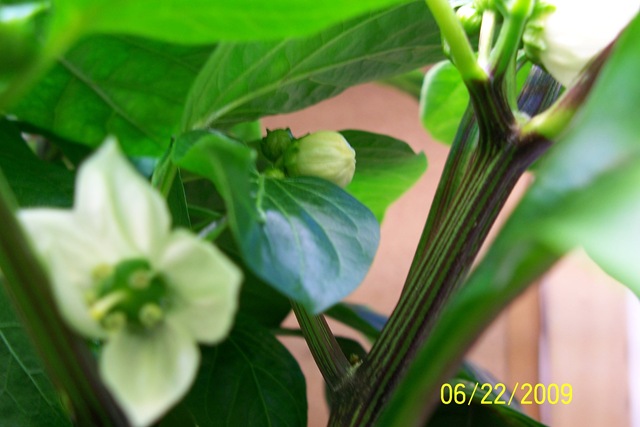 This is a purple bell pepper, see the baby peppers?
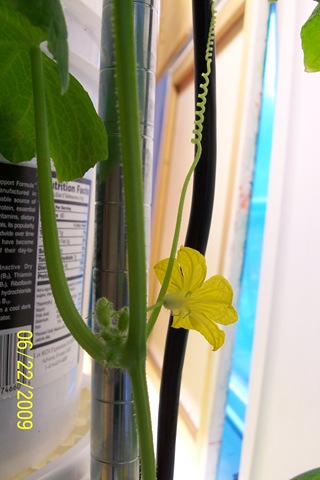 The cucumber is growing up the cord for the grow light.
 I ate blueberries with rain dripping off of them….
 I was sooo happy to feel the rain coming, we have had 100 degree days and no rain for a week.
The tomatoes inside are flowering like crazy, so are the cukes.
Wahooo, two days off to catch up around here; change water in bubblers, transplant 4 new tomato plants into sub-irrigated containers, start new crop of lettuce..
Industrial Farming is Giving us Less Nutritious Food
Posted: June 22, 2009 Filed under: Food and it's Impact on Our Health Leave a comment http://www.motherearthnews.com/
By Cheryl Long
We now have solid, scientific evidence of this troubling trend. For example:
- In wheat and barley, protein concentrations declined by 30 to 50 percent between the years 1938 and 1990.
- Likewise, a study of 45 corn varieties developed from 1920 to 2001, grown side by side, found that the concentrations of protein, oil and three amino acids have all declined in the newer varieties.
- Six minerals have declined by 22 to 39 percent in 14 widely grown wheat varieties developed over the past 100 years.
- Official U.S. Department of Agriculture (USDA) nutrient data shows that the calcium content of broccoli averaged 12.9 milligrams per gram of dry weight in 1950, but only 4.4 mg/g dry weight in 2003.
All of this evidence has been assembled and rigorously reviewed by Dr. Donald R. Davis, a now (mostly) retired chemist from the University of Texas.
So what’s causing these declines? The evidence indicates there are at least two forces at work. The first is what agriculture researchers call the environmental “dilution effect.” Davis notes that researchers have known since the 1940s that yield increases produced by fertilization, irrigation and other environmental means used in industrial farming tend to decrease the concentrations of minerals in those plants. These techniques give growers higher yields, and consumers get less expensive food. But now it appears there’s a hidden long-term cost — lowered food quality.
For example, a study of phosphorous fertilizer on raspberries found that applying high levels of phosphorus caused the yield to double and concentrations of phosphorus to increase in the plants, but meanwhile levels of eight other minerals declined by 20 to 55 percent!
The other force at work is what Davis calls the genetic dilution effect — the decline in nutrient concentration that results when plant breeders develop high-yielding varieties without a primary focus on broad nutrient content. That’s what the studies of wheat, corn and broccoli confirm.
In fruits, vegetables and grains, usually 80 to 90 percent of the dry weight yield is carbohydrates — sugars and starches (the last things we need more of in the American diet). Davis says that when breeders (and growers) specifically choose varieties for high yields, they are selecting mostly for the highest amounts of carbohydrates.
“These studies suggest to me that genetic dilution effects may be common when selective breeding successfully increases crop yield,” Davis says. USDA data indicate that yields have increased an average of 1.8 fold for 24 vegetables and 1.3 fold for six fruits over the past 30 years.
What can we do? Vegetables and fruits are our richest sources of many vitamins and minerals. It seems likely that those of us who grow food gardens (or shop at farmers markets) will get more nutrient-dense foods if we grow (or pay a premium for) older, lower-yielding heirloom varieties. Odds are good that heirloom varieties may be more nutritious than current supermarket fare. Plus, using organic methods such as moderate amounts of slow-release fertilizers should help us get maximum nutrition from our homegrown produce. And most important of all, Davis points out that the nutrient declines in processed foods are much deeper and broader than the declines in fresh, whole foods.
You can review the full study by requesting “Declining Fruit and Vegetable Nutrient Composition,” HortScience, 2009; 44:15, at your local library.
Broth is Beautiful
Posted: June 22, 2009 Filed under: Food and it's Impact on Our Health Leave a comment
"Good broth will resurrect the dead," says a South American proverb. Said Escoffier: "Indeed, stock is everything in cooking. Without it, nothing can be done."
A cure-all in traditional households and the magic ingredient in classic gourmet cuisine, stock or broth made from bones of chicken, fish and beef builds strong bones, assuages sore throats, nurtures the sick, puts vigor in the step and sparkle in love life–so say grandmothers, midwives and healers. For chefs, stock is the magic elixir for making soul-warming soups and matchless sauces.
Meat and fish stocks play a role in all traditional cuisines—French, Italian, Chinese, Japanese, African, South American, Middle Eastern and Russian. In America, stock went into gravy and soups and stews. That was when most animals were slaughtered locally and nothing went to waste. Bones, hooves, knuckles, carcasses and tough meat went into the stock pot and filled the house with the aroma of love. Today we buy individual filets and boneless chicken breasts, or grab fast food on the run, and stock has disappeared from the American tradition.
Grandmother Knew Best
Science validates what our grandmothers knew. Rich homemade chicken broths help cure colds. Stock contains minerals in a form the body can absorb easily—not just calcium but also magnesium, phosphorus, silicon, sulphur and trace minerals. It contains the broken down material from cartilage and tendons–stuff like chondroitin sulphates and glucosamine, now sold as expensive supplements for arthritis and joint pain.
Fish stock, according to traditional lore, helps boys grow up into strong men, makes childbirth easy and cures fatigue. "Fish broth will cure anything," is another South American proverb. Broth and soup made with fishheads and carcasses provide iodine and thyroid-strengthening substances.
When broth is cooled, it congeals due to the presence of gelatin. The use of gelatin as a therapeutic agent goes back to the ancient Chinese. Gelatin was probably the first functional food, dating from the invention of the "digestor" by the Frenchman Papin in 1682. Papin’s digestor consisted of an apparatus for cooking bones or meat with steam to extract the gelatin. Just as vitamins occupy the center of the stage in nutritional investigations today, so two hundred years ago gelatin held a position in the forefront of food research. Gelatin was universally acclaimed as a most nutritious foodstuff particularly by the French, who were seeking ways to feed their armies and vast numbers of homeless in Paris and other cities. Although gelatin is not a complete protein, containing only the amino acids arginine and glycine in large amounts, it acts as a protein sparer, helping the poor stretch a few morsels of meat into a complete meal. During the siege of Paris, when vegetables and meat were scarce, a doctor named Guerard put his patients on gelatin bouillon with some added fat and they survived in good health.
The French were the leaders in gelatin research, which continued up to the 1950s. Gelatin was found to be useful in the treatment of a long list of diseases including peptic ulcers, tuberculosis, diabetes, muscle diseases, infectious diseases, jaundice and cancer. Babies had fewer digestive problems when gelatin was added to their milk. The American researcher Francis Pottenger pointed out that as gelatin is a hydrophilic colloid, which means that it attracts and holds liquids, it facilitates digestion by attracting digestive juices to food in the gut. Even the epicures recognized that broth-based soup did more than please the taste buds. "Soup is a healthy, light, nourishing food" said Brillant-Savarin, "good for all of humanity; it pleases the stomach, stimulates the appetite and prepares the digestion."
Attention to Detail
Stock or broth begins with bones, some pieces of meat and fat, vegetables and good water. For beef and lamb broth, the meat is browned in a hot oven to form compounds that give flavor and color–the result of a fusion of amino acids with sugars, called the Maillard reaction. Then all goes in the pot–meat, bones, vegetables and water. The water should be cold, because slow heating helps bring out flavors. Add vinegar to the broth to help extract calcium–remember those egg shells you soaked in vinegar until they turned rubbery.
Heat the broth slowly and once the boil begins, reduce heat to its lowest point, so the broth just barely simmers. Scum will rise to the surface. This is a different kind of colloid, one in which larger molecules–impurities, alkaloids, large proteins called lectins–are distributed through a liquid. One of the basic principles of the culinary art is that this effluvium should be carefully removed with a spoon. Otherwise the broth will be ruined by strange flavors. Besides, the stuff looks terrible. "Always Skim" is the first commandment of good cooks.
Two hours simmering is enough to extract flavors and gelatin from fish broth. Larger animals take longer–all day for broth made from chicken, turkey or duck and overnight for beef broth.
Broth should then be strained. The leavings, picked over, can be used for terrines or tacos or casseroles. Perfectionists will want to chill the broth to remove the fat. Stock will keep several days in the refrigerator or may be frozen in plastic containers. Boiled down it concentrates and becomes a jellylike fumée or demi-glaze that can be reconstituted into a sauce by adding water.
Cutting Corners
Research on gelatin came to an end in the 1950s because the food companies discovered how to induce Maillard reactions and produce meat-like flavors in the laboratory. In a General Foods Company report issued in 1947, chemists predicted that almost all natural flavors would soon be chemically synthesized. And following the Second World War, food companies also discovered monosodium glutamate (MSG), a food ingredient the Japanese had invented in 1908 to enhance food flavors, including meat-like flavors. Humans actually have receptors on the tongue for glutamate. It is the protein in food that the human body recognizes as meat.
Any protein can be hydrolyzed to produce a base containing free glutamic acid or MSG. When the industry learned how to make the flavor of meat in the laboratory, using inexpensive proteins from grains and legumes, the door was opened to a flood of new products including bouillon cubes, dehydrated soup mixes, sauce mixes, TV dinners and condiments with a meaty taste. "Homemade" soup in most restaurants begins with a powdered soup base that comes in a package or can and almost all canned soups and stews contain MSG, often found in ingredients called hydrolyzed porteins. The fast food industry could not exist without MSG and artificial meat flavors to make "secret" sauces and spice mixes that beguile the consumer into eating bland and tasteless food.
Short cuts mean big profits for producers but the consumer is short changed. When homemade stocks were pushed out by cheap substitutes, an important source of minerals disappeared from the American diet. The thickening effects of gelatin could be mimicked with emulsifiers but the health benefits were lost.
Most serious, however, were the problems posed by MSG, problems the industry has worked very hard to conceal from the public. In 1957, scientists found that mice became blind and obese when MSG was administered by feeding tube. In 1969, MSG-induced lesions were found in the hypothalamus region of the brain. Other studies all point in the same direction–MSG is a neurotoxic substance that causes a wide range of reactions, from temporary headaches to permanent brain damage.
Why do consumers react to factory-produced MSG and not to naturally occurring glutamic acid found in food? One theory is that the glutamic acid produced by hydrolysis in factories contains many isomers in the right-handed form, whereas natural glutamic acid in meat and meat broths contains only the left-handed form. L-glutamic acid is a precursor to neurotransmitters, but the synthetic form, d-glutamic acid, may stimulate the nervous system in pathological ways.
A "Brothal" in Every Town
Peasant societies still make broth. It is a necessity in cultures that do not use milk because only stock made from bones and dairy products provides calcium in a form that the body can easily assimilate. It is also a necessity when meat is a luxury item, because gelatin in properly made broth helps the body use protein in an efficient way.
Thus, broth is a vital element in Asian cuisines–from the soothing long-simmered beef broth in Korean soups to the foxy fish broth with which the Japanese begin their day. Genuine Chinese food cannot exist without the stockpot that bubbles perpetually. Bones and scraps are thrown in and mineral-rich stock is removed to moisten stir-frys. Broth-based soups are snack foods from Thailand to Manchuria.
Asian restaurants in the US are likely to take shortcuts and use a powdered base for sweet and sour soup or kung pau chicken but in Japan and China and Korea and Thailand, mom-and-pop businesses make broth in steamy back rooms and sell it as soup in store fronts and on street corners.
What America needs is healthy fast food and the only way to provide this is to put brothals in every town, independently owned brothals that provide the basic ingredient for soups and sauces and stews. And brothals will come when Americans recognize that the food industry has prostituted itself to short cuts and huge profits, shortcuts that cheat consumers of the nutrients they should get in their food and profits that skew the economy towards industrialization in farming and food processing.
Until our diners and carryouts become places that produce real food, Americans can make broth in their own kitchens. It’s the easy way to produce meals that are both nutritious and delicious—and to acquire the reputation of an excellent cook.
Sauce Basics
Meat sauces are made from stocks that have been flavored and thickened in some way. Once you have learned the technique for making sauces—either clear sauces or thick gravies—you can ignore the recipe books and be guided by your imagination.
Reduction Sauces are produced by rapid boiling of gelatinous stock to produce a thick, clear sauce. The first step is to "deglaze" coagulated meat juices in the roasting pan or skillet by adding 1/2 cup to 1 cup wine or brandy, bringing to a boil and stirring with a wooden spoon to loosen pan drippings. Then add 3 to 4 cups stock, bring to a boil and skim. (Use chicken stock for chicken dishes, beef stock for beef dishes, etc.) The sauce may now be flavored with any number of ingredients, such as vinegar, mustard, herbs, spices, fresh orange or lemon juice, naturally sweetened jam, garlic, tomato paste, grated ginger, grated lemon rind, creamed coconut, whole coconut milk or cultured cream. Let sauce boil vigorously, uncovered, until reduced by at least one half, or until desired thickness is achieved. You may add about 1-2 teaspoons gelatin to promote better thickening, although this should be avoided by those with MSG sensitivities (as gelatin contains small amounts of MSG). Another way to thicken is to mix 2 tablespoons arrowroot powder with 2 tablespoons water. Gradually add this to the boiling sauce until the desired thickness is obtained. If sauce becomes too thick, thin with a little water. The final step in sauce-making is to taste and add sea salt if necessary.
Gravies are thickened with flour rather than by reduction. They are suitable for meats like roast chicken and turkey, which drip plenty of fat into the pan while cooking. After removing the roasting fowl and roasting rack, place pan on a burner. You should have at least 1/2 cup good fat drippings—if not, add some butter, goose fat or lard. Add about 1/2 cup unbleached flour to the fat and cook over medium high heat for several minutes, stirring constantly, until the flour turns light brown. Add 4 to 6 cups warm stock, bring to a boil and blend well with the fat-flour mixture, using a wire whisk. Reduce heat and simmer 10 minutes or so. Check for seasonings and add sea salt and pepper if necessary. You may also add herbs, cream, butter, whole coconut milk or creamed coconut.
Recipes
Chicken Stock
1 whole free-range chicken or 2 to 3 pounds of bony chicken parts, such as necks, backs, breastbones and wings*
gizzards from one chicken (optional)
4 quarts cold filtered water
2 tablespoons vinegar
1 large onion, coarsely chopped
2 carrots, peeled and coarsely chopped
3 celery stalks, coarsely chopped
1 bunch parsley
*Note: Farm-raised, free-range chickens give the best results. Many battery-raised chickens will not produce stock that gels.
If you are using a whole chicken, cut off the wings and remove the neck, fat glands and the gizzards from the cavity. Cut chicken parts into several pieces. (If you are using a whole chicken, remove the neck and wings and cut them into several pieces.) Place chicken or chicken pieces in a large stainless steel pot with water, vinegar and all vegetables except parsley. Let stand 30 minutes to 1 hour. Bring to a boil, and remove scum that rises to the top. Reduce heat, cover and simmer for 6 to 8 hours. The longer you cook the stock, the richer and more flavorful it will be. About 10 minutes before finishing the stock, add parsley. This will impart additional mineral ions to the broth.
Remove whole chicken or pieces with a slotted spoon. If you are using a whole chicken, let cool and remove chicken meat from the carcass. Reserve for other uses, such as chicken salads, enchiladas, sandwiches or curries. Strain the stock into a large bowl and reserve in your refrigerator until the fat rises to the top and congeals. Skim off this fat and reserve the stock in covered containers in your refrigerator or freezer.
Beef Stock
about 4 pounds beef marrow and knuckle bones
1 calves foot, cut into pieces (optional)
3 pounds meaty rib or neck bones
4 or more quarts cold filtered water
1/2 cup vinegar
3 onions, coarsely chopped
3 carrots, coarsely chopped
3 celery stalks, coarsely chopped
several sprigs of fresh thyme, tied together
1 teaspoon dried green peppercorns, crushed
l bunch parsley
Place the knuckle and marrow bones and optional calves foot in a very large pot with vinegar and cover with water. Let stand for one hour. Meanwhile, place the meaty bones in a roasting pan and brown at 350 degrees in the oven. When well browned, add to the pot along with the vegetables. Pour the fat out of the roasting pan, add cold water to the pan, set over a high flame and bring to a boil, stirring with a wooden spoon to loosen up coagulated juices. Add this liquid to the pot. Add additional water, if necessary, to cover the bones; but the liquid should come no higher than within one inch of the rim of the pot, as the volume expands slightly during cooking. Bring to a boil. A large amount of scum will come to the top, and it is important to remove this with a spoon. After you have skimmed, reduce heat and add the thyme and crushed peppercorns.
Simmer stock for at least 12 and as long as 72 hours. Just before finishing, add the parsley and simmer another 10 minutes. You will now have a pot of rather repulsive-looking brown liquid containing globs of gelatinous and fatty material. It doesn’t even smell particularly good. But don’t despair. After straining you will have a delicious and nourishing clear broth that forms the basis for many other recipes in this book.
Remove bones with tongs or a slotted spoon. Strain the stock into a large bowl. Let cool in the refrigerator and remove the congealed fat that rises to the top. Transfer to smaller containers and to the freezer for long-term storage.
Fish Stock
3 or 4 whole carcasses, including heads, of non-oily fish such as sole, turbot, rockfish or snapper
2 tablespoons butter
2 onions, coarsely chopped
1 carrot, coarsely chopped
several sprigs fresh thyme
several sprigs parsley
1 bay leaf
1/2 cup dry white wine or vermouth
1/4 cup vinegar
about 3 quarts cold filtered water
Ideally, fish stock is made from the bones of sole or turbot. In Europe, you can buy these fish on the bone. The fish monger skins and filets the fish for you, giving you the filets for your evening meal and the bones for making the stock and final sauce. Unfortunately, in America sole arrives at the fish market preboned. But snapper, rock fish and other non-oily fish work equally well; and a good fish merchant will save the carcasses for you if you ask him. As he normally throws these carcasses away, he shouldn’t charge you for them. Be sure to take the heads as well as the body—these are especially rich in iodine and fat-soluble vitamins. Classic cooking texts advise against using oily fish such as salmon for making broth, probably because highly unsaturated fish oils become rancid during the long cooking process.
Melt butter in a large stainless steel pot. Add the vegetables and cook very gently, about 1/2 hour, until they are soft. Add wine and bring to a boil. Add the fish carcasses and cover with cold, filtered water. Add vinegar. Bring to a boil and skim off the scum and impurities as they rise to the top. Tie herbs together and add to the pot. Reduce heat, cover and simmer for at least 4 hours or as long as 24 hours. Remove carcasses with tongs or a slotted spoon and strain the liquid into pint-sized storage containers for refrigerator or freezer. Chill well in the refrigerator and remove any congealed fat before transferring to the freezer for long-term storage.
The Importance of Saturated Fats for Biological Functions
Posted: June 20, 2009 Filed under: Food and it's Impact on Our Health 1 Comment
 Many people recognize that saturated fats are needed for energy, hormone production, cellular membranes and for organ padding. You may be surprised to learn that certain saturated fatty acids are also needed for important signaling and stabilization processes in the body.
Signaling processes work in the cells at the level of the membrane proteins, many of which are called G-protein receptors. The G-protein receptors become stimulated by different molecules and can be turned off or on in a manner similar to a binary light switch, which remains on for a limited time and then flips itself off until it is stimulated again.
The saturated fatty acids that play important roles in these processes are the 16-carbon palmitic acid, the 14-carbon myristic acid and the 12-carbon lauric acid. These saturated fatty acids are found in certain food fats. Palmitic acid, for example, comprises 45 percent of palm oil and about 25 percent of animal fats. Furthermore, the body makes palmitic acid out of excess carbohydrates and excess protein.
A biochemical process called palmitoylation, in which the body uses palmitic acid in stabilization processes, although not very well known, is very important to our health.
When these important saturated fatty acids are not readily available, certain growth factors in the cells and organs will not be properly aligned. This is because the various receptors, such as G-protein receptors, need to be coupled with lipids in order to provide localization of function.
The messages that are sent from the outside of the cell to the inner part of the cell control many functions including those activated by, for example, adrenaline in the primitive mammalian fight/flight reactions. When the adrenal gland produces adrenaline and the adrenaline (beta-adrenergic) receptor communicates with the G-protein and its signal cascade, the parts of the body are alerted to the need for action; the heart beats faster, the blood flow to the gut decreases while the blood flow to the muscles increases and the production of glucose is stimulated.
The G-proteins come in different forms; the alpha subunit is covalently linked to myristic acid and the function of this subunit is important for turning on and off the binding to an enzyme called adenylate cyclase and thus the amplification of important hormone signals.
When researchers looked at the fatty acid composition of the phospholipids in the T-cells (white blood cells), from both young and old donors, they found that a loss of saturated fatty acids in the lymphocytes was responsible for age-related declines in white blood cell function. They found that they could correct cellular deficiencies in palmitic acid and myristic acid by adding these saturated fatty acids.
Most Westerners consume very little myristic acid because it is provided by coconut oil and dairy fats, both of which we are told to avoid. But myristic acid is a very important fatty acid, which the body uses to stabilize many different proteins, including proteins used in the immune system and to fight tumors. This function is called myristoylation; it occurs when myristic acid is attached to the protein in a specific position where it functions usefully. For example, the body has the ability to suppress production of tumors from lung cancer cells if a certain genetically determined suppressor gene is available. This gene is called fus1 and is a protein that has been modified with covalent addition of the saturated fatty acid myristic acid. Thus, the loss of myristic acid from the diet can have unfortunate consequences, including cancer and immune system dysfunction.
Lauric acid has several functions. It is an antimicrobial fatty acid on its own and as a monoglyceride. It also has the function of stabilization when it is attached to certain proteins in a similar fashion to myristic acid and palmitic acid.
Stearic acid is the 18-carbon saturated fatty acid. The main sources are animal tallows, which contain about 20-25 percent stearic acid, and chocolate, which contains about 35 percent stearic acid. In other foods it occurs only on levels of 1-2 percent.
How much total saturated do we need? During the 1970s, researchers from Canada found that animals fed rapeseed oil and canola oil developed heart lesions. This problem was corrected when they added saturated fat to the animals diets. On the basis of this and other research, they ultimately determined that the diet should contain at least 25 percent of fat as saturated fat. Among the food fats that they tested, the one found to have the best proportion of saturated fat was lard, the very fat we are told to avoid under all circumstances!
These are some of the complex but vital reasons we need to include Organic palm oil, coconut oil, butter and lard in our diets.
The importance of saturated fats
Posted: June 20, 2009 Filed under: Food and it's Impact on Our Health 1 Comment 75% of our fat intake each day should be organic saturated fats- coconut oil, butter, meat broths. Here’s why;
· Enhance the immune system
· Are necessary for healthy bones
· Provide energy and structural integrity to the cells
· Protect the liver and enhance the body’s use of essential fatty acids
· Satiric acid, found in beef tallow and butter, has cholesterol lowering properties and is a preferred food for the heart.
Saturated fats are stable, they do not become rancid easily, do not call upon the body’s reserves of antioxidants, do not initiate cancer, do not irritate the artery walls.
Cholesterol;
- Is a precursor to vital corticosteroids; hormones that help us deal with stress and protect the body against heart disease and cancer.
- Precursor to sex hormones like androgen, testosterone, estrogen and progesterone.
- It is a precursor to vitamin D, a vital fat-soluble vitamin needed for healthy bones and nervous system, proper growth, mineral metabolism, muscle tone, insulin production, reproduction and immune system function.
- It is the precursor to bile salts, which are vital for digestion and assimilation of fats in the diet.
· As an antioxidant, cholesterol protects us against free radical damage that leads to heart disease and cancer.
· Cholesterol is the body’s repair substance, manufactured in large amounts when the arteries are irritated or weak. Blaming heart disease on high serum cholesterol levels is like blaming firemen who have come to put out a fire for starting the blaze.
· Cholesterol is needed for proper function of serotonin receptors in the brain. Serotonin is the body’s natural "feel-good" chemical. This explains why low cholesterol levels have been linked to aggressive and violent behavior, depression and suicidal tendencies.
Mother’s milk is especially rich in cholesterol and contains a special enzyme that helps the baby utilize this nutrient. Babies and children need cholesterol-rich foods throughout their growing years to ensure proper development of the brain and nervous system.
· Dietary cholesterol plays an important role in maintaining the health of the intestinal wall, which is why low-cholesterol vegetarian diets can lead to leaky gut syndrome and other intestinal disorders.
Animal foods containing saturated fat and cholesterol provide vital nutrients necessary for growth, energy and protection from degenerative disease. Animal fats are necessary for reproduction. Humans are drawn to both by powerful instincts. Suppression of natural appetites leads to weird nocturnal habits, fantasies, fetishes, bingeing and splurging. FOOD DISORDERS!!!
Animal fats are nutritious, satisfying and they taste good. "Whatever is the cause of heart disease," said the eminent biochemist Michael Gurr in a recent article, "it is not primarily the consumption of saturated fats. And yet the high priests of the lipid hypothesis continue to lay their curse on the fairest of culinary pleasures—butter and Béarnaise, , soufflés bacon and omelets.
The Benefits of High Cholesterol
People with high cholesterol live the longest. This statement seems so incredible that it takes a long time to clear one’s brainwashed mind to fully understand its importance. Yet the fact that people with high cholesterol live the longest emerges clearly from many scientific papers. Consider the finding of Dr. Harlan Krumholz of the Department of Cardiovascular Medicine at Yale University, who reported in 1994 that old people with low cholesterol died twice as often from a heart attack as did old people with a high cholesterol. Supporters of the cholesterol campaign consistently ignore his observation, or consider it as a rare exception, produced by chance among a huge number of studies finding the opposite.
But it is not an exception; there are now a large number of findings that contradict the lipid hypothesis. To be more specific, most studies of old people have shown that high cholesterol is not a risk factor for coronary heart disease. This was the result of my search in the Medline database for studies addressing that question. Eleven studies of old people came up with that result, and a further seven studies found that high cholesterol did not predict all-cause mortality either.
Now consider that more than 90 % of all cardiovascular disease is seen in people above age 60 also and that almost all studies have found that high cholesterol is not a risk factor for women. This means that high cholesterol is only a risk factor for less than 5 % of those who die from a heart attack.
But there is more comfort for those who have high cholesterol; six of the studies found that total mortality was inversely associated with either total or LDL-cholesterol, or both. This means that it is actually much better to have high than to have low cholesterol if you want to live to be very old.
High Cholesterol Protects Against Infection
Many studies have found that low cholesterol is in certain respects worse than high cholesterol. For instance, in 19 large studies of more than 68,000 deaths, reviewed by Professor David R. Jacobs and his co-workers from the Division of Epidemiology at the University of Minnesota, low cholesterol predicted an increased risk of dying from gastrointestinal and respiratory diseases.
Most gastrointestinal and respiratory diseases have an infectious origin. Therefore, a relevant question is whether it is the infection that lowers cholesterol or the low cholesterol that predisposes to infection? To answer this question Professor Jacobs and his group, together with Dr. Carlos Iribarren, followed more than 100,000 healthy individuals in the San Francisco area for fifteen years. At the end of the study those who had low cholesterol at the start of the study had more often been admitted to the hospital because of an infectious disease. This finding cannot be explained away with the argument that the infection had caused cholesterol to go down, because how could low cholesterol, recorded when these people were without any evidence of infection, be caused by a disease they had not yet encountered? Isn’t it more likely that low cholesterol in some way made them more vulnerable to infection, or that high cholesterol protected those who did not become infected? Much evidence exists to support that interpretation.
Low Cholesterol and HIV/AIDS.
Young, unmarried men with a previous sexually transmitted disease or liver disease run a much greater risk of becoming infected with HIV virus than other people. The Minnesota researchers, now led by Dr. Ami Claxton, followed such individuals for 7-8 years. After having excluded those who became HIV-positive during the first four years, they ended up with a group of 2446 men. At the end of the study, 140 of these people tested positive for HIV; those who had low cholesterol at the beginning of the study were twice as likely to test positive for HIV compared with those with the highest cholesterol.
Similar results come from a study of the MRFIT screenees, including more than 300,000 young and middle-aged men, which found that 16 years after the first cholesterol analysis the number of men whose cholesterol was lower than 160 and who had died from AIDS was four times higher than the number of men who had died from AIDS with a cholesterol above 240.
Cholesterol and Chronic Heart Failure
Heart disease may lead to a weakening of the heart muscle. A weak heart means that less blood and therefore less oxygen is delivered to the arteries. To compensate for the decreased power, the heart beat goes up, but in severe heart failure this is not sufficient. Patients with severe heart failure become short of breath because too little oxygen is delivered to the tissues, the pressure in their veins increases because the heart cannot deliver the blood away from the heart with sufficient power, and they become edematous, meaning that fluid accumulates in the legs and in serious cases also in the lungs and other parts of the body. This condition is called congestive or chronic heart failure.
There are many indications that bacteria or other microorganisms play an important role in chronic heart failure. For instance, patients with severe chronic heart failure have high levels of endotoxin and various types of cytokines in their blood. Endotoxin, also named lipopolysaccharide, is the most toxic substance produced by Gram-negative bacteria such as Escherichia coli, Klebsiella, Salmonella, Serratia and Pseudomonas. Cytokines are hormones secreted by white blood cells in their battle with microorganisms; high levels of cytokines in the blood indicate that inflammatory processes are going on somewhere in the body.
The role of infections in chronic heart failure has been studied by Dr. Mathias Rauchhaus and his team at the Medical Department, Martin-Luther-University in Halle, Germany. They found that the strongest predictor of death for patients with chronic heart failure was the concentration of cytokines in the blood, in particular in patients with heart failure due to coronary heart disease. To explain their finding they suggested that bacteria from the gut may more easily penetrate into the tissues when the pressure in the abdominal veins is increased because of heart failure. In accordance with this theory, they found more endotoxin in the blood of patients with congestive heart failure and edema than in patients with non-congestive heart failure without edema, and endotoxin concentrations decreased significantly when the heart’s function was improved by medical treatment.
A simple way to test the functional state of the immune system is to inject antigens from microorganisms that most people have been exposed to, under the skin. If the immune system is normal, an induration (hard spot) will appear about 48 hours later at the place of the injection. If the induration is very small, with a diameter of less than a few millimeters, this indicates the presence of "anergy," a reduction in or failure of response to recognize antigens. In accordance, anergy has been found associated with an increased risk of infection and mortality in healthy elderly individuals, in surgical patients and in heart transplant patients.
Dr. Donna Vredevoe and her group from the School of Nursery and the School of Medicine, University of California at Los Angeles tested more than 200 patients with severe heart failure with five different antigens and followed them for twelve months. The cause of heart failure was coronary heart disease in half of them and other types of heart disease (such as congenital or infectious valvular heart disease, various cardiomyopathies and endocarditis) in the rest. Almost half of all the patients were anergic, and those who were anergic and had coronary heart disease had a much higher mortality than the rest.
Now to the salient point: to their surprise the researchers found that mortality was higher, not only in the patients with anergy, but also in the patients with the lowest lipid values, including total cholesterol, LDL-cholesterol and HDL-cholesterol as well as triglycerides.
The latter finding was confirmed by Dr. Rauchhaus, this time in co-operation with researchers at several German and British university hospitals. They found that the risk of dying for patients with chronic heart failure was strongly and inversely associated with total cholesterol, LDL-cholesterol and also triglycerides; those with high lipid values lived much longer than those with low values.
Other researchers have made similar observations. The largest study has been performed by Professor Gregg C. Fonorow and his team at the UCLA Department of Medicine and Cardiomyopathy Center in Los Angeles. The study, led by Dr. Tamara Horwich, included more than a thousand patients with severe heart failure. After five years 62 percent of the patients with cholesterol below 129 mg/l had died, but only half as many of the patients with cholesterol above 223 mg/l.
When proponents of the cholesterol hypothesis are confronted with findings showing a bad outcome associated with low cholesterol–and there are many such observations–they usually argue that severely ill patients are often malnourished, and malnourishment is therefore said to cause low cholesterol. However, the mortality of the patients in this study was independent of their degree of nourishment; low cholesterol predicted early mortality whether the patients were malnourished or not.
Smith-Lemli-Opitz Syndrome
Much evidence supports the theory that people born with very high cholesterol, so-called familial hypercholesterolemia, are protected against infection. But if inborn high cholesterol protects against infections, inborn low cholesterol should have the opposite effect. Indeed, this seems to be true.
Children with the Smith-Lemli-Opitz syndrome have very low cholesterol because the enzyme that is necessary for the last step in the body’s synthesis of cholesterol does not function properly. Most children with this syndrome are either stillborn or they die early because of serious malformations of the central nervous system. Those who survive are imbecile, they have extremely low cholesterol and suffer from frequent and severe infections. However, if their diet is supplemented with pure cholesterol or extra eggs, their cholesterol goes up and their bouts of infection become less serious and less frequent.
Laboratory Evidence
Laboratory studies are crucial for learning more about the mechanisms by which the lipids exert their protective function. One of the first to study this phenomenon was Dr Sucharit Bhakdi from the Institute of Medical Microbiology, University of Giessen, Germany along with his team of researchers from various institutions in Germany and Denmark.
Staphylococcus aureus α-toxin is the most toxic substance produced by strains of the disease-promoting bacteria called staphylococci. It is able to destroy a wide variety of human cells, including red blood cells. For instance, if minute amounts of the toxin are added to a test tube with red blood cells dissolved in 0.9 percent saline, the blood is hemolyzed, that is the membranes of the red blood cells burst and hemoglobin from the interior of the red blood cells leaks out into the solvent. Dr. Bhakdi and his team mixed purified α-toxin with human serum (the fluid in which the blood cells reside) and saw that 90 percent of its hemolyzing effect disappeared. By various complicated methods they identified the protective substance as LDL, the carrier of the so-called bad cholesterol. In accordance, no hemolysis occurred when they mixed α-toxin with purified human LDL, whereas HDL or other plasma constituents were ineffective in this respect.
Dr. Willy Flegel and his co-workers at the Department of Transfusion Medicine, University of Ulm, and the Institute of Immunology and Genetics at the German Cancer Research Center in Heidelberg, Germany studied endotoxin in another way. As mentioned, one of the effects of endotoxin is that white blood cells are stimulated to produce cytokines. The German researchers found that the cytokine-stimulating effect of endotoxin on the white blood cells disappeared almost completely if the endotoxin was mixed with human serum for 24 hours before they added the white blood cells to the test tubes. In a subsequent study they found that purified LDL from patients with familial hypercholesterolemia had the same inhibitory effect as the serum.
LDL may not only bind and inactivate dangerous bacterial toxins; it seems to have a direct beneficial influence on the immune system also, possibly explaining the observed relationship between low cholesterol and various chronic diseases. This was the starting point for a study by Professor Matthew Muldoon and his team at the University of Pittsburgh, Pennsylvania. They studied healthy young and middle-aged men and found that the total number of white blood cells and the number of various types of white blood cells were significantly lower in the men with LDL-cholesterol below 160 mg/dl (mean 88.3 mg/l),than in men with LDL-cholesterol above 160 mg/l (mean 185.5 mg/l). The researchers cautiously concluded that there were immune system differences between men with low and high cholesterol, but that it was too early to state whether these differences had any importance for human health. Now, seven years later with many of the results discussed here, we are allowed to state that the immune-supporting properties of LDL-cholesterol do indeed play an important role in human health.
Animal Experiments
The immune systems in various mammals including human beings have many similarities. Therefore, it is interesting to see what experiments with rats and mice can tell us. Professor Kenneth Feingold at the Department of Medicine, University of California, San Francisco, and his group have published several interesting results from such research. In one of them they lowered LDL-cholesterol in rats by giving them either a drug that prevents the liver from secreting lipoproteins, or a drug that increases their disappearance. In both models, injection of endotoxin was followed by a much higher mortality in the low-cholesterol rats compared with normal rats. The high mortality was not due to the drugs because, if the drug-treated animals were injected with lipoproteins just before the injection of endotoxin, their mortality was reduced to normal.
Dr. Mihai Netea and his team from the Departments of Internal and Nuclear Medicine at the University Hospital in Nijmegen, The Netherlands, injected purified endotoxin into normal mice, and into mice with familial hypercholesterolemia that had LDL-cholesterol four times higher than normal. Whereas all normal mice died, they had to inject eight times as much endotoxin to kill the mice with familial hypercholesterolemia. In another experiment they injected live bacteria and found that twice as many mice with familial hypercholesterolemia survived compared with normal mice.
Other Protecting Lipids
As seen from the above, many of the roles played by LDL-cholesterol are shared by HDL. This should not be too surprising considering that high HDL-cholesterol is associated with cardiovascular health and longevity. But there is more.
Triglycerides, molecules consisting of three fatty acids linked to glycerol, are insoluble in water and are therefore carried through the blood inside lipoproteins, just as cholesterol. All lipoproteins carry triglycerides, but most of them are carried by a lipoprotein named VLDL (very low-density lipoprotein) and by chylomicrons, a mixture of emulsified triglycerides appearing in large amounts after a fat-rich meal, particularly in the blood that flows from the gut to the liver.
For many years it has been known that sepsis, a life-threatening condition caused by bacterial growth in the blood, is associated with a high level of triglycerides. The serious symptoms of sepsis are due to endotoxin, most often produced by gut bacteria. In a number of studies, Professor Hobart W. Harris at the Surgical Research Laboratory at San Francisco General Hospital and his team found that solutions rich in triglycerides but with practically no cholesterol were able to protect experimental animals from the toxic effects of endotoxin and they concluded that the high level of triglycerides seen in sepsis is a normal immune response to infection. Usually the bacteria responsible for sepsis come from the gut. It is therefore fortunate that the blood draining the gut is especially rich in triglycerides.
Exceptions
So far, animal experiments have confirmed the hypothesis that high cholesterol protects against infection, at least against infections caused by bacteria. In a similar experiment using injections of Candida albicans, a common fungus, Dr. Netea and his team found that mice with familial hypercholesterolemia died more easily than normal mice. Serious infections caused by Candida albicans are rare in normal human beings; however, they are mainly seen in patients treated with immunosuppressive drugs, but the finding shows that we need more knowledge in this area. However, the many findings mentioned above indicate that the protective effects of the blood lipids against infections in human beings seem to be greater than any possible adverse effects.
Cholesterol as a Risk Factor
Most studies of young and middle-aged men have found high cholesterol to be a risk factor for coronary heart disease, seemingly a contradiction to the idea that high cholesterol is protective. Why is high cholesterol a risk factor in young and middle-aged men? A likely explanation is that men of that age are often in the midst of their professional career. High cholesterol may therefore reflect mental stress, a well-known cause of high cholesterol and also a risk factor for heart disease. Again, high cholesterol is not necessarily the direct cause but may only be a marker. High cholesterol in young and middle-aged men could, for instance, reflect the body’s need for more cholesterol because cholesterol is the building material of many stress hormones. Any possible protective effect of high cholesterol may therefore be counteracted by the negative influence of a stressful life on the vascular system.
Does High Cholesterol Protect Against Cardiovascular Disease?
Apparently, microorganisms play a role in cardiovascular disease. They may be one of the factors that start the process by injuring the arterial endothelium. A secondary role may be inferred from the association between acute cardiovascular disease and infection. The infectious agent may preferably become located in parts of the arterial walls that have been previously damaged by other agents, initiating local coagulation and the creation of a thrombus (clot) and in this way cause obstruction of the blood flow. But if so, high cholesterol may protect against cardiovascular disease instead of being the cause!
In any case, the diet-heart idea, with its demonizing of high cholesterol, is obviously in conflict with the idea that high cholesterol protects against infections. Both ideas cannot be true. Let me summarize the many facts that conflict with the idea that high cholesterol is bad.
If high cholesterol were the most important cause of atherosclerosis, people with high cholesterol should be more atherosclerotic than people with low cholesterol. But as you know by now this is very far from the truth.
If high cholesterol were the most important cause of atherosclerosis, lowering of cholesterol should influence the atherosclerotic process in proportion to the degree of its lowering.
But as you know by now, this does not happen.
If high cholesterol were the most important cause of cardiovascular disease, it should be a risk factor in all populations, in both sexes, at all ages, in all disease categories, and for both heart disease and stroke. But as you know by now, this is not the case.
I have only two arguments for the idea that high cholesterol is good for the blood vessels, but in contrast to the arguments claiming the opposite they are very strong. The first one stems from the statin trials. If high cholesterol were the most important cause of cardiovascular disease, the greatest effect of statin treatment should have been seen in patients with the highest cholesterol, and in patients whose cholesterol was lowered the most. Lack of dose-response cannot be attributed to the knowledge that the statins have other effects on plaque stabilization, as this would not have masked the effect of cholesterol-lowering considering the pronounced lowering that was achieved. On the contrary, if a drug that effectively lowers the concentration of a molecule assumed to be harmful to the cardiovascular system and at the same time exerts several beneficial effects on the same system, a pronounced dose-response should be seen.
On the other hand, if high cholesterol has a protective function, as suggested, its lowering would counterbalance the beneficial effects of the statins and thus work against a dose-response, which would be more in accord with the results from the various trials.
I have already mentioned my second argument, but it can’t be said too often: High cholesterol is associated with longevity in old people. It is difficult to explain away the fact that during the period of life in which most cardiovascular disease occurs and from which most people die (and most of us die from cardiovascular disease), high cholesterol occurs most often in people with the lowest mortality. How is it possible that high cholesterol is harmful to the artery walls and causes fatal coronary heart disease, the commonest cause of death, if those whose cholesterol is the highest, live longer than those whose cholesterol is low?
To the public and the scientific community I say, "Wake up!"
Urban gardening and connecting to nature
Posted: June 19, 2009 Filed under: Gardening Leave a commentYa’ll must have noticed how often I quote No Impact Man. I discovered his blog about 2 or 3 months after he started it..and fell in love. Of course I became a even bigger fan after he published an article I wrote!! LOL! Just Kiddin’. If you haven’t had the pleasure, please check it out! (you can read the article here- 31 Tips for Reducing for Reducing Your Impact While Saving Money)
Here’s another good one-

There are all sorts of reasons to farm food in the cities–reduction of the heat island effect, local food production, keeping storm water out of the waterways. But something happened to me the other day as a result of growing vegetables in my new garden plot that I wasn’t counting on.
It’s been a dark winter and a pretty rainy spring. I’ve been waiting for the sun. And still the rain comes.
When I was little, when it rained, my grandmother would always say, "Well, it’s good for the farmers." And I would give lip service and say, "That’s true," and then I’d feel bad about the fact that I really didn’t care about the farmers. I just wanted sun.
For thirty years, I pretty much just wanted sun.
But the other day, when it rained, I wasn’t disappointed. I’d seen the difference to my new community garden plot after watering with a hose versus a soaking with a good rain. One keeps it alive. The other makes it thrive.
Living in the city, we don’t have as much connection to nature as we should. But keeping my new vegetable plot at Laguardia Community Gardens, the thing I wasn’t counting on was that I suddenly discovered a new gratitude for the cycles of nature. I was grateful for how the world works. I was grateful for the rain.
True success
Posted: June 19, 2009 Filed under: Food and it's Impact on Our Health Leave a comment From No Impact Man
Success
To laugh often and much;
To win the respect of intelligent people
and the affection of children;
To earn the appreciation of honest critics
and endure the betrayal of false friends;
To appreciate beauty;
To find the best in others;
To leave the world a bit better, whether by
a healthy child, a garden patch
or a redeemed social condition;
To know even one life has breathed
easier because you have lived;
This is to have succeeded.
–Ralph Waldo Emerson
Pee-cycling
Posted: June 17, 2009 Filed under: Gardening 2 Comments- 20 December 2006 by Graham Lawton

You recycle your household waste. You buy locally grown food, fit low-energy light bulbs and try not to use the car unnecessarily. Maybe you even irrigate the garden with your bath water. But you’ve still got an environmental monster in your house. Your toilet is wrecking the planet.
Before you point to the brick you’ve put in the cistern, it’s not about the water – well, not entirely. The big problem is pee. Your pee. Do you flush it away without a second thought? Tsk, tsk. Lose the green halo.
At first sight urine looks like an unlikely environmental menace. What harm could come from flushing away a fluid that is mostly water, plus a smidge of proteins and salts? Surprisingly, the answer is "a lot".
The problem with urine is that it is the main source of some of the chemical nutrients that have to be removed in sewage treatment plants if they are not to wreck ecosystems downstream. Despite making up only 1 per cent of the volume of waste water, urine contributes about 80 per cent of the nitrogen and 45 per cent of all the phosphate. Peeing into the pan immediately dilutes these chemicals with vast quantities of water, making the removal process unnecessarily inefficient.
To be fair, if you use conventional western plumbing there’s not an awful lot you can do about your personal pee-print right now. A lucky few, however, live or work in one of the buildings in continental Europe where you can find a future must-have eco-accessory: the urine separation toilet. These devices divert urine away from the main sewage stream, allowing the nutrients to be recycled rather than treated as waste. They could solve all the environmental problems associated with urine and even turn sewage plants into net producers of green, clean energy.
If you use conventional plumbing There’s not a lot you can do about your personal pee-print right now
So how do standard sewage systems deal with urine? Known in the business as "yellow water", urine enters the sewage system and mixes with solid waste ("black water"), "grey water" from household sinks and baths, and sometimes rainwater. It eventually arrives at a treatment plant, where it must be cleaned up enough to be discharged into a river.
The first step is to filter the sewage to remove large objects such as condoms, tampons and a random assortment of dead goldfish and false teeth. What remains flows into settlement tanks, to allow the feces to sink to the bottom. This solid sludge is separated off and stored in oxygen-free tanks, which are gently warmed for about two weeks. Bacteria break it down, generating methane gas that can be burned to produce electricity. The end product is an inert solid that is usually burned or dumped in landfill.
Meanwhile, the liquid portion of the sewage flows into oxygenated "aeration tanks". Here microbes guzzle the nutrient-rich organic material and multiply like crazy, converting nutrients into biomass. This eventually sinks to the bottom of settlement tanks as yet more sludge, while the liquid heads off for a final, energy-intensive "polishing", which strips out any leftover nitrogen and phosphate that the aeration stage couldn’t get rid of.
Minority pursuit
The whole process is very good at converting yellow, black and grey water into more or less clear water, but all that pumping, stirring, aeration and heating uses a lot of power – about 11.5 watts per head of population. That’s only a tiny portion of your personal daily energy consumption, but it mounts up. In the UK, population 65 million, it means waste water treatment consumes 65,000 gigajoules a day – about a quarter of the output of the country’s largest coal-fired power station. In a world where energy efficiency is ever more important, that’s not to be dismissed.
According to civil engineer and urine-separation expert Jac Wilsenach, it’s highly inefficient. Wilsenach spent six years at Delft University of Technology in the Netherlands working on the intricacies of sewage systems, and according to his calculations, today’s methods mean we are literally flushing energy down the pan.
In a paper published last March, Wilsenach calculated that if we were to separate out just half of our urine, the microbes in the aeration tanks could eat up almost all the nitrogen and phosphate (Journal of Environmental Engineering, vol 132, p 331). The energy-intensive polishing stage would become completely unnecessary.
There’s another, even bigger gain to be had from separating out the urine. Lower starting levels of nitrogen and phosphate mean that the microbes in the aeration tanks can do their job much more efficiently, taking just one day compared with about 30, thus reducing the energy demand of the aeration tanks. What’s more, the resulting sludge is richer in organic matter and generates more than three times as much methane. In fact, says Wilsenach, separating out 50 to 60 per cent of the urine could turn sewage works from net consumers to net producers of energy to the tune of about 2.5 watts per person.
So far so good. But how do you stop pee from getting into sewage in the first place? The answer is to install a special WC called a "urine-separation toilet" or often just a NoMix, after one of the leading brands.
On casual inspection a NoMix toilet looks pretty much like a normal one. But peer into the bowl and you’ll see that there are two waste pipes – a small front one and a larger rear one. The front one collects urine and diverts it into a storage tank (sometimes aided by a tiny trickle of water) to await its fate. The rear works like a standard flush toilet.
You don’t even have to do anything special to make this separation happen – apart from one thing. "The toilet is constructed in a way that if a man or woman sits on the toilet most of the urine is collected," says Bjartur Swart of engineering firm Grontmij in Drachten, the Netherlands, which is conducting urine separation trials across the country. Yep, that’s right. In the urine-separating future, men will sit down to pee.
Although small-scale urine separation has been practised for centuries (pee has been used in industries ranging from textile dyeing to blacksmithing, for example), it is something of a minority pursuit today. Modern experiments started in Sweden in 1994 with the founding of two "ecovillages" – Understenshöjden in Stockholm and Björsbyn in the far north – whose houses and apartments were fitted with urine-separation toilets. There, the urine is stored for collection by local farmers who use it as a fertiliser.
Other villages have followed suit and Sweden is now the urine-separation centre of the western world, with around 3000 NoMix toilets in use. Denmark has also set up urine-separation projects including one at the Svanholm Gods farming collective near Skibby, the largest producer of organic vegetables in the country (bear that in mind if you ever buy organic vegetables from Denmark).
The urine from all these projects ends up being sprayed directly onto fields, which works fine as long as only a few people are contributing. It doesn’t take much, though, for supply to start outstripping demand. "Recycling urine directly is not feasible in cities, but that is where the focus should be because that’s where the biggest amount of waste comes from," says Wilsenach, now at South Africa’s national research institute CSIR in Stellenbosch.
So what to do with the urine? The answer is, recycle it indirectly – in other words, extract the nutrients and turn them into fertiliser. In the Netherlands, Grontmij trucks the stored urine to a special treatment plant where the phosphate is precipitated out as a mineral called struvite (ammonium magnesium phosphate). This is a useful fertiliser and can help reduce demand for mined phosphate, which can only be a good thing: phosphate rocks are often contaminated with heavy metals, and mining and refining them generates waste and uses lots of energy. Some estimates suggest the world’s phosphate mines will be exhausted in 100 years. Yet at the moment we literally pour tons and tons of perfectly good phosphate down the drain.
Green halo
The other nutrients in urine can also be turned into fertiliser. Novaquatis, a branch of the Swiss Federal Institute of Aquatic Science and Technology (EAWAG) on the outskirts of Zürich, is experimenting with extracting nitrogen and potassium in forms that can be sprayed directly onto crops. Once the urine is treated it is clean enough to go directly into a river.
Crucially, these methods of extracting nutrients directly from urine consume much less energy than dealing with its vastly diluted form in general waste water. There’s an extra energy cost from trucking the urine in, but Wilsenach says it’s minuscule compared with the savings.
If all these benefits weren’t enough, using a NoMix toilet saves water too. According to research done by EAWAG, it reduces your use of flush water by 80 per cent, cutting the average household’s overall water use by about 25 per cent. Bear in mind that the water that fills up the toilet cistern is clean enough to drink: "We use good quality drinking water to flush away urine," says Wilsenach.
So where next for urine separation? Grontmij and Novaquatis have set up pilot projects across the Netherlands and Switzerland, and a handful of places are now doing it for real, including the public library in Liestal, Switzerland. Swiss citizens can even buy their very own NoMix toilets and storage tanks if they want, even though the sewage system is not yet ready and the urine ends up flowing into the waste water stream as normal. Urine separation is also taking root in Austria and Germany.
In surveys, people say they would be happy to use NoMix toilets and buy vegetables fertilized with processed urine. There is even a way round what could seem the biggest obstacle to widespread acceptance. "If a man doesn’t like sitting, he can urinate just in a normal way and use the [front] hole as a target," says Swart.
One day we may look back at our habit of flushing pee away with drinking water as staggeringly wasteful. "Water and waste are two of the greatest challenges the world faces at the moment," says Jacob Tompkins, director of Water-wise, a London-based water efficiency campaigning group. "Anything that looks at our low-efficiency way of dealing with the waste stream is extremely important."
Of course it would take time and money to convert existing sewage systems. But even if urine separation isn’t coming to your area any time soon, that’s not an excuse for inaction. Keeping urine out of the waste stream any way you can pays dividends. So what are you waiting for? Next time you need to take a leak, give the bathroom a miss and head straight for the flower beds. Then you can replace your green halo.
They can be very simple;

Or more esthetically pleasing;

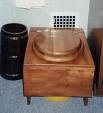
The one above is at the top of the article is a beautiful Japanese sawdust toilet.
Here is a link to Joseph Jenkins wonderful book- The Humanure Handbook.
Here are exact instructions. Building a sawdust toilet
I paid 18.00 at Lowe’s for a wooden toilet seat. I got the buckets free from a local sub-shop. It feels SO good to not be flushing an average of 40 GALLONS a day of water. My water bill has dropped considerably, my compost is baking away and the plants love the fertilizer. Between Bokashi composting, growing my own veggies and recycling all yard clipping and leaves, I am getting more and more “off the grid”. It is deeply satisfying.
TV Reduces Adult-Child Conversations
Posted: June 17, 2009 Filed under: Food and it's Impact on Our Health Leave a commentThey needed a study for this??

I had a couple whom I was Life Coaching a few years ago and suggested to them that they turn off the TV for a few months and see what changed in their life. I say I suggested, they went into shock and I insisted. They noticed the first week that they were talking more, felt closer and, best of all, their teenager was talking to them more and was less resentful. They went from two movies each evening, then the husband went to bed and the wife stayed up watching TV late.
I call it living alone together, what most people do, sadly, nowadays.
Anyway, here’s the article that ran in the NY Times today;
By ERIC NAGOURNEY
Conversations between children and their caregivers decrease measurably when a television is on nearby, even if no one seems to be watching it, a new study says.
Researchers came to the conclusion after equipping children with small tape recorders that kept track of everything they said and heard during day-to-day life.
The study, which was led by Dr. Dimitri A. Christakis of the University of Washington medical school and the Seattle Children’s Research Institute, may help explain why early exposure to television has been associated with language and cognitive delays, the researchers said. The study appears in The Archives of Pediatrics & Adolescent Medicine.
For the study, more than 300 children, ages 2 months to 48 months, wore the recorders for an entire day once a month for up to two years. A software program then reviewed the recording.
For each hour a television was on, the researchers found, the children on average heard 770 fewer words from an adult — a 7 percent decrease. They also spoke less themselves.
“Some of these reductions are likely due to children being left in front of the television screen,” the study said, “but others likely reflect situations in which adults, though present, are distracted by the screen and not interacting with their infant in a discernible manner.”
The amount of hours of television viewed per day directly correlates with scores children and students received. By the way, the correlation is definitely not positive. Students who watched more television on weekdays typically performed poorer on tests and daily work assignments. Most of the poor performance can be attributed to an inadequate amount of time spent on preparation and studying. (This is according to a recent news article posted on CNN, October 6.)
However, that may not be the only factor. By watching large amounts of television, students may be swayed into valuing television more than they value schoolwork, if they don’t already. The CNN article went on to mention the fact that television on the weekends did not produce quite as negative of effects as on school nights. However, performance did seem to depend on the amount of time spent viewing television overall.
Also, television also has several other negative effects. Depending on the content of the television show, which of course is generally damaging these days, the child may pick up immoral values and words that the parents or guardians certainly don’t want their child using. Children are often exposed to content that is much too mature for their eyes, and they receive a misrepresentation of reality. They will most likely begin to believe that what they see on TV is not only real, but that it is completely acceptable from all standpoints.
What kind of content is unacceptable for children? Fortunately, not every television program will impact children negatively. However, the majority of it will.
Picking dinner out of the back yard rocks!
Posted: June 16, 2009 Filed under: Gardening 1 CommentEverything I ate tonight I grew, except for the chicken. It’s organic, free range, now it’s in the oven. I am using organic butter, thyme and scallions and sweet potatoes I grew, Cherry tomatoes I picked this afternoon. When I went to the backyard just now I noticed a bunch of blueberries were ripe. I have been eating a few a week, but all of the sudden I had to come back in and get a bowl..there were so many! I love this! I have only been seriously gardening since last July. that’s when the square foot garden went in. But then I became fascinated with hydroponics and it took off from there… but today was the first time that everything I grew all the veggies and fruit for dinner!!!
Here’s an update; This is the sunroom at the end of the living room. Almost everything is in sub-irrigated containers I built.
 The tomatoes have vined up to the ceiling! Next time I know to use patio type tomatoes. In the red bucket is purple bell peppers, Clockwise from there; purple tomatoes, cucumbers, beets, garlic, lettuce, chives, beets.
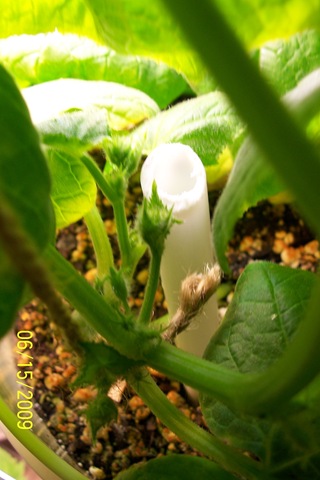 Cucumbers

Outside something attacked my broccoli, I sprayed with Neem oil.
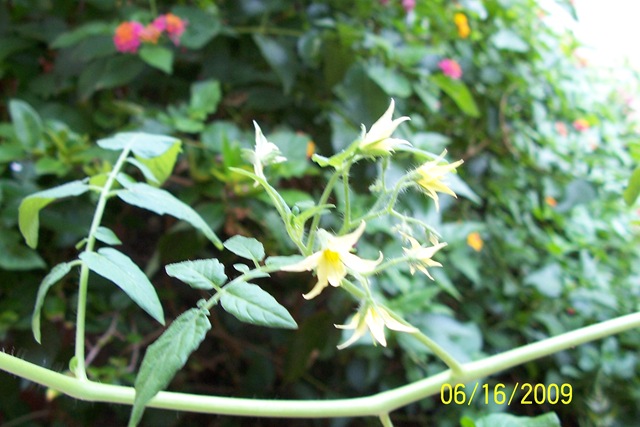 Flowers on the upside down tomatoes, hanging outside my kitchen window. I can open the window and pick tomatoes!


 Meal Delivery Service by Millie Barnes