Eating grains = brain damage
Posted: July 6, 2009 Filed under: Food and it's Impact on Our Health 1 Comment Eating grain products – breads, cakes, cereals – have long been consider a healthy choice. If you look at the RDA recommendations, grains, at the bottom of the pyramid, are what you should be eating the most of to maintain a healthy body.
In medical and alternative medicine circles, celiac disease is well known for being the cause of numerous detrimental body conditions. In its basic form, celiac disease is the damage of the intestinal lining by gluten proteins, which come from grains – the bottom of the pyramid. Let’s get technical for a moment and say that the specific proteins in gluten that damage the intestine are called "gliadin."
What you need to know about gliadin is that when you eat it, it acts like an invading substance, which activates your body’s immune system to destroy and eliminate the invader – your favorite food bread and cereals. Eating an excess of gluten causes celiac disease. Where is gluten found? It is found in products made from wheat, rye, barley, kamut, triticale, oats, and spelt.
It is now well established in medicine that 1 in approximately 100 have celiac disease. Many have the disease without having any symptoms. The continual use of and eating of detrimental grains will eventually bring on symptoms. People with celiac disease can expect to have illnesses associated or connected with:
* cancer
* schizophrenia
* epilepsy
* attention deficit disorders
* auto immune diseases
* osteoporosis
* brain disorders
* neurological diseases
* premature death
* premature births
* chronic liver diseases
* gastrointestinal problems
* food allergies
* chronic fatigue
* malnutrition
* and the list goes on and on
When the intestinal lining is damage by gluten, your overall health is damaged. Your immune system is activated to prevent further intestinal damage causing your overall response to other body crisis to diminish. Your ability to fight off other diseases is diminished. Your ability to absorb nutrients from your food is reduced leading to nutritional deficiencies.
How does gluten create so many problems in the body? As gluten moves into the intestine, it is digested and broken down into small protein molecules – peptides (which consist of 2-3 amino acids bound together) and free amino acids. Amino acids are the basic building blocks the make up protein. Once digestion is complete, peptides and free amino acids easily move into the intestinal wall cell structure and then into your blood stream. This is what happens in a healthy person.
Over many years of eating gluten, the intestinal cell structure deteriorates. Digested protein no longer passes through the cells walls but passes between cells and into the blood. These holes in the intestinal walls is what is know as "leaky gut syndrome"
Because of the existence of these tiny holes in the intestinal wall, harmful substances can pass into the blood and settle into your organs and cells causing irritations and damage. Your intestinal wall is no longer a barrier keeping out unwanted substances from your blood and body.
Undigested foods can now enter your body creating food allergies. Toxins from various foods – dyes, preservatives, food additives, artificial flavors – can now enter you blood stream. Pathogens such as bacteria, worms, fungus and viruses can also enter your body and invade your organs. When this happens, you will slowly come down with a variety of symptoms and illnesses that you cannot attribute to anything specific. Absorption of undigested proteins is a major threat to the health of your organs and to your immune system.
It is estimated that up to 40% of all people have some intestinal damage from eating gluten and are passing undigested proteins into their blood stream.
There are some of you that do not have the enzymes to digest gluten. Those of you have what is called "gluten sensitivity." Those of you that have the enzymes to digest gluten are not as prone to celiac disease and have less damage to your intestinal wall.
So what are the foods that you should be eliminating from your eating habits?
* wheat starch, wheat grass, wheat germ oil, wheat triticum
* bread flour, brewer’s yeast, bran, brown flour
* oats, oat straw,
* baking powder, edible starch, germ, gum base, dextrin
* malt, rice malt,
* rye, spelt, kamut, wheat, bleached flour, couscous, pearl barley, bulgar
*soy sauce, teriyaki sauce, shoyu, miso
* durum wheat, semolina
* blue cheese (all cheese, actually, cow’s milk is NOT good for humans!)
Not all is known about the effects of gluten on your body and how it creates illness. What is known is that gluten is responsible for celiac disease and many other diseases that result from having celiac. Don’t always believe what the government says about food. Their interest is in economics and not in your health.
why grass fed meat is better
Posted: July 6, 2009 Filed under: Food and it's Impact on Our Health Leave a commentA Quick Review of the Fats That Make Up Your Body
All food fats are a blend of the different types, saturated and unsaturated. Unsaturated fats include poly- and monounsaturated fats. omega-3s and 6s are types of polyunsaturated fats, called essential because we have to get them from food, our bodies can’t manufacture them from other fats.
The Story on the the Good Fats and Bad Fats
Whereas cellular proteins are genetically determined, the polyunsaturated fatty acids composition of all cell membranes is to a great extent dependent on the dietary intake.
There are many kinds of fats in the body. Some of the most crucial fats are in the list of compounds that make up the cell walls for all of the body’s cells.
After isolating these fats scientific experiments determined that if the ratio of omega 6 fats to omega 3 fats exceeds 4:1, people have more health problems. This is especially meaningful since grain-fed beef can have ratios that exceed 20:1 whereby grass-fed beef is down around 3:1.
Similar ratios are also found in all grain-fed versus grass-fed livestock products.
Grass-fed products are rich in all the fats now proven to be health-enhancing, but low in the fats that have been linked with disease.
Why are Omega 3 Fatty Acids Important For Your Health?
Omega 3 fatty acids are essential for normal growth and may play an important role in the prevention and treatment of:
- coronary artery disease
- hypertension
- arthritis
- cancer
- other inflammatory and autoimmune disorders
Your Body Can’t Make These Fats So You Have to Get Them From Your Diet
Omega 3 and omega 6 fats are not interconvertible in your body and are important components of practically all cell membranes.
Whereas the proteins in your cell are genetically determined, the unsaturated fats of all your cell membranes is to a great extent determined on what you eat.
Therefore you need sufficient amounts of dietary omega 6 and omega 3 fats and they need to be balanced for normal development.
Your Diet Has Evolved From Your Ancient Ancestors
On the basis of estimates from studies in Paleolithic nutrition and modern-day hunter-gatherer populations, humans evolved on a diet that was much lower in saturated fatty acids than is today’s diet. Furthermore, the diet contained small but roughly equal amounts of omega 6 and omega 3 fats.
Plant Fat Ratios
In the past 100 years there has been a rapid and unprecedented change in our diet. The modern vegetable oil industry was developed, and it is based on oil from seeds rich in omega 6 fats. Modern agriculture increased production by emphasizing grain feeds for domestic livestock, and grains are rich in omega 6 fats. Therefore, aggressive, industrialized agricultural management techniques have decreased the omega 3 fat content in many foods: green leafy vegetables, animal meats, eggs, and even fish.
This imbalance where omega 6 fats levels exceed omega 3 levels can be seen by comparing wild edible plants and wild animals and birds with products of modern agriculture. Products of modern agriculture frequently have drastically lower omega 3 levels. It is estimated that man evolved with a omega 6 to omega 3 ratio of one to one from both meat and vegetable sources.
Today the vegetable sources have an estimated omega 6:3 ratio of 10 to one. The modern diet of meat, fish, chicken, and vegetable oils has a ratio estimated to be 20 or 25 to one.
Eggs and Beef Fat Ratios
Chickens that eat vegetables high in omega 3 fats, along with insects and lots of fresh green grass, supplemented with fresh and dried fruit, and small amounts of corn
Range fed eggs have an omega 6:3 ratio of 1.5 to one whereas the "supermarket egg"has a ratio of 20 to one.
Modern agriculture’s emphasis on increased production has led to the development of chicken feed that is being reflected in the out-of-balance ratio of fatty acids in the "supermarket egg."
North Dakota State University conducted a study on the nutritional differences between grass-fed and grain-fed bison. The results of that study closely followed that of the egg studies. The grass-fed bison had omega 6 to omega 3 ratios of 4.0 to one, and the grain-fed bison had ratios of 21 to one.
Additional studies by others clearly show that the longer cattle are fed grain, the greater the fatty acid imbalance. For instance, after 200 days in the feedlot grain-fed cattle have omega 6 to omega 3 ratios that exceed 20 to one. Many cattle are fed 200 days or more in the United States.
With the scientific data that has been published concerning omega 6 and omega 3 fatty acids, we must assume grass-fed beef is far better for human nutrition than grain-fed beef. If so, then having access to grass-fed beef can be very beneficial for one’s health.
And since REAL Beef has been raised naturally, without hormones, and without having been fed antibiotics during the final phase of their lives, they have added benefits.
Why Not Get Your Omega 3 Fats From Fish?
Fish, while generally a leaner food choice than beef, is heavily promoted as a good source of the omega-3 fats.
The problem with fish is that over half of the US burns coal to generate electricity and 80,000 pounds of mercury is dumped into the oceans every year as a result.
Nearly all fish are contaminated with mercury. It has gotten so bad that even the conservative US government warns pregnant women to avoid eating fish. Additionally, it is my recommendation to eat cold water fish only once a week, unless you are absolutely certain that it has been tested in a laboratory and shown not to contain detectable levels of mercury and other toxins.
REAL Beef is Grass Fed Beef and a Major Source of Omega 3 fats
When we switch from grainfed to grassfed meat, then, we are simply returning to the diet of our long-ago ancestors, the diet that is most in harmony with our physiology. Every cell and every system of our bodies will function better when we eat products from animals raised on grass.
Grass-fed beef is naturally leaner than grain-fed beef.
Omega 3s in beef that feed on grass is 7% of the total fat content, compared to 1% in grain-only fed beef.
Grass-fed beef has the recommended ratio of omega 6 to omega 3 fats (3:1.)
Grass-fed beef is loaded with other natural minerals and vitamins, plus it’s a great source of CLA (conjugated linoleic acid) a fat that reduces the risk of cancer, obesity, diabetes, and a number of immune disorders.
Beef, in its natural grass-fed state, is a health food of the highest order.
Here’s one of my favorite ways to serve it. Remember that when eating grass fed meat, you need to eat the pan dripping, and learn the art of making meat stocks, which is the best source of calcium there is!
Pan Seared Steak with Cognac and Mustard Pan Sauce
serves 2
2 T. minced shallots
1/2 t. organic sugar
2 T. cognac
1/3 cup chicken stock (I roast a chicken once a week, use bones to make stock)
1/2 lemon
1 1/2 t. Dijon mustard
1/2 t.Dijon mustard
1 t. tarragon (1/2 t. dried)
kosher salt and pepper to taste
Pan-Sear Steaks to desired temp (I like 140). To same skillet used to cook steaks (do not clean skillet or discard accumulated fat), add shallots and sugar off heat; using pan’s residual heat, cook, stirring frequently, until shallots are slightly softened and browned and sugar is melted, about 45 seconds. Return skillet to high heat, add cognac and broth; bring to boil, scraping up browned bits on pan bottom with wooden spoon.
Boil until liquid is reduced to 1/3 cup, about 4 minutes. Add lemon juice and mustard; cook to blend flavors, about 1 minute longer. Off heat, whisk in butter until melted and sauce is thickened and glossy. Add tarragon and season to taste with salt and pepper; spoon over steaks and serve immediately.
Meat; Should you choose Grass Fed or Organic
Posted: July 6, 2009 Filed under: Food and it's Impact on Our Health Leave a commentBOTH! If you can get it, if not choose grass fed; here’s why?
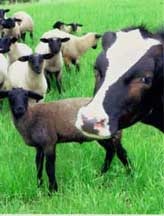 Article from Eat Wild;
By Jo Robinson
Organic meat, poultry, and dairy products are now available at your supermarket, which is a change for the better. When you see the organic label, you know the food is going to be free of pesticide residues, synthetic hormones, genetically modified organisms, and a long list of questionable additives. You also have the satisfaction of knowing that raising animals organically causes less harm to the environment. But when it comes to animal production, organic is not enough. We need to be raising animals on their species-appropriate diets.
Few consumers realize that many producers of "organic" or "naturally raised" animal products, raise their animals in confinement and feed them grain—just like the operators of conventional feedlots. Feeding large amounts of grain to a grazing animal decreases the nutritional value of its products whether the grain is organic or conventionally raised. The reason is simple. Compared with grass, grain has far fewer omega-3 fatty acids and vitamin E. Therefore, grainfed animals have fewer of these important nutrients in their meat and dairy products. Grainfeeding also interferes with the creation of a cancer-fighting fight called conjugated linoleic acid or CLA. I A test by an independent lab determined that milk from one of the largest organic grain-fed dairies had no more omega-3 fatty acids or CLA than milk from ordinary dairies. Similarly, meat from organic grain-fed beef has the same nutritional profile as meat from the largest Kansas feedlot.
The same story holds true for organic but confinement-raised poultry. Their meat and eggs have no more omega-3s or vitamin E than the products you find in the supermarket. (Unless the birds are given special supplements along with the grain.)
For many consumers, food safety is an even bigger concern than nutrition. Once again, grass feeding offers an important advantage. It has been known for decades that grain feeding makes a cow’s digestive tract more acid. Now we know that this acidic environment speeds the growth of potentially dangerous E. coli bacteria and, even worse, makes the bugs more acid-resistant. Alarmingly, these acid-resistant bacteria are much more likely to survive the cleansing acidity of our own digestive juices and make us ill.
Depriving our livestock of fresh greens and vastly increasing their consumption of grain has jeopardized our health in ways people never imagined. Although feeding organically raised grain reduces our reliance on pesticides and synthetic fertilizers, it does not provide the food that nature intended us to eat.
Click here for references.
Garden Update…
Posted: July 4, 2009 Filed under: Gardening Leave a commentI finally have a cucumber! I have TONS of flowers on the plant inside under grow lights…and it’s finally fruiting!!!

Here’s a pic from a few days ago…

Here’s an update on that silly cucumber-tomato cross I got outside…weird science experiment, eh?

Dean Foods Sells Out Organic Farmers With Release of New "Natural" Horizon Milk
Posted: July 2, 2009 Filed under: Food and it's Impact on Our Health Leave a commentFrom the Organic Consumers Association;
The rumors have now been confirmed. Dean Foods’ WhiteWave division has now announced that they will bring out "natural" (conventional) dairy products under the Horizon label. This at a time when organic dairy farmers around the country are in financial crisis due to a glut of milk.
They are in essence creating a new product category, "natural dairy products," that will directly compete with certified organic farmers and the marketers they partner with.
This move comes on the heels of the recent decision by Dean/WhiteWave to switch almost the entire product offerings of their Silk soymilk and soyfoods line to "natural" (conventional) soybeans. They made the switch to conventional soybeans, in Silk products, without lowering the price. Sheer profiteering.
The likelihood is that they will create this new category and enjoy higher profits than they currently realize having to pay those pesky organic dairy farmers a livable wage.
The news story below, from the Natural Foods Merchandise quotes Dean Foods/WhiteWave officials saying these products will be "easier on the pocketbook."
Yes, they will be designed to undercut certified organic on price.
Horizon is the largest, in terms of dollar volume, organic brand in the marketplace. Silk holds the leading market share in soyfoods and was once, prior to Dean Foods’ acquisition, a 100% organic company and brand.
SHAME!
Stay tuned. Dean Foods has just declared war on the organic industry. Although the first shot has been fired it will not be the last.
The organic farmers, consumers and ethical business people who built this industry did so in effort to create an alternative food system with a different set of values. We will all work hard to defend what so many good people spent so many years to create.
Mark A. Kastel
Senior Farm Policy Analyst
The Cornucopia Institute
—————————-
Horizon Organic Introduces Two New Natural Products
June 29,2009
By: Angela Cortez
Natural Foods Merchandise
Horizon Organic, the Broomfield, Colo.-based company known as one of the first certified organic dairies to distribute nationwide, is adding one new product in July and testing another in August, and for the first time in the company’s history, the products geared toward children are not organic but natural.
Next month, Horizon Organic will launch Little Blends, a yogurt for toddlers. Milk Breakers, single servings of milk, will undergo a regional market test in the area of southeast Florida in August. These products are the first the company will distribute that are not certified organic. They are natural, don’t contain growth hormones and will be easier on the pocketbook, said Sara Loveday, marketing communications manager for Horizon Organic.
"We’ve only been organic in the past and the majority of our business will remain organic," she said. "They are new, separate offerings. These are our first natural offerings in the marketplace, and Horizon always tries to provide great-tasting products for moms and for families. We’ve always been focused on innovation that satisfies a broader range of consumer needs."
Little Blends is a yogurt with a fruit and vegetable purée that comes in combinations of banana and sweet potato, strawberry and carrot, and apple and butternut squash. The recommended retail price is $3.39 to $3.59 for a four-pack of 4-ounce cups. Milk Breakers, which will be available in vanilla and chocolate and are fortified with added protein, are geared to 4 to 10 year olds. The suggested retail price is $3.79 for a six-pack of 6-ounce servings.
Being natural but not organic means the company can sell the new products at a lower price and tap into a larger market. As the gap between conventional and organic widens and shoppers look to save money during recessionary times, companies are looking for ways to compete, ride the trends and offer value-priced products, said Michelle Barry, a retail and cultural trends expert and senior vice president of The Hartman Group, a research and consulting firm.
"I suspect it may be unusual, but [Horizon Organic] may be on the leading edge of companies that are struggling and in competition with other companies," she said. "I’m not surprised they’ve done this. Their competition and consumers have been heading in this direction for some time.
"There may be some core brand loyalists that will be upset, but at the same time, they could be expanding to a much dense population and the strategy may expand their reach into more households," Barry said.
But the move away from purely organic is a trend that doesn’t settle particularly well with Matthew McLean, vice president of the Organic Trade Association and owner of Uncle Matt’s Organic in Clermont, Fla.
Still, McLean said he understands that now is a difficult time for companies and they have to do what it takes to stay in business.
"As an advocate of organic, I hope organic holds firm and continues to grow, but each company has its own mission and vision," he said. "Anybody in this economy, in any industry, is looking at ways to continue to grow the company and keep the light bill paid. I can only hope the organic consumer will continue to support organic, based on the quality of the products we put out. But I hope the companies stay true to organic, as well."
Who is killing organics? Horizon, Whole Foods Market, Silk…
Posted: July 2, 2009 Filed under: Food and it's Impact on Our Health Leave a commentAlert of the Week
 Breaking the Organic Monopoly and the "Natural" Foods Myth
Whole Food Market and United Natural Foods, Inc.: Undermining Our Organic Future
After four decades of hard work, the organic community has built up a $25 billion "certified organic" food and farming sector. This consumer-driven movement, under steady attack by the biotech and Big Food lobby, with little or no help from government, has managed to create a healthy and sustainable alternative to America’s disastrous, chemical and energy-intensive system of industrial agriculture.
However, the annual $50 billion natural food and products industry is threatening to undermine the organic movement by flooding the marketplace with conventional products greenwashed with "natural" labeling. "Natural," in the overwhelming majority of cases, translates to "conventional-with-a-green-veneer." Natural products are routinely produced using pesticides, chemical fertilizer, hormones, genetic engineering, and sewage sludge. "Natural","all-natural," and "sustainable," products in most cases are neither backed up by rules and regulations, nor a Third Party certifier. These are label claims that are neither policed nor monitored. For an evaluation of eco-labels see the Consumers Union Eco-Label website.
For example:
* Tests Show Widespread Presence of GMOs in So-Called "Natural" Foods
* So-Called "Natural" (non-organic) soy milk, including leading brands such as "Silk," are made with conventional soy lecithin, utilizing the hazardous chemical, Hexane, as an extraction agent.
* Dozens of "natural" and "made with organic" personal care and household cleaning products contain known carcinogens such as 1,4 Dioxane. Just about the only personal care products you can trust are those bearing the "USDA Organic" label.
* 90% or more of the vitamins and supplements now on the market labeled as "Whole Foods," "natural" or "food based" are spiked with synthetic chemicals.
Despite the massive popularity and demand for certified organic products, retailers like Whole Foods Market, and wholesalers like United Natural Foods Inc., continue to push "natural" products at a premium price, while, in effect slowing down the growth of organics with their near market monopoly. In fact, the majority of products sold and distributed by Whole Foods Market and UNFI are not certified organic, but rather so-called "natural." Meanwhile, independent and cooperative grocers often offer more certified organic products at competitive prices.
Will you stand up for organics?
Contact Whole Foods Market and UNFI today and tell them that you will buy only certified organic products for you and your family.
Gluten link with schizophrenia and diabetes
Posted: July 1, 2009 Filed under: Food and it's Impact on Our Health Leave a commentGluten-rich foodstuffs such as bread could help to trigger schizophrenia in people with a genetic predisposition to the mental disease, scientists believe.
 Researchers at UHI, the prospective University of the Highlands and Islands, are looking at the links between schizophrenia and diabetes. Two studies are being undertaken by geneticist Dr Jun Wei and his team at the UHI Department of Diabetes and Cardiovascular Science in Inverness, after winning £300,000 of grant funding from the Schizophrenia Association of Great Britain (SAGB).
One project is exploring the links between schizophrenia and diabetes, while the other focuses on the role of gluten – the protein commonly found in rye, wheat and barley – in schizophrenia and diabetes.
Gluten has long been recognised as a trigger for serious diseases related to the gut, most notably coeliac disease. However, it is now emerging that this dietary component might also be associated with the incidence of other auto-immune diseases, including schizophrenia and type 1 diabetes.
Professor Ian Megson, head of the UHI Department of Diabetes and Cardiovascular Science, explained: “The reason that gluten might provide a link between these apparently quite different diseases is that, in people with a particular genetic make-up that results in their bodies’ inability to handle gluten in the normal way, the immune system becomes unusually active. In this way, cells in the blood that are designed to combat infections begin to target healthy tissue, which can lead to impaired function of affected organs (gut, brain or pancreas) and disease.
“This research is at an early stage, but if the theory is correct and those at risk are identified very early in life, a simple change in diet might prevent these diseases developing in some individuals.”
Dr Wei, senior researcher and reader in genetics, added: “An individual’s inherited genes, together with factors from the environment in which they have lived, are now considered to be central to development of both schizophrenia and diabetes.
“Gluten is one such environmental factor. More than 30 per cent of schizophrenia sufferers have high levels of antibodies against wheat gluten in their body so a gluten-free diet might help to reduce the symptoms of this mental condition. We are also investigating if gluten acts as a trigger for schizophrenia in people who have a genetic predisposition to it.” Gwynneth Hemmings, honorary executive director of the SAGB, commented: “We are pleased to be supporting this very important research which we hope will benefit the many people suffering, or likely to suffer, from the illness.”
Dr Wei is being assisted in the gluten work by postdoctoral researcher Dr Matthew Law and PhD student Matilda Bradford, and in the other project by PhD colleague Aditi Mathur. They are working at the UHI department’s new base at the Centre for Health Science in Inverness. “Our unit is just over two years old and we are making fantastic progress, with funding come in from bodies such as the SAGB, the Chief Scientist Office, Medical Research Council and the Natural Environment Research Council,” Professor Megson said. “We have a wonderful facility here in Inverness to rival any in the country, and we are punching above our weight in terms of our ability to attract funding for research which will deliver significant benefits to people’s health, especially those with diabetes and cardiovascular conditions.”
Source: UHI MIllenium Institute
Food Allergies May Be Linked to Obesity
Posted: July 1, 2009 Filed under: Food and it's Impact on Our Health Leave a commentFrom Special Gourmet Magazine;
Researchers studying more than 4,000 children ages 2 to 19 enrolled in a larger survey of childhood health found a significant association of overweight and obesity with allergic reactions to eggs, peanuts and other common allergens. For example, overweight and obese children were over 50 percent more likely than those of normal weight to be allergic to milk. Over all, the obese and overweight children were about 25 percent more likely to have one or more food allergies.
“While there’s nothing conclusive about our findings,” said Cindy M. Visness, the lead author, “this is one more motivation to try to prevent obesity in children.” Dr. Visness is an epidemiologist with Rho Inc., a company that provides research and statistical services for clinical trials.
The scientists also found an association between being overweight and levels of C-reactive protein, a marker of inflammation, which suggests that systemic inflammation may also play a role in the development of allergies. The authors acknowledge that their study, published in the May issue of The Journal of Allergy and Clinical Immunology, does not prove that obesity causes allergies, and that other explanations for the association are possible.
The truth of the matter is that all humans are lactose and gluten intolerant to some degree. Grains are devoid of nutrients, and cows milk is for baby cows!!!!
BPA-Free: In The News, In Your Soft Drink
Posted: June 30, 2009 Filed under: Food and it's Impact on Our Health Leave a commentFrom Green Thinkers Blog today;
BPA Free is a new running Greenthinkers feature where we discuss BPA, link to BPA-related pieces in the news, and also discuss and review all the BPA-free products you can handle. Enjoy your new BPA-free life.
Again today, we’re all about BPA in the news.
Globe & Mail: Estrogen-mimicking chemical BPA has now shown up in significant levels in energy and soft drinks. Tests by Health Canada scientists revealed the highest levels were in energy drinks, but also it in a wide variety of ginger ales, diet colas, root beers and citrus-flavoured sodas. Bisphenol A was detected in 96 per cent of soft drinks tested.
Consumerist: Suffolk County, New York enacted the nation’s first BPA ban this week when it voted to ban the chemical from bottles for children 3 and under.
CTV News: A study has found that BPA lingers in the bodies of newborns and infants. Compared to adults, newborns and infants may have up to 11 times as much BPA – reported to be linked to cancer and reproductive and behavioral problems – in their bodies, the study found.
So STOP buying food in plastic, but especially STOP drinking out of it!!
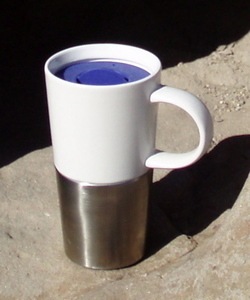
Use a Kleen Kanteen or a Pottery and Stainless Steel Travel Mug– I own both and LOVE them!!

Betraying the Planet
Posted: June 30, 2009 Filed under: Food and it's Impact on Our Health Leave a commentBy PAUL KRUGMAN
In the NYTimes today…
So the House passed the Waxman-Markey climate-change bill. In political terms, it was a remarkable achievement.
But 212 representatives voted no. A handful of these no votes came from representatives who considered the bill too weak, but most rejected the bill because they rejected the whole notion that we have to do something about greenhouse gases.
And as I watched the deniers make their arguments, I couldn’t help thinking that I was watching a form of treason — treason against the planet.
To fully appreciate the irresponsibility and immorality of climate-change denial, you need to know about the grim turn taken by the latest climate research.
The fact is that the planet is changing faster than even pessimists expected: ice caps are shrinking, arid zones spreading, at a terrifying rate. And according to a number of recent studies, catastrophe — a rise in temperature so large as to be almost unthinkable — can no longer be considered a mere possibility. It is, instead, the most likely outcome if we continue along our present course.
Thus researchers at M.I.T., who were previously predicting a temperature rise of a little more than 4 degrees by the end of this century, are now predicting a rise of more than 9 degrees. Why? Global greenhouse gas emissions are rising faster than expected; some mitigating factors, like absorption of carbon dioxide by the oceans, are turning out to be weaker than hoped; and there’s growing evidence that climate change is self-reinforcing — that, for example, rising temperatures will cause some arctic tundra to defrost, releasing even more carbon dioxide into the atmosphere.
Temperature increases on the scale predicted by the M.I.T. researchers and others would create huge disruptions in our lives and our economy. As a recent authoritative U.S. government report points out, by the end of this century New Hampshire may well have the climate of North Carolina today, Illinois may have the climate of East Texas, and across the country extreme, deadly heat waves — the kind that traditionally occur only once in a generation — may become annual or biannual events.
In other words, we’re facing a clear and present danger to our way of life, perhaps even to civilization itself. How can anyone justify failing to act?
Well, sometimes even the most authoritative analyses get things wrong. And if dissenting opinion-makers and politicians based their dissent on hard work and hard thinking — if they had carefully studied the issue, consulted with experts and concluded that the overwhelming scientific consensus was misguided — they could at least claim to be acting responsibly.
But if you watched the debate on Friday, you didn’t see people who’ve thought hard about a crucial issue, and are trying to do the right thing. What you saw, instead, were people who show no sign of being interested in the truth. They don’t like the political and policy implications of climate change, so they’ve decided not to believe in it — and they’ll grab any argument, no matter how disreputable, that feeds their denial.
Indeed, if there was a defining moment in Friday’s debate, it was the declaration by Representative Paul Broun of Georgia that climate change is nothing but a “hoax” that has been “perpetrated out of the scientific community.” I’d call this a crazy conspiracy theory, but doing so would actually be unfair to crazy conspiracy theorists. After all, to believe that global warming is a hoax you have to believe in a vast cabal consisting of thousands of scientists — a cabal so powerful that it has managed to create false records on everything from global temperatures to Arctic sea ice.
Yet Mr. Broun’s declaration was met with applause.
Given this contempt for hard science, I’m almost reluctant to mention the deniers’ dishonesty on matters economic. But in addition to rejecting climate science, the opponents of the climate bill made a point of misrepresenting the results of studies of the bill’s economic impact, which all suggest that the cost will be relatively low.
Still, is it fair to call climate denial a form of treason? Isn’t it politics as usual?
Yes, it is — and that’s why it’s unforgivable.
Do you remember the days when Bush administration officials claimed that terrorism posed an “existential threat” to America, a threat in whose face normal rules no longer applied? That was hyperbole — but the existential threat from climate change is all too real.
Yet the deniers are choosing, willfully, to ignore that threat, placing future generations of Americans in grave danger, simply because it’s in their political interest to pretend that there’s nothing to worry about. If that’s not betrayal, I don’t know what is.
I couldn’t agree more!!


 Meal Delivery Service by Millie Barnes