Corn Syrup’s Mercury Surprise
Posted: August 11, 2009 Filed under: Food and it's Impact on Our Health Leave a comment
Are grape jelly and chocolate milk bad for kids’ brains?
—By Melinda Wenner
If the specter of obesity and diabetes wasn’t enough to turn you off high- fructose corn syrup (HFCS), try this: New research suggests that the sweetener could be tainted with mercury, putting millions of children at risk for developmental problems.
In 2004, Renee Dufault, an environmental health researcher at the Food and Drug Administration (FDA), stumbled upon an obscure Environmental Protection Agency report on chemical plants’ mercury emissions. Some chemical companies, she learned, make lye by pumping salt through large vats of mercury. Since lye is a key ingredient in making HFCS (it’s used to separate corn starch from the kernel), Dufault wondered if mercury might be getting into the ubiquitous sweetener that makes up 1 out of every 10 calories Americans eat.
Dufault sent HFCS samples from three manufacturers that used lye to labs at the University of California-Davis and the National Institute of Standards and Technology. The labs found mercury in most of the samples. In September 2005, Dufault presented her findings to the FDA’s center for food safety. She was surprised by what happened next. "I was instructed not to do any more investigation," she recalls. FDA spokeswoman Stephanie Kwisnek says that the agency decided against further investigation because it wasn’t convinced "that there was any evidence of a risk."
At first, Dufault was reluctant to pursue the matter. But eventually, she became frustrated enough to try to publish the findings herself. She had her 20 original samples retested; mercury was found in nearly half of them. In January, Dufault and her coauthors—eight scientists from various universities and medical centers—published the findings in the peer-reviewed journal Environmental Health. Although they weren’t able to determine what type of mercury was present, they concluded that if it was organic, the most dangerous form, then based on average hfcs consumption, individuals could be ingesting as much as 200 micrograms of the neurotoxin per week—three times more than the amount the fda deems safe for children, pregnant women, women who plan to become pregnant, and nursing mothers.
But the FDA and the Corn Refiners Association, an industry trade group, claim there’s nothing to worry about. The group hired ChemRisk, the consulting firm whose scientists testified on behalf of a polluting utility in the lawsuit portrayed in Erin Brockovich, to analyze Dufault’s report. ChemRisk criticized Dufault for not specifying the type of mercury her tests had found. This, the consultants said, was key, since mercury poses different risks depending on its chemical form. In its unadulterated elemental state, mercury is relatively safe to ingest—the body absorbs only about a tenth of a percent of it. Inorganic forms of mercury, such as cinnabar, are more easily absorbed and therefore more dangerous than elemental. Organic forms, like methylmercury, which originate from fossil-fuel emissions and build up in the fatty tissue of tuna and other kinds of fish, are the worst; readily absorbed, they can cumulatively damage the brain and nervous system.
Though it provides no scientific evidence to back up this assertion, the FDA says that the mercury in Dufault’s HFCS samples is elemental. But the lab that analyzed the samples believes there’s a good chance the mercury is organic. The analysts "said in so many words, ‘It doesn’t look like inorganic,’" says Peter Green, Dufault’s UC-Davis colleague who coordinated with the lab. "They would even say it’s more likely not the regular elemental mercury."
The corn-syrup industry claims that no HFCS manufacturers currently use mercury-grade lye, though it concedes some used to. (According to the EPA, four plants still use the technology.) It says that its own tests found no traces of mercury in HFCS samples from US manufacturers, including a number of samples from some of the same sources Dufault tested. But hundreds of foreign plants still use mercury to make lye—which may then be used to make foods for export. Already, 11 percent of the sweeteners and candy on the US market are imported.
At around the same time that she published her study, Dufault also learned of a report issued by the Minnesota-based Institute for Agriculture and Trade Policy, which found low levels of mercury in 16 common food products, including certain brands of kid-favored foods, like grape jelly and chocolate milk. Researchers haven’t proven that the mercury in the foods came from HFCS, but internist Jane Hightower, who coauthored the Environmental Health study, points out that it ultimately doesn’t matter how it got there: The FDA has allegedly known about the mercury-contaminated hfcs for nearly four years and "should already have an answer for us based on science and not speculation," she says. The agency says it has no plans for further testing unless additional evidence of harm emerges in outside scientific literature. But the issue has been getting some attention in Congress—a bill proposed in April would require plants that once employed the technology to report how much mercury they used.
Dufault retired from the FDA in January 2008, after the agency began taking her off her field projects. "All of a sudden, they wanted me to sit in the office," she says. She moved to Hawaii, but she hasn’t exactly been lounging on the beach. She recently finished a paper, currently in the peer-review process, that explores why children and fetuses are more sensitive to mercury than adults. She also teaches second- and third-graders with learning disabilities. "I worked for an organization that allowed stuff to go on that probably impacted these children," she says. "I look at this as doing penance."
TORTILLA WITH FLANK STEAK WITH CHIPOTLE HONEY SAUCE
Posted: August 10, 2009 Filed under: In The Kitchen with Millie- How To's Leave a comment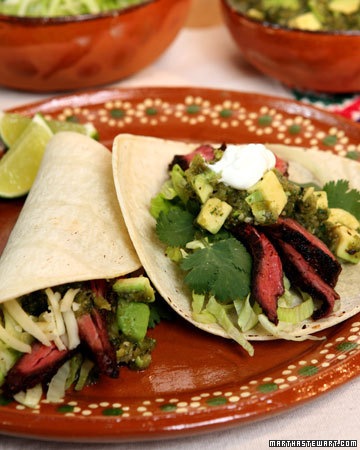
Flank Steak
2 Chipotle Peppers in Adobo
2 garlic cloves
3 T. Cilantro
1 T. Coconut Oil
1 1/2 T. Honey
3 T. Lime juice
2 T. Rice Vinegar
2 T. Dijon Mustard
1 t. cumin
1 pound flank steak
salt and fresh ground pepper to taste
3 cups Masa Harina
1/3 chipotle pepper
1 medium garlic clove
2 T. cilantro
For the sauce, mince chipotle, garlic and cilantro in a food processor. Add honey, oil, vinegar, mustard, lime juice, cumin, including 1 tsp salt and 1/2 tsp pepper; pulse to combine. Set aside.
For the steak, mix chipotle, garlic, cilantro, and lime juice in a large nonreactive baking pan to make a marinade. Place flank steak in the marinade; turn to coat. Cover with plastic wrap and refrigerate overnight.
Heat the grill. Sprinkle flank steak with 1/2 tsp pepper. Grill, turning once, until browned; about 8 minutes for medium rare. Transfer steak to a carving board and let stand for 5 minutes.
Holding the knife on a slight angle, slice the flank steak across the grain into 1/4-inch-thick slices. Transfer a portion of the steak slices to each warm dinner plate. Drizzle a portion of the Chipotle-Honey Sauce over the grilled flank steak slices and serve immediately. Serve the slices of flank steak on a fresh off the stove tortilla with slices of avocado and red onion.
To make fresh Corn Tortillas;
equal parts water and Masa Harina less a bout 2 T. water. I figure a cup about 1 serving.
1) Mix masa flour with hot water. Let stand about 10 minutes.Heat iron skillet to medium high. Us 2 pieces of wax paper or parchment paper that you have coated lightly with coconut oil or butter, place a slightly larger than golf ball size ball of dough between wax papers. using a pan that has a flat bottom, gently press tortilla flat. Peel off into your hand and place in skillet.
2) cook until edges begin to turn up, flip over and cook on other side. the first side should take about 5 minutes, the other side; about 4 minutes. Place on oven racks in COLD oven,oven door ajar. When ready to reheat, turn oven on 350 degrees and warm for a short length of time. If you leave them in too long, they’ll get very hard.
Beetroot Juice Boosts Stamina, New Study Shows
Posted: August 8, 2009 Filed under: Food and it's Impact on Our Health Leave a commentScienceDaily (Aug. 7, 2009) — Drinking beetroot juice boosts your stamina and could help you exercise for up to 16% longer. A University of Exeter led-study shows for the first time how the nitrate contained in beetroot juice leads to a reduction in oxygen uptake, making exercise less tiring.
 The study reveals that drinking beetroot juice reduces oxygen uptake to an extent that cannot be achieved by any other known means, including training.
The research team believes that the findings could be of great interest to endurance athletes. They could also be relevant to elderly people or those with cardiovascular, respiratory or metabolic diseases.
The research team conducted their study with eight men aged between 19 and 38. They were given 500ml per day of organic beetroot juice for six consecutive days before completing a series of tests, involving cycling on an exercise bike. On another occasion, they were given a placebo of blackcurrant cordial for six consecutive days before completing the same cycling tests.
After drinking beetroot juice the group was able to cycle for an average of 11.25 minutes, which is 92 seconds longer than when they were given the placebo. This would translate into an approximate 2% reduction in the time taken to cover a set distance. The group that had consumed the beetroot juice also had lower resting blood pressure.
The researchers are not yet sure of the exact mechanism that causes the nitrate in the beetroot juice to boost stamina. However, they suspect it could be a result of the nitrate turning into nitric oxide in the body, reducing the oxygen cost of exercise.
The research was carried out by the University of Exeter and Peninsula Medical School and published in the Journal of Applied Physiology. The research team now hopes to conduct further studies to try to understand in more detail the effects of nitrate-rich foods on exercise physiology.
Corresponding author of the study, Professor Andy Jones of the University of Exeter’s School of Sport and Health Sciences, said: "Our study is the first to show that nitrate-rich food can increase exercise endurance. We were amazed by the effects of beetroot juice on oxygen uptake because these effects cannot be achieved by any other known means, including training. I am sure professional and amateur athletes will be interested in the results of this research. I am also keen to explore the relevance of the findings to those people who suffer from poor fitness and may be able to use dietary supplements to help them go about their daily lives."
This study follows research by Barts and the London School of Medicine and the Peninsula Medical School (published in February 2008 in the American Heart Association journal Hypertension), which found that beetroot juice reduces blood pressure.
Making Butter in the Food Processor
Posted: August 7, 2009 Filed under: In The Kitchen with Millie- How To's Leave a commentMaking butter is easy with a food processor, and it produces a light fresh taste.
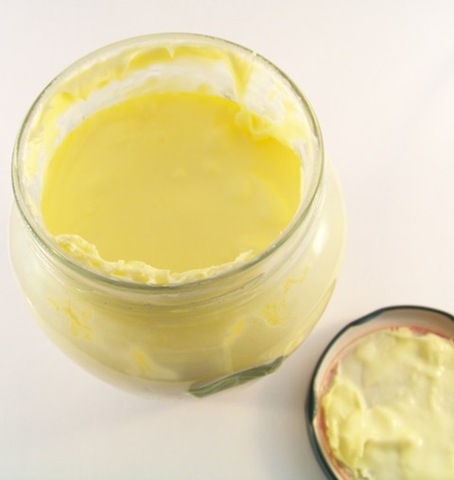

Stages of buttermaking in the food processor, and bowl.
You will need:
1-2 cups heavy whipping cream, or double cream (1/3 liter)
(preferably without carrageenan or other stabilizers)
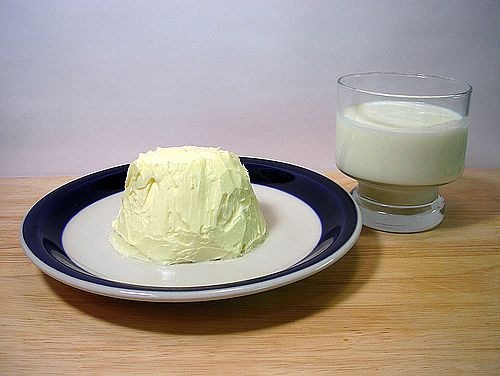
Fit food processor with plastic blade, whisk, or normal chopping blade. Fill food processor about 1/4 – 1/2 full. Blend. The cream will go through the following stages: Sloshy, frothy, soft whipped cream, firm whipped cream, coarse whipped cream. Then, suddenly, the cream will seize, its smooth shape will collapse, and the whirring will change to sloshing. The butter is now fine grained bits of butter in buttermilk, and a few seconds later, a glob of yellowish butter will separate from milky buttermilk. Drain the buttermilk.
You can eat the butter now — it has a light taste — though it will store better if you wash and work it. Add 1/2 cup (100 mL) of ice-cold water, and blend further. Discard wash water and repeat until the wash water is clear. Now, work butter to remove suspended water. Either place damp butter into a cool bowl and knead with a potato masher or two forks; or put in large covered jar, and shake or tumble. Continue working, pouring out the water occasionally, until most of the water is removed. The butter is now ready. Put butter in a butter crock, ramekins, or roll in waxy freezer paper.
Yield: About half as much butter as the amount of cream you started with.
 Various options:
- Salt to taste before working, a few pinches.
- Have the cream around 60°F/15°C before churning. (55°F/13°C for goat milk)
- Obtain the freshest cream you can. So-called "vat pasteurized cream" tastes better than ultra heat treated (UHT) or HTST pasteurized. Try calling your state Department of Agriculture, and asking the Milk Control office who sells vat pasteurized cream.
- Shake in a jar instead of a food processor. Shake about once a second. Add a marble to speed things up. This is fun with kids, but expect it to take between 5-30 minutes, depending on the shaking.
- Culture the cream before churning. Add a few tablespoons (50 mL) store-bought cultured yogurt, buttermilk, sour cream, clabbered cream, or creme fraiche, and let sit about 12 hours at warm room temperature (75°F/24°C is ideal) to thicken and ferment before churning. It should taste delicious, slightly sour, with no aftertaste. If it is bubbly, or smells yeasty or gassy, discard.
- Use some butter making tools, such as a churn, paddle for working, or molds for forming the finished butter.
Grass Fed Beef Stock – The Perfect Solution For a Chemotherapy Diet
Posted: August 7, 2009 Filed under: Food and it's Impact on Our Health 2 Comments
By Cathy McNeil
Grass fed beef stock can be a Godsend for cancer patients undergoing chemotherapy. Two of the main problems faced by chemo patients are painful mouth sores which inhibit chewing and swallowing, as well as low hematocrit scores (blood iron levels), possibly resulting in malnourishment and anemia.
One woman I know of said that while undergoing chemo, all she could eat was applesauce. A recovering cancer patient undergoing chemotherapy needs far more nutritional support than just applesauce. He or she needs sufficient quantities of protein and iron.
Grass fed beef is a perfect source of protein and iron, as almost all producers raise it without the use of added growth hormones, antibiotics, or pesticides; all things that a recovering cancer patient wants to be sure to avoid.
However, as good for a recovering cancer patient as grass fed beef is, it is of no value if the patient cannot chew or swallow it. The mouth sores that often come as a side effect of chemo can make it almost impossible to chew, much less swallow, steak, roast beef, or hamburger. That is where grass fed beef stock is the perfect solution!
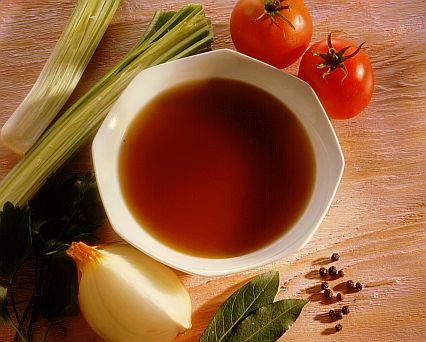
Full of health supporting nutrients such as protein, iron, Omega 3, CLA, Vitamin E, Beta Carotene, B vitamins, and minerals, grass fed beef stock requires no chewing and is easy to swallow, thus making it so much easier to ingest. Not only that, grass fed beef stock is delicious and satisfying, even for chemo patients who have experienced changes in their taste buds and have found most food to be less desirable.
The other great thing about grass fed beef stock is that it is so easy and affordable to make. Soup bones are the most inexpensive cut of beef, and you can brew up a large pot of stock almost effortlessly. See the recipe below:
Quick and easy grass fed beef stock
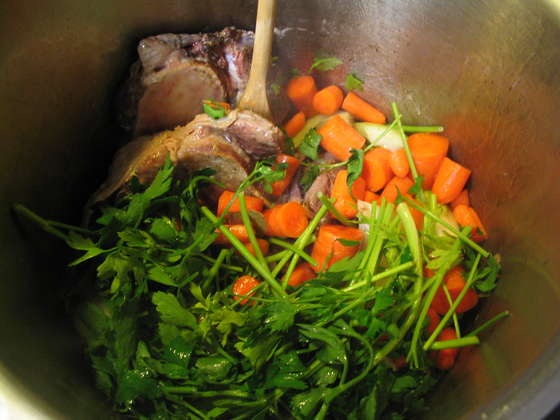
- Roast 3 pounds of grass fed beef soup bones in 350 degree F oven for an hour
- Start large stockpot of water boiling
- Add roasted soup bones, with meat, fat, and drippings, to boiling water
- Add a whole, peeled onion to boiling water
- Add six whole celery stocks to boiling water
- Boil at hard boil for about 15 minutes
- Turn to simmer, and let simmer for an hour or two
- Strain or remove bones, meat, onion, and celery
- Add a pinch of ground celery seed, thyme, and chervil to taste
- Strip the meat off of the bones and add it to the individual soup bowls for those who are not undergoing chemo
A caution about salt
It is best not to add salt to the broth, as it can aggravate and irritate the mouth sores of chemo patients. The rest of the family can add clean and pure sea salt to their own individual bowl rather than to the stockpot. Once the sores start to heal, the chemo patient can begin to add salt as tolerated. Yes, the stock is a bit bland without salt, but the additional herbs, especially the celery seed, can make the broth quite flavorful without it.
As the patient begins to recover
As the mouth sores begin to heal, you can introduce more solid food to the stock. Start by blending the meat, along with sautéed carrots, celery, and other vegetables and adding it all to the stock. After a while you will not need to blend it up, and the patient can begin to enjoy delicious, full and hearty soups made from a base of grass fed beef stock.
Health benefits for the whole family
Not only is grass fed beef stock great for chemo patients, but is chock full of other wonderful properties that are beneficial to the whole family. Studies have shown that bone broth can help improve joint functioning and relieve digestive problems. It makes intuitive sense that the nutrients leached from bones and joints into a beef stock would be good for our own bones and joints.
Grass fed beef stock is a delicious, hearty, healthy, and nutritious solution to the dietary needs of the recovering cancer patient undergoing chemotherapy, as well as the whole family.
If you or a loved one has cancer, and are undergoing chemotherapy, our hearts go out to you! We appreciate the trials and tribulations that you are going through, and for that reason are offering a special on grass fed beef soup bones so you can get the nutritional support you need.
New York Times says Sports Drinks ARE good for kids!!
Posted: August 6, 2009 Filed under: Food and it's Impact on Our Health Leave a comment They say yes, then they actually give a lot of reasons why sports drinks are horrible; No one suggests that, outside of fields or courts, sports drinks are wise. “These are not health foods,” Clark says. “They’re fancy sugar water. You see kids having them with their pizza at lunch. That’s not a good idea.” Sports drinks have been linked with obesity and tooth decay. They’re also expensive.”
The article also says that, “What they found was that the young athletes, aged 9-16, didn’t drink enough. Most of them, in fact, had arrived at the camps dehydrated to one degree or another, and proceeded to dry themselves out far more over the course of the four-day camps”.
The point they make is that kids don’t like water, aren’t used to drinking it…so because they will actually drink it they should have it. That’s crazy. It the same mentality I hear from moms with kids with allergies, “Well, they won’t eat veggies, they only like mac and cheese”.
I say that unless they kids have jobs and cars, the parents are supposed to be in control of what they eat! By setting examples, not buying soft drinks and sports drinks, by stopping eating so many carbs!
What they are actually saying here is that kids are not used to drinking water. The answer isn’t to give them chemicals in water (sports drinks)! No one, including kids has any room each day for empty calories and carbs. Americans are addicted to carbs, hence our obesity rates.
Fruit juices are healthier than sodas and sports drinks but are still all carbs.
The healthiest diet is one based on organic grass-fed or free range meats, butter, coconut oil, eggs, vegetables and very small servings of fruit. Fruit juice is just another way to main-line sugar.
Carbs are killing us, get back to a Traditional Human Diet. Teach your children to drink water; by doing it yourself by example. And never give your kids soft drinks, or sports drinks. I raised 5 children on NO soft drinks, EVER. They are all grown and not one of them drinks soft drinks.
Read the article here; Phys Ed: Are Sports Drinks Actually Good for Kids?
Bayer One a Day Claims are False
Posted: August 6, 2009 Filed under: Food and it's Impact on Our Health Leave a comment
If you are a man over 50, you’ve likely seen ads for Bayer One A Day men’s multivitamins that claimed the mineral selenium helps reduce risk of prostate cancer or otherwise promotes "prostate health."
There’s a big problem however: It’s not true.
In fact, for most men, taking too much selenium may actually promote more aggressive forms of prostate cancer. And, previous studies warned against supplementing with selenium since men taking selenium developed more cases of diabetes than men in control groups who did not.
The Center for Science in the Public Interest has threatened Bayer with a lawsuit over those claims, and just last month, we asked the Food and Drug Administration to seize existing stockpiles of One A Day Men’s Health Formula and One A Day Men’s 50+ Advantage.
As CSPI senior nutritionist David Schardt said at the time, "Bayer is exploiting men’s fear of prostate cancer just to sell more pills." And, a group of some of the most prominent prostate cancer researchers in the country wrote that "Bayer Healthcare is doing a disservice to men by misleading them about a protective role for selenium in prostate cancer."
If you purchased either of these One A Day Men’s Multis on the belief the product would help reduce your risk of prostate cancer or promote better prostate health, we would like to hear from you. Please email us at cwalsh@cspinet.org so we can learn about your experience with One A Day men’s multis. Together, we may be able to help other men from being ripped off by Bayer’s misleading and illegal claims.
Garden Update- It’s Kickin’ Butt!
Posted: August 5, 2009 Filed under: Gardening Leave a commentI was heading to Publix to shop for a client when I walked out the door and saw the sky. Then noticed the flowers and veggies in that light when it gets real dark right before a storm..you know that deep dark sky with the green leaves looking dark against?
I grabbed the camera, here’s a garden update. As you can see everything is busting loose! So far I have felt like the guy who wrote about spending all his money on growing and months later realized he had a tomatoes that had cost him roughly $65 apiece. Except that I have collected, asked for, bartered for most of what it took me to do. And did all the labor myself with any power tools until I finally bought a drill a few months ago.
 Purple Bell Peppers
 These are outside my front door, on the circular driveway. They are sub-irrigated containers made from 5 gallon buckets I got from a nearby restaurant,
 The tomatoes are hanging by my front door.
 These will be purple tomatoes. You can see the garden in the backyard. These tomatoes grew so tall I finally just hung them to the clothesline!
 Tomatoes in the foreground, and in the back, The blue barrels have sweet potatoes growing in them;
 Swiss chard, watermelon, sweet potatoes, basil,
The Truth about Caffeine
Posted: August 4, 2009 Filed under: Food and it's Impact on Our Health 1 Comment9 Caffeine Myths Explained
 By Susan Kreimer, Special to LifeScript
Published April 17, 2009
Are you jonesing for coffee first thing in the a.m.? Need a Coke in the afternoon? Caffeine has a reputation of being bad for you. Is it a bum rap? Read on for the facts behind 9 common caffeine myths. Plus, test your caffeine IQ with our quiz…
Myth #1: Caffeine is addictive.
False: Although caffeine is considered a mild stimulant, it’s not addictive, according to the American Journal of Drug and Alcohol Abuse. Unlike classic stimulants – think cocaine and amphetamines – there’s rarely a strong compulsion to use caffeine.
But caffeine can be habit-forming. That’s why you may feel mild withdrawal symptoms if you skip your morning cup of joe or afternoon pick-me-up.
Typical symptoms include headache, restlessness and irritability. Should you decide to give up caffeine, don’t go cold turkey; instead, slowly decrease your caffeine consumption over a week.
Really though, why bother? Studies show moderate intake of caffeine actually enhances your mood and improves alertness. For adults, the American Dietetic Association suggests no more than 200 mg to 300 mg a day, which equals two to three cups of coffee.
Myth #2: Caffeine causes dehydration.
True: Caffeine is a mild diuretic, but “it’s not very pronounced,” says Franz H. Messerli, M.D., a professor of clinical medicine at Columbia University in New York City.
Still, diuretics make you have to pee. The more often you go, the more fluids you lose. And you’ll feel more dehydrated because you’re losing more fluids than you’re taking in.
“I wouldn’t drink a double espresso before a run, but would have no problem drinking a 12-ounce Coke,” Messerli explains. That’s because all fluids, even those with caffeine, contribute to the body’s daily fluid total.
Myth #3: Caffeine can make heart disease worse.
False: Doctors often tell cardiac patients, especially those with high blood pressure, to avoid caffeine. But there’s little proof that it raises the risk of heart attack, sudden death or abnormal heart rhythms.
In fact, coffee drinking may reduce risk of heart disease! A study by Autonomous University of Madrid of more than 126,000 people found that women who drank two to three cups of caffeinated coffee per day had a 25% lower risk of heart disease. Men didn’t show any higher or lower risk.
Drinking tea – black and green – may also have heart-healthy benefits.
"Tea in general seems to have cardiovascular benefits,” says Messerli, also a cardiologist and director of hypertension at St. Luke’s-Roosevelt Hospital Center in Manhattan. The “benefits of tea are probably due to its antioxidant properties,” he says.
But not all teas are created equal. Herbal ones such as chamomile, rosebud and elderberry don’t have the same antioxidants.
Plus, “when you add cream or milk, you may abolish the benefits,” Messerli says, “because it seems that the milk or the cream prevents the antioxidant substance from acting.”
Myth #4: Caffeine heightens hypertension risk.
True and false: Caffeine does cause a small, short-term boost in blood pressure, but it’s nothing serious, Messerli says, and has no lingering health effect.
In fact, a Harvard University Medical School study of 155,000 female nurses found no link between a decade of coffee drinking – with or without caffeine – and an increased risk of hypertension. Caffeinated colas did increase the risk, but that could be due to the sugar and other ingredients in sodas, not the caffeine. Tea drinking received mixed results.
As for men, a 33-year-long Johns Hopkins University study of more than 1,000 participants revealed that coffee played little role in hypertension risk.
Myth #5: Caffeine causes hyperactivity in children.
False: A kid on a Coke rush will practically bounce off walls. But studies show that a moderate amount of caffeine (40 mg to 200 mg) doesn’t make them hyperactive. (For reference, that 12-ounce can of Coke has 35 mg.)
Like adults, kids will get an energy boost from caffeine. But whether it’s soda, green tea or coffee, “on average, one serving a day wouldn’t be considered harmful overall for children,” says Suzanne Sheres, a pediatric clinical dietitian at Nemours Children’s Clinic in Orlando.
A bigger concern is the empty calories in soda and high-energy drinks favored by teens, she says.
In fact, small amounts of caffeine may help children diagnosed with attention-deficit hyperactivity disorder (ADHD). It can sharpen their focus and stimulate them to answer questions, Sheres says. So far, long-term studies haven’t shown whether it’s more beneficial to use caffeine than medication.
Myth #6: Caffeine causes bone loss.
True: Caffeine causes a slight, negligible increase in calcium excretion, according to a study by the Creighton University Osteoporosis Research Center in Omaha, Neb. And it would require about three cups of coffee for this to occur. Any calcium loss can be offset simply by consuming more calcium – a few tablespoons of milk, for example.
Even youngsters who drink one or two caffeinated beverages a day aren’t harming their bones, Sheres says, unless they consume them in place of milk.
Myth #7: Caffeine is linked to fibrocystic breast disease.
False: Caffeine intake isn’t related to the benign condition of lumpy breasts, reports the American Medical Association.
“There is no evidence to support the idea that caffeine causes fibrocystic changes,” says Katherine B. Lee, M.D., a staff physician in Cleveland Clinic’s Breast Center.
“It seems to contribute to breast pain, but does not cause breast cancer," Lee says. That’s because breast pain is hormonal, and caffeine causes blood vessels to dilate, adding to normal monthly breast tenderness.
"If a woman experiences breast pain, I inquire about caffeine and usually advise that she cut down on her intake,” she says.
Myth #8: Caffeine is unhealthy for pregnant women.
True: If you’re trying to conceive, you don’t have to give up the lattes. Research suggests that caffeine has little, if any, effect on the time it takes to conceive, and it’s not a risk factor for infertility.
But if you’re pregnant, you’ll have to watch how much you drink. Once a woman is carrying, the American College of Obstetricians and Gynecologists advises no more than one or two cups of coffee a day.
The National Institutes of Health recommends consuming no more than 300 mg a day during pregnancy, about three to four cups of regular coffee.
“The bottom line is, if the intake for a pregnant woman is less than 300 mg of caffeine a day, there should be no harm inflicted upon the baby,” says Linda Burke-Galloway, M.D., LifeScript Pregnancy Expert and a board-certified ob/gyn with the Florida Department of Health.
But too much caffeine may cause an irregular fetal heartbeat, which sometimes occurs in “women who eat excessive amounts of chocolate,” Burke-Galloway says.
Myth #9: Caffeine comes with calories galore.
False: On their own, coffee and tea have no calories or fat. It’s the flavored syrups, whole milk and cream that turn innocent caffeinated drinks into calorie bombs. Those tasty blended drinks can contain 200 to 600 calories.
And the creamers found in many offices? Two tablespoons can add 80 calories and four grams of fat. That equals a pat of butter.
To cut calories, choose the smallest size serving, either 8 or 12 ounces. Order your beverage with fat-free or skim milk and skip the syrup, whipped cream and sprinkles!
Drink
Caffeine
8-oz. brewed coffee
133 mg
8-oz. decaf coffee
5 mg
2-oz. Starbucks double espresso
150 mg
12-oz. Diet Coke
47 mg
8.3-oz. Red Bull
80 mg
8-oz. hot cocoa
9 mg
12-oz. Jolt Cola
72 mg
8-oz. black tea
53 mg
Source: Center for Science in the Public Interest
At Wal-Mart, Labeling to Reflect Green Intent
Posted: August 2, 2009 Filed under: Food and it's Impact on Our Health Leave a commentJuly 16, 2009
In the NYTimes

Shoppers expect the tags on Wal-Mart items to have rock-bottom prices. In the future they may also have information about the product’s carbon footprint, the gallons of water used to create it, and the air pollution left in its wake.
As the world’s largest retailer, Wal-Mart Stores is on a mission to determine the social and environmental impact of every item it puts on its shelves. And it has recruited scholars, suppliers, and environmental groups to help it create an electronic indexing system to do that.
The idea is to create a universal rating system that scores products based on how environmentally and socially sustainable they are over the course of their lives. Consider it the green equivalent to nutrition labels.
Rather than a retailer or a product supplier’s focusing on only a few sustainability goals — lower emissions or water conservation or waste reduction — the index would help them take a broader view of sustainability by scrutinizing and rating all sorts of environmental and social implications.
Did this T-shirt come from a cotton crop that was sprayed with pesticide? Was excessive packaging used to ship these diapers?
Wal-Mart’s goal is to have other retailers eventually adopt the indexing system, which will be created over the next five years.
“We have to change how we make and sell products,” Michael T. Duke, Wal-Mart’s president and chief executive, plans to tell about 1,500 of the company’s suppliers and employees on Thursday at a “sustainability meeting,” according to a copy of his prepared remarks. “We have to make consumption itself smarter and sustainable.”
The only thing less likely than a Wal-Mart meeting that sounds as if it were dreamed up by liberal-arts environmentalists may be that a number of scholars and environmental groups say that Wal-Mart is the only entity capable of making “sustainable consumption” a retailing reality.
“Nobody else could pull this off,” said Michelle Harvey at Environmental Defense Fund, one of the groups involved in the creation of the index.
The question, of course, is whether even Wal-Mart can make it happen.
“I think it’s going to be a lot of work for a lot of people,” said Jon Johnson, a professor in the Sam M. Walton College of Business at the University of Arkansas, whom the company asked to help create the index, along with Jay Golden at Arizona State University. “But obviously we’re optimistic about the prospects.”
Joe Cavaliere, a senior vice president for customer development at Unilever, a big Wal-Mart supplier, called the indexing idea “a great move forward for the industry.”
Wal-Mart’s sheer size has long enabled it to create ripple effects throughout corporate America whenever it adopts new ways of doing business.
For instance, Len Sauers, the vice president for global sustainability at Procter & Gamble, recalls that a few years ago, when his company and a few others began selling concentrated laundry detergent that uses 50 percent less water — and allows for a smaller container using less plastic — that version was slow to catch on.
In 2007, Wal-Mart decided it would sell only the concentrated detergents.
“Because of Wal-Mart’s leadership in that area, they were able to set a standard for the entire industry,” Mr. Sauers said. “That opened the door to allow it to progress very, very quickly.”
Procter & Gamble said sharing the new sustainability index across the industry was important.
“The last thing a supplier really wants is when you’re doing a separate index for every retailer,” said Tim Marrin, associate director of external relations for Procter & Gamble. “Wal-Mart has invited the Targets, the Costcos, the Tescos of the world,” he said, “to come up with a solution so that there are not 5, 10, 15, 20 different standards that retailers are implementing in their markets.”
But creating a single set of measurements for the entire retailing industry will be complicated. For one thing, some suppliers have concerns about their proprietary information.
And environmentally sustainable production and distribution methods will not necessarily be cheap.
“The first question is always, ‘It’s going to cost more,’ ” John E. Fleming, Wal-Mart’s chief merchandising officer, said in an interview this week. “But you know, I think we’ve demonstrated time and time again, if you reduce packaging, if you reduce energy, the costs go down.”
Wal-Mart plans to begin by asking its more than 100,000 suppliers around the world to answer 15 simple questions about the sustainable practices of their companies. Questions include “Have you set publicly available greenhouse gas reduction targets? If yes, what are those targets?”
The largest United States suppliers will be asked to respond by October. Deadlines outside the United States have not been set.
Wal-Mart said suppliers that choose not to participate would not be penalized, but warned, “then they’re probably less relevant to us.”
Whatever grumbling the index might create, Wal-Mart executives said that more and more consumers, especially those born from 1980 to 2000, will be making purchasing decisions based not only on price but also on which products do the least harm to the environment and the people, often in poorer countries, who produce them.
“These younger consumers, they care deeply about this regardless of what happens in the economy,” Mr. Fleming said. “When I go around to colleges and universities to recruit, sustainability is tops on their list. So I think this will help us build a better business model.”
If successful, the index could compel manufacturers and suppliers to create more sustainable products.
“If we could take a snapshot of products today in the store and then fast forward 10 years from now,” said Matt Kistler, Wal-Mart’s senior vice president for sustainability, we would see “dramatic changes.”


 Meal Delivery Service by Millie Barnes