Why Vitamin A and D Supplements May Not Be as Useful or Harmless as You Thought
Posted: August 21, 2009 Filed under: Food and it's Impact on Our Health, Non-Toxic Choices Leave a comment A landmark paper from the Vitamin D Council asserts that a form of vitamin A, retinoic acid, can block the activity of vitamin D by weakly activating the vitamin D response element on genes. Since vitamin D levels are crucial for human health, that means it is essential to have the proper ratio of vitamin D to vitamin A in your body.
This means that vitamin A supplementation is potentially dangerous. Vitamin A production is tightly controlled in your body, the source (substrate) being carotenoids from vegetables in your intestine. Your body uses these carotenoid substrates to make exactly the right amount of retinol. But when you take vitamin A as retinol directly, such as in cod liver oil, you intervene in this closed system and bypass the controls.
The goal is to provide all the vitamin A and vitamin D substrate your body would have obtained in a natural state, so your body can regulate both systems naturally. This is best done by eating grass fed meat, raw butter from grass fed animals, free range chickens, meat stocks, colorful vegetables and by exposing your skin to sun every day. And throw out the sunscreen- it’s toxic!
Cast Iron Cookware- Or, How to Get Rid of that Toxic Non-stick Stuff you’ve Had Forever.
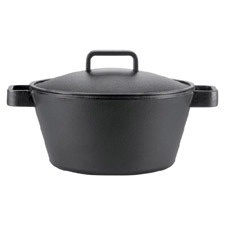
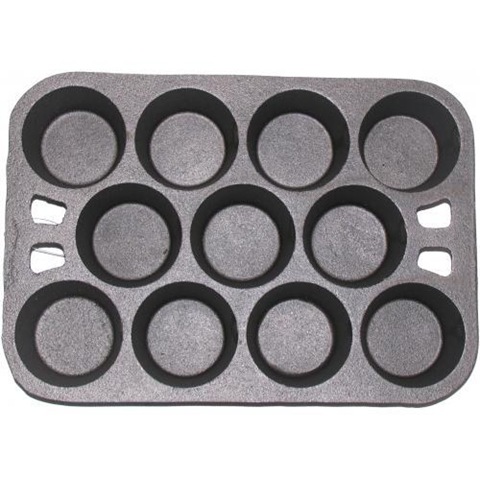
Posted: August 21, 2009 Filed under: In The Kitchen with Millie- How To's 11 Comments A heavy, but essential, addition to the kitchen, cast-iron cookware is dependable and full of history.
The other day someone asked me how I cooked eggs or hash browns without a non-stick skillet. I told them I used my 100 year old cast-iron skillets, wonderfully non-stick because I keep them seasoned correctly, never, ever use soap in them…eggs and hash brown slide right out. I have a 6 inch skillet, 2 12 inch skillets, a 12 inch round griddle with a handle, a 30 year old 12 inch Dutch oven with a lid and an antique cast iron waffle maker with a iron ring to use on the stove top.
They all perform beautifully. There is no reason to pay more for a pre-seasoned pan, or pans such as La Crueset with enamel that cost a small fortune. These pan are non-stick when seasoned, and kept that way.
Besides being an ideal heat conductor, cast iron heats evenly and consistently, it is inexpensive and will last a lifetime (actually several lifetimes) with proper care, and it is an old-fashioned way to cook non-stick. When well seasoned, a cast-iron pan will be stick resistant and require no additional oil.
The benefits of cast-iron pans are terrific: Foods glide out of it as from no pan made with Teflon; it goes from stove to oven; no special utensils are needed to cook in it and cleanup is a cinch. It’s time people realize the culinary wonder that a cast-iron pan can be!
As a chef, I consider cast-iron pans to be precision cooking tools, as these dependable pans enable precise control of cooking temperatures. Their heat retention qualities allow for even cooking temperature without hot spots. Cast-iron pans can be used on top of the stove or to bake in the oven. All our grandmothers had cast iron skillets and stove-top griddles. In fact, your grandmother swore by it and the pioneers depended on it.
If you don’t own a cast-iron skillet, it’s well worth the time and money to invest in one. You can find them for sale on the internet, at cook stores everywhere, thrift stores, flea markets, or you can scour the tag and yard sales for one that might look as if it has seen better days. If the pan is rusty or encrusted with grease, buy it anyway. Don’t worry! I’ll tell you how to get that new or old one into shape so you can enjoy it for a lifetime of non-stick cooking. You’ll be able to pass the pan on to your own children and grandchildren.
To season a new pan, or re-season one you have been abusing;
All new (not old pots) cast-iron pots and skillets have a protective coating on them, which must be removed. American companies use a special food-safe wax; imports are covered with a water-soluble shellac. In either case, scrub the item with a stainless steel scouring pads (steel wool), using soap and the hottest tap water you can stand.
If the pan was not seasoned properly or a portion of the seasoning wore off and food sticks to the surface or there is rust, then it should be properly cleaned and re-seasoned. Seasoning a cast iron pan is a natural way of creating non-stick cookware. And, like you cook and clean the modern non-stick cookware with special care to avoid scratching the surface, your cast iron cookware wants some special attention too.
You season a cast iron pan by rubbing it with a relatively thin coat of neutral oil (I stress a light coat of oil).
NOTE: NEVER use vegetable oils (canola, sunflower, etc.), or shortening (like Crisco shortening) to season your pan. These oils get very sticky when heated (the same as they do in your arteries!!) Use coconut oil or lard for seasoning your cast iron pans. You can also use butter.
Place the cast iron pan, upside down, in the oven, with a sheet of aluminum foil on the bottom to catch any drips. Heat the pan for 2 hours in a 250 degree oven. Once done, let the pan cool to room temperature. Repeating this process several times is recommended as it will help create a stronger "seasoning" bond.
The oil fills the cavities and becomes entrenched in them, as well as rounding off the peaks. By seasoning a new pan, the cooking surface develops a nonstick quality because the formerly jagged and pitted surface becomes smooth. Also, because the pores are permeated with oil, water cannot seep in and create rust that would give food an off-flavor.
Your ironware will be slightly discolored at this stage, but a couple of frying jobs will help complete the cure, and turn the iron into the rich, black color that is the sign of a well-seasoned, well-used skillet or pot.
Never put cold liquid into a very hot cast iron pan or oven. They will crack on the spot!
Be careful when cooking with your cast-iron pots on an electric range, because the burners create hot spots that can warp cast iron or even cause it to crack. Be sure to preheat the iron very slowly when using an electric range and keep the settings to medium or even medium-low.
Important:
Unless you use your cast-iron pans daily, they should be washed briefly with warm (not hot) water and a green scrubbie, then rinsed and thoroughly dried in order to rid them of excess surface oil. If you do not do this, the surplus oil will become rancid within a couple of days. After you clean the skillet (and this is easiest if you clean it while warm), rub a small amount of coconut oil over the surface.
Remember – Every time you cook in your cast-iron pan, you are actually seasoning it again by filling in the microscopic pores and valleys that are part of the cast-iron surface. The more you cook, the smoother the surface becomes!
Cast iron is 50 percent pig iron and 50 percent steel. It’s cooking properties have been championed and cherished for generations.
I use only cast iron or triple bottom stainless steel to cook. Cast iron for frying or scrambling eggs, frying bacon or steaks, sautéing onions or other veggies. Never cook acidic food such as tomatoes in cast iron, you will remove the seasoning.
I use my cast iron Dutch oven for sautéing roasts or other cuts of meat that I need to brown first, then finish in the oven. My favorite is a Provencal Chicken that I make a little bit of dough to seal the lid to the pot. It seals it completely and when the seal is broken the steam coming out with the smell of chicken, herbs and garlic is amazing!
The technology for making cast-iron cookware has come a long way in the last 100 years, but each piece is still cast in sand moulds. Yes, sand. This method goes back to the Chinese. At Lodge, the biggest cast iron company in the United States, the iron/steel mixture is melted with electro-magnetic heat to 2,500°F. The pouring of the molten metal into the sand moulds has been automated. It’s this automation that has made Lodge the industry leader–and survivor. They were also the first, and only, cast-iron company to offer a pre-seasoned pan. This means the pan is ready to go when you buy it.


The Dangers of Eating Soy
Posted: August 20, 2009 Filed under: Food and it's Impact on Our Health 1 CommentMyths and Truths About Soy
Myth: Use of soy as a food dates back many thousands of years.
Truth: Soy was first used as a food during the late Chou dynasty (1134-246 BC), only after the Chinese learned to ferment soybeans to make foods like tempeh, natto and tamari.
Myth: Asians consume large amounts of soy foods.
Truth: Average consumption of soy foods in China is 10 grams (about 2 teaspoons) per day and 30 to 60 grams in Japan. Asians consume soy foods in small amounts as a condiment, and not as a replacement for animal foods.
Myth: Modern soy foods confer the same health benefits as traditionally fermented soy foods.
Truth: Most modern soy foods are not fermented to neutralize toxins in soybeans, and are processed in a way that denatures proteins and increases levels of carcinogens.
Myth: Soy foods provide complete protein.
Truth: Like all legumes, soybeans are deficient in sulfur-containing amino acids methionine and cystine. In addition, modern processing denatures fragile lysine.
Myth: Fermented soy foods can provide vitamin B12 in vegetarian diets.
Truth: The compound that resembles vitamin B12 in soy cannot be used by the human body; in fact, soy foods cause the body to require more B12.Myth: Soy formula is safe for infants.
Myth: Soy formula is safe for infants.
Truth: Soy foods contain trypsin inhibitors that inhibit protein digestion and adversely affect pancreatic function. In test animals, diets high in trypsin inhibitors led to stunted growth and pancreatic disorders. Soy foods increase the body’s requirement for vitamin D, needed for strong bones and normal growth. Phytic acid in soy foods results in reduced bioavailability of iron and zinc which are required for the health and development of the brain and nervous system. Soy also lacks cholesterol, likewise essential for the development of the brain and nervous system. Megadoses of phytoestrogens in soy formula have been implicated in the current trend toward increasingly premature sexual development in girls and delayed or retarded sexual development in boys.
Myth: Soy foods can prevent osteoporosis.
Truth: Soy foods can cause deficiencies in calcium and vitamin D, both needed for healthy bones. Calcium from bone broths and vitamin D from seafood, lard and organ meats prevent osteoporosis in Asian countries—not soy foods.
Myth: Modern soy foods protect against many types of cancer.
Truth: A British government report concluded that there is little evidence that soy foods protect against breast cancer or any other form of cancer. In fact, soy foods may result in an increased risk of cancer.
Myth: Soy foods are safe and beneficial for women to use in their postmenopausal years.
Truth: Soy foods can stimulate the growth of estrogen-dependent tumors and cause thyroid problems. Low thyroid function is associated with difficulties in menopause.
Myth: Soy foods protect against heart disease.
Truth: In some people, consumption of soy foods will lower cholesterol, but there is no evidence that lowering cholesterol lowers one’s risk of having heart disease.
Myth: Phytoestrogens in soy foods can enhance mental ability.
Truth: A recent study found that women with the highest levels of estrogen in their blood had the lowest levels of cognitive function; in Japanese Americans tofu consumption in mid-life is associated with the occurrence of Alzheimer’s disease in later life.
Myth: Soy estrogens (isoflavones) are good for you.
Truth: Soy isoflavones are phyto-endocrine disrupters. At dietary levels, they can prevent ovulation and stimulate the growth of cancer cells. As little as four tablespoons of soy per day can result in hypothyroidism with symptoms of lethargy, constipation, weight gain and fatigue.
Myth: Soy isoflavones and soy protein isolate have GRAS (Generally Recognized as Safe) status.
Truth: Archer Daniels Midland recently withdrew its application to the FDA for GRAS status for soy isoflavones following an outpouring of protest from the scientific community. The FDA never approved GRAS status for soy protein isolate because of concern regarding the presence of toxins and carcinogens in processed soy.
Myth: Soy foods are good for your sex life.
Truth: Numerous animal studies show that soy foods cause infertility in animals. Soy consumption lowers testosterone levels in men. Tofu was consumed by Buddhist monks to reduce libido.
Myth: Soybeans are good for the environment.
Truth: Most soybeans grown in the US are genetically engineered to allow farmers to use large amounts of herbicides, creating toxic runoff.
Myth: Soybeans are good for developing nations.
Truth: In third world countries, soybeans replace traditional crops and transfer the value added of processing from the local population to multinational corporations.
Soy is a very common allergen, is high in fat and is hard to digest. Here are the reasons to not use soy;
· High levels of phytic acid in soy reduce assimilation of calcium, magnesium, copper, iron and zinc. Phytic acid in soy is not neutralized by ordinary preparation methods such as soaking, sprouting and long, slow cooking. High phytate diets have caused growth problems in children.
· Trypsin inhibitors in soy interfere with protein digestion and may cause pancreatic disorders. In test animals soy containing trypsin inhibitors caused stunted growth.
· Soy phytoestrogens disrupt endocrine function and have the potential to cause infertility and to promote breast cancer in adult women.
· Soy phytoestrogens are potent antithyroid agents that cause hypothyroidism and may cause thyroid cancer. In infants, consumption of soy formula has been linked to autoimmune thyroid disease.
· Vitamin B12 analogs in soy are not absorbed and actually increase the body’s requirement for B12.
· Soy foods increase the body’s requirement for vitamin D.
· Fragile proteins are denatured during high temperature processing to make soy protein isolate and textured vegetable protein.
· Processing of soy protein results in the formation of toxic lysinoalanine and highly carcinogenic nitrosamines.
· Free glutamic acid or MSG, a potent neurotoxin, is formed during soy food processing and additional amounts are added to many soy foods.
Soy foods contain high levels of aluminum which is toxic to the nervous system and the kidneys.
Recovery from Soy
Posted: August 20, 2009 Filed under: Food and it's Impact on Our Health Leave a comment
Getting Over Soy
Hidden soy exists in thousands of everyday foods and cosmetics as well as products such as cardboards, paints, cars, biodiesel fuels, fabric softeners, mattresses and even books printed with soy ink. This is a nightmare for people who are allergic to soy and a challenge for those who are sensitive to it or who just want to avoid it. When New Trends printed The Whole Soy Story: the Dark Side of America’s Favorite Health Food in 2005, we went "green" and boasted on the copyright page "Printed with soy ink, an appropriate use of soy." Soon after, we learned, to our dismay, that people who are highly allergic to soy cannot read the book!
Warning Labels
Books printed with soy ink don’t yet require warning labels but luckily foods now do. In January 2006, help for consumers came with the Food Allergen Labeling and Consumer Protection Act. The law requires food manufacturers to clearly state whether a product contains any of the top eight allergens—milk, eggs, peanuts, tree nuts, fish, shellfish, wheat and soy protein—and to put the warning in plain English. That means companies have to spell it out S-O-Y and not hide behind confusing and little-understood terms like "hydrolyzed plant protein" or "textured vegetable protein."
That’s good enough for people who simply prefer to avoid soy. For highly allergic people, the new labeling law is not enough. Soy oil, lecithin and vitamin E (often added as a preservative) do not fall under the labeling requirement. (The FDA reasons that such products are free of soy protein, which is only true when they are manufactured under perfect conditions.) Animal products too may unexpectedly contain "hidden" soy. Some will appear on labels such as "extenders" added to ground meat, "plasticizers" used to hold patties, meat balls and hot dogs together or soy oil pumped into pre-basted turkeys. But labeling won’t help the increasing numbers of people who are starting to react to the flesh of fish, poultry, lamb or cattle that were fattened on soy feed and to eggs laid by soy fed chickens.
Inaccurate labeling is yet another problem. Both the US Food and Drug Administration (FDA) and Canadian Food Inspection Agency recall hundreds of products each year, usually because of undeclared allergens. Three factors are usually to blame: omissions or errors on labels, cross contamination of manufacturing equipment and mistakes made by suppliers of ingredients. With the new labeling law, some health food store companies have voluntarily taken the precaution of stating clearly on their labels whether a food product was produced in a "facility that also processes soy." Likewise, some supplement companies may indicate that a probiotic was grown on a culture containing dairy and soy, even though soy is not officially an ingredient and is extremely unlikely to appear in the final product. Such companies, however, are the exception and not the rule.
Nothing to Eat
Since The Whole Soy Story came out, hundreds of allergic people have told me that they live lives of angry desperation. Trips to the supermarket or health food store mean hours of poring over food labels and finding little or nothing to eat. Making matters worse, many react to soy dust in the bulk bins and/or smells in the cleaning product and cosmetic aisles. Some of these people use up tremendous amounts of energy venting in letters to the FDA and to food manufacturers. Their entire lives revolve around fear of soy and the frustration of trying to completely avoid it. What they want is for the government to outlaw soy entirely, so they can be happy again.
Why Avoidance Isn’t Enough
The mistake most of these highly allergic people make is to put all their energy into avoiding soy. Vigilance is essential, of course, especially for those who might go into anaphylactic shock. But the downside is an increasingly limited diet that can precipitate additional food allergies. Think how many of the soy allergies develop in the first place. A baby, child or adult reacts to commercial dairy products only to be switched to soy infant formula or soy milk. Or, parents of an autistic child will go on a gluten-free and casein-free diet and end up using soy flours, soy protein and soy milk. The overuse of soy then leads to soy-related digestive disorders, allergies, thyroid damage and other health problems. Every week I get letters from people wanting "protein powders," "energy bars" and other convenience foods free of whey and soy protein. The food industry’s latest answer is pea protein, but people who take pea protein every day will likely develop allergies or sensitivities to it as well. In any case, 100 percent soy avoidance is well nigh impossible.
A better solution is to reduce—or even eliminate—the sensitivity and reactivity. This is not always easy, but is possible using the combination of right diet and high-quality soy-free supplements. To get started, here are four tips.
Tip # 1: If It Has A Label, Don’t Buy It!
Live by this rule and you’ll eliminate the frustration of poring over food labels at supermarkets. Basing their diet on readymade food products without any soy or other bad ingredients is the reason people with allergies think there’s nothing they can eat. With the time saved, put your energy into preparing real foods, whole foods and slow foods. Eat a variety of them. This is the best way to avoid soy and will give your body the nourishment it needs for soy recovery.
Tip #2: Bone Up
People with allergies and food sensitivities almost always suffer from impaired digestion and a "leaky gut." Heal both with homemade bone broths rich in gelatin, cartilage and collagen. (Canned, packaged, restaurant or deli soups won’t do the trick as they are almost never made properly.) Directions can be found in Nourishing Traditions and Eat Fat/Lose Fat. Both books contain broth-based recipes but feel free to use any of your old favorite soup or stew recipes after including the three key ingredients of bones, water and vinegar. Chicken, turkey, lamb, beef and fish broths are all good. In addition to making homemade soups and stews, use bone broth as the liquid when cooking rice and other grains to improve nutritional content and digestibility. Bone broth provides good levels of absorbable calcium for people who cannot tolerate dairy, even raw dairy.
Tip #3: Support Yourself with Coconut
The number one question I hear from readers is, "I can’t drink milk so what do you recommend instead of soy milk?" Most people choose rice milk, a beverage that is high in sugar and low in nutritional value. The best non-dairy, soy free alternative is a homemade coconut tonic made with coconut milk (full fat, not "lite"), water, dolomite, vanilla and a little maple syrup or stevia for a sweetener. Thanks to the dolomite, it’s rich in calcium and magnesium (see recipe below). Use coconut oil liberally as well. Coconut supports the immune system, always a weakness in people with allergies.
Coconut Milk Tonic
1 can whole coconut milk 3/4 cup filtered water
1-2 tablespoons maple syrup 1/2 teaspoon vanilla extract
1 teaspoon KAL brand dolomite powder
Mix all ingredients and heat gently. Serve in a mug. Note: Coconut Milk Tonic contains the same calories, fat and calcium as whole milk. However, this recipe should not be used as a substitute for raw milk in recipes for baby formula. The tonic is still missing many compounds and nutrients found in raw milk. However, Coconut Milk Tonic can be used as a substitute for milk in a diet containing a variety of whole foods.
Tip #4: Bring In the Wee Beasties
Improve your intestinal flora and fauna with unpasteurized cultured vegetables, kombucha and other fermented foods and beverages. The problem is that few people do it. Those who get past the taste often give up after experiencing uncomfortable detoxification reactions such as bowel upsets, headaches and flu symptoms. Such reactions can be minimized by going slowly but surely. In addition, I recommend working with a health professional who does laboratory testing and can recommend a high-quality probiotic, customized digestive and metabolic enzymes, and other gut-healing supplements. Enzymes are critical because allergy sufferers produce insufficient amounts of pancreatic enzymes needed for adequate digestion of protein, fats and carbohydrates. Enzymes are not only needed to break down the proteins that would otherwise incite allergic reactions, but also to block the allergic reactions themselves. Furthermore, enzymes boost immune system function by promoting the growth of healthy intestinal flora. While healing can sometimes be accomplished with diet alone, most people need time to implement a full-tilt Nourishing Traditions diet. The right combination of diet and supplements can greatly speed the way.
Super Soy Me!
Remember Super Size Me, the 2004 darkly hilarious, award-winning documentary? The film features 30 days in the life of Morgan Spurlock who risked life and love by eating breakfast, lunch and dinner at McDonalds. Human interest is provided by his vegan girlfriend who worries (appropriately) but implies (inappropriately) that Morgan’s fast weight gain, fatigue, liver toxicity and loss of libido are due not only to sugar but to the evil meat patty with its saturated fat. Truth is the amount of saturated fat in the burgers is far exceeded by soy oil on the griddle and in the French fries. And the buns, shakes and condiments all contain soy protein. Indeed, the movie might have been called Super Soy Me!
Fresh Corn Tortillas
Posted: August 20, 2009 Filed under: In The Kitchen with Millie- How To's Leave a comment Here is the recipe for fresh corn tortillas. Those cardboard things with hydrogenated fats in them from the store always smell rancid to me (they are!)
These are addictive, smell heavenly while cooking and are very inexpensive to make. Please remember they are empty carbs, so to make the meal healthy, make sure you make the topping with plenty of grass fed meat or seafood, It makes them healthier for you to add healthy fat to the mix, organic butter or coconut oil.
Corn Tortillas
Makes 4
1 1/2 cup Masa Harina – Publix has it with all the other flours on the baking and spice aisle.
1 1/2 cup hot water- less about 2 Tablespoons.
1 T. of butter or coconut oil
1) Mix masa flour with hot water. Let stand about 10 minutes. Heat iron skillet to medium high.
2) use 2 ziploc bags that you have sprayed lightly with Pam, (or rub with butter or coconut oil, I don’t use Pam because it’s in a can, and it’s expensive)), place a slightly larger than golf ball size ball of dough between your hands, roll it into a ball. Using a pan that has a flat bottom, gently press tortilla flat. Peel off into your hand and place in hot skillet.
2) Cook until edges begin to turn up, flip over and cook on other side. The first side should take about 5 minutes, the other side; about 4 minutes. Warm on racks in cool oven, leaving the oven door ajar. When ready to reheat, turn oven on 350 degrees and warm for a short length of time. if you leave them in too long, they’ll get very hard.
My Favorite Topping Recipes;
I like Salmon with Peppers and Onions, but this is my favorite;
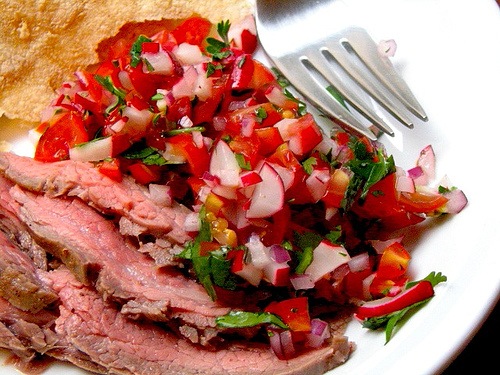
Pacific Rim Flank Steak
1/3 cup honey
1/4 cup Bragg’s Amino Acids ( use instead of soy sauce)
2 T. rice vinegar
1 cup orange juice
1/3 teaspoon toasted sesame oil
2 cloves garlic
1 teaspoon thyme
1/3 teaspoon smoked paprika
1 teaspoon cumin
1/4 teaspoon freshly ground pepper
2 pound flank steak
2 tablespoon fresh cilantro
1 whole onion, sliced in half moons
1 red peeper, sliced medium
1. In medium shallow dish, combine rice vinegar, Bragg’s, onion, honey, orange juice, oil, garlic, and pepper to taste; whisk until blended. Remove; reserve 3/4 cup for basting.
2. With sharp knife, lightly score both sides of flank steak in a crisscross pattern. Place steak in marinade in dish, turning to coat. Cover with plastic wrap and marinate in refrigerator 30 minutes, turning once.
3. Remove steak from marinade; discard marinade. Place steak on grid over medium, ash-covered coals. Grill, uncovered, 17 to 21 minutes for medium rare to medium doneness, basting occasionally with reserved marinade and turning once. You can also use a very hot well-seasoned iron skillet.
4) Sauté onions and peppers in coconut oil and a few T. of marinade.
4. Place remaining basting marinade in small saucepan; place on grid of grill and bring to a boil. Meanwhile, carve steak diagonally across the grain into thin slices; arrange on platter. Mix veggies with steak. Spoon hot marinade over beef, as desired.
Warm tacos and serve everything on top.
The Whole Calcium Problem..
Posted: August 19, 2009 Filed under: Food and it's Impact on Our Health Leave a comment I saw two commercials last night for prescription medications. Two were for osteoporosis, the other was for cholesterol. All three pissed me off. (excuse my language..)
The Boniva ad had Sally Fields talking about her osteoporosis and how she had stopped the bone loss. The other commercial had two women talking about how they had known each other all thier lives and even now “shared osteoporosis”.
Dr. Jarvis says on his commercial for Lipitor, “when diet and exercise are not enough, he turned to Lipitor.”
HELLO??? Diet and Exercise ARE always enough if you eat right! My chiropractor says my bone density is that of a 25 year old. My joints show very little wear and tear on an x-ray.
Our bodies do not recognize supplements as food, most are excreted. Medications bring side effects, kidney and liver are stressed.
A few days ago I posted Eating Organically and Economically-How I Cook and Eat-Weekly
Let’s take a look at one days menu then I will show you the nutrition breakdown for that day.
Ideal Day
Breakfast:
2 whole organic eggs soft scrambled with 1 T. raw butter
1 slices organic bacon
2 slices tomato
½ cup fresh vegetable juice, mostly greens.
Lunch
3 chicken legs
2 cups sautéed red cabbage and onions using coconut oil
2 slices tomato
Mid-afternoon
½ cup blueberries
Dinner
1 cup sweet potato (136 calories) or (winter squashes) with 1 T. butter
7 ounces grass fed beef, bison or free range chicken, cooked with 1 T. coconut oil
2 cups kale or broccoli or other green LEAFY vegetable
½ cup mushrooms, peppers and onions cooked with butter
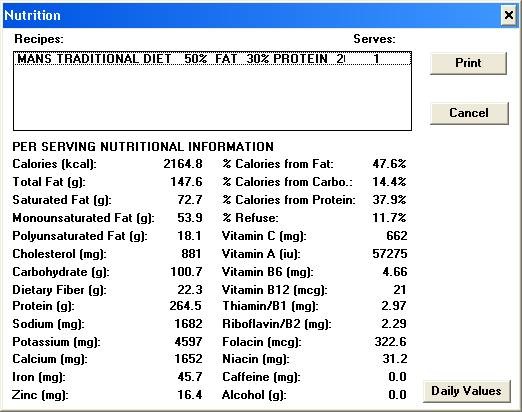
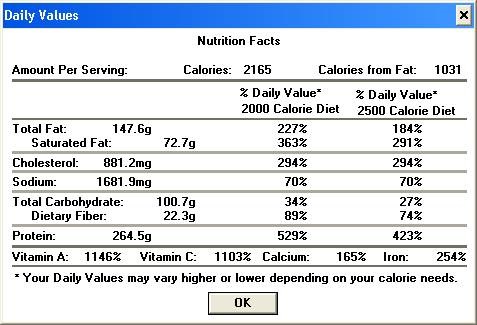
Notice the nutrient level for Vitamin C is 662 mg? Vitamin A is 57,275 I.U. a DAY! Calcium intake is 165% of what you need daily, Iron 254%!
Perfect nutrition, not expensive, not hard to prepare…and meets your every need for protein, fats, carbs and all Vitamins and Minerals.
Trying to use prescription medications to reach optimum health is like using a band-aid to deal with symptoms. Perfect nutrition gets rid of the symptoms, gets at the cause, detoxes you and returns you to perfect health. And reverses the ages process by drastically cutting back on free radical production.
Tell Greenpeace: Toilet Paper Consumption from Canada’s Ancient Boreal Forests Must End
Posted: August 19, 2009 Filed under: Food and it's Impact on Our Health Leave a comment
When it comes to any sort of environmental initiative, it’s usually Greenpeace that’s complaining that the effort is just not enough. They’re often purists, demanding more than people are willing to give, out of a noble sense of urgency and responsibility. But after they suspended a recent campaign to stop Canada’s ancient boreal forests from being cut down for toilet paper, one ecologist says Greenpeace gave in too easily.
Dr. Glen Barry, environmental sustainability policy expert and founder of Ecological Internet, sent out a press release entitled ‘Greenpeace Wipes It’s Soft, Virgin Butt with Canada’s Ancient Boreal Forests’:
Greenpeace’s long-standing campaign against “ancient forest crimes” by Kimberly-Clark was suspended on the basis of promises that 40% of its North American tissue fiber will be either recycled or FSC certified by 2011. The company traditionally has used 3 million tones of virgin fiber a year, which will fall to 2.4 million tons if they are successful. This atrociously weak target will legitimize continued destruction of Canada’s ancient forest ecosystems for throw away paper products for decades.
“In a world well past its carrying capacity, facing abrupt climate change and species and ecosystem collapse, we call upon Greenpeace to immediately disclose the ecological science that suggests primary and old growth forests can and should continue to be clearcut to wipe our asses,” questions Dr. Glen Barry. “It is just like Greenpeace to half carry out a campaign, achieve partial success, claim victory and move onto a more telegenic protest opportunity to fill their coffers.”
Ecological Internet calls upon Greenpeace to embrace substance over style (for a change) and immediately disassociate itself from the Forest Stewardship Council’s ongoing certification of first time industrial logging of primary forests as being “well-managed” while implying sustainability.
“No one including Greenpeace can tell us how many tens of millions of hectares of primeval forest ecosystems are being destroyed under FSC’s certification label for, amongst other things, toilet paper and lawn furniture. Until Greenpeace and friends stop greenwashing FSC ancient forest logging, we call upon committed forest protectors to resign their membership from Greenpeace and other ancient forest logging apologists, and to stop using virgin toilet paper, no matter how sensitive their behinds,” explains Dr. Barry.
Wow. It’s not often that Greenpeace is accused of not being tough enough on environmentally irresponsible companies. They’re known for being among the biggest hardasses in the world of environmental activism, yelling “bigger, faster, more” like a drill sergeant when companies take baby steps toward better practices.
But Dr. Barry has one-upped them, saying “There is no such thing as ecologically sustainable or even mildly beneficial first time industrial primary forest logging, and Greenpeace should be ashamed of itself for legitimizing the trade. If you support Greenpeace, you support ancient forest logging that endangers our shared being.”
Judge for yourself at Greenpeace’s Kleercut campaign website.
Click here to Tell Greenpeace: Toilet Paper Consumption from Canada’s Ancient Boreal Forests Must End
The Voice of Reason Concerning the Whole Foods Boycott
Posted: August 18, 2009 Filed under: Food and it's Impact on Our Health, Going Green; How and Why... Leave a commentMichael Bluejay’s site has long been a favorite of mine. I don’t think there is a better blog out there that covers how to conserve electricity. Following is what he wrote about the Whole Foods Boycott. Now, frankly, I do not shop at Whole Foods for many reasons. I support local business as much as possible. I realize some folks in some areas of the country have no choices, in Jacksonville, Fl, we do. I support businesses who keep the money in our community, I support those who treat their employees well, I support those who buy locally as much as possible and I support those businesses who have honest, open corporate practices such as Publix, who do an amazing amount of community service and also truly care about their customers.
I do not support Winn Dixie because of the horrible way they treat their employees; of this I know about personally after working as a Food Service Manager with them.
I do not support Native Sun because of their dishonesty and the way they treat their employees.
The only health food stores in Jacksonville that I do support are Grassroots, Bio-max and The Good Earth. I have long supported Southern Nutrition but their mostly empty shelves nowadays have made me give up on them. Grassroots is by far my favorite, it has an old fashioned, homey feel to it, it is in way cool 5 Points…and best of all, it’s a great, well stocked store by people who know tier stuff.
But, back to what Michael has to say about the whole thing..I have to agree.
Whole Foods Market: What’s wrong with Whole Foods?
Whole Foods Market does some good things. For starters, they practically created the modern market for organic foods single-handedly. Organics would likely still be hard to find and a lot more expensive (rather than a little more expensive) were it not for their efforts. Whole Foods also requires its suppliers to meet standards for humane treatment of farm animals, which has greatly improved the lives of millions of creatures. They also support the Fair Trade movement and have a more democratic workplace than can be found in just about any other organization of its size. So giving credit where it’s due, Whole Foods has often been a force for good.
But just because a company sells natural foods doesn’t mean it can do no wrong. Many of Whole Foods’ actions have been controversial, especially where their labor practices are concerned. As the Texas Observer put it, "People shop at Whole Foods not just because it offers organic produce and natural foods, but because it claims to run its business in a way that demonstrates a genuine concern for the community, the environment, and the ‘whole planet,’ in the words of its motto. In reality, Whole Foods has gone on a corporate feeding frenzy in recent years, swallowing rival retailers across the country…. The expansion is driven by a simple and lucrative business strategy: high prices and low wages." (1)
We’re not suggesting that anyone stop shopping at Whole Foods and we’re not calling for any kind of boycott (see sidebar at left) — we just want consumers to realize that even a company that puts on a socially-responsible face doesn’t always live up to its own hype.
Here are fourteen questionable aspects of Whole Foods Market:
(1) Aggressive monopolization. Tons of independent co-ops throughout the country don’t exist any more because Whole Foods bought them out. Whole Foods also absorbed all its significant competitors (Wild Oats, Bread & Circus, Fresh Fields, Bread of Life, Merchant of Vino, Nature’s Heartland, Food for Thought, Harry’s Farmers Market, Mrs. Gooch’s Natural Foods Markets, and U.K.-based Fresh & Wild). (2) They’ve thus created a near-monopoly in the natural foods grocery business. Consumers are better served by a diversity of stores, but Whole Foods has been trying to wipe out the competition — and has been quite successful at doing so.
(2) Failure to support farmworkers. When United Farm Worker activists passed out literature at an Austin Whole Foods Market, Whole Foods called the cops and had them arrested. Embarrassed by the public outcry, Whole Foods then promised to support the UFW’s grape boycott, but then broke that promise when it moved the store a couple of blocks away, saying the agreement applied only to the old location. They also produced deceptive literature for their customers blasting the farmworkers group and describing farmworker conditions as being no problem at all. About this, the UFW says, "Several major cases have been tried in states such as North Carolina and Florida during recent years where it was found that workers were being kept by their employers in a state of virtual slavery. This is worlds away from the ideal and naïve (and disingenuous) information put out by Whole Foods." (3,4)
(3) Fierceless devotion to profit. It’s not unusual for a business to try to maximize profit. But when the business puts on a socially-responsible face, consumers have the hope that the business will put "Doing the Right Thing" above "Making More Money". That’s not always the case at Whole Foods. It’s precisely why Whole Foods swallows its competitors, sells certain questionable products, and keeps wages as low as possible. Common Dreams says, "A closer look at the company’s business practices and Mackey’s ideas about business and society reveals a vision not that different from a McDonald’s or a Wal-Mart. In fact, the Whole Foods business model is more or less the standard stuff of Fortune 500 ambition. This is a vision of mega-chain retailing that involves strategic swallowing up (or driving out of business) of smaller retail competitors. It is a business model that objectively complements the long-term industrialization of organics (that is, large-scale corporate farms) over small family farms. It is also a vision in which concerns about social responsibility do not necessarily apply where less publicly visible company suppliers are concerned. Subsidiaries of cigarette manufacturers (for example, Altria, owner of Kraft’s organic products) or low-wage exploiters of minority workers (such as California Bottling Co., Inc., makers of Whole Foods’ s private-label water) are apparently welcome partners in this particular eco-corporate version of ‘the sustainable future.’" (2,5)
(4) Refusal to carry only turtle-safe shrimp. When Earth Island Institute asked Whole Foods to carry only shrimp caught in nets certified to protect endangered sea turtles, Whole Foods flatly refused. (1)
(5) CEO posing as someone else on the Internet. For seven years, Whole Foods CEO John Mackey posted on the Yahoo Finance board about his company and its competitors while pretending to be someone else. By trashing rival Wild Oats, their stock price could drop and he could buy them out for less money. Mackey also had the gall to anonymously praise himself. ("I like Mackey’s haircut. I think he looks cute!") (6) He didn’t stop there: He also criticized specific employees, under the cover of anonymity. Daily Kos said of this, "The very idea of the founder and CEO of a major national corporation hiding behind a pseudonym to lambaste one of his own hourly wage earners on an online message board says something about the personal moral integrity of union-busting executives." (7) After being discovered, he was unrepentant, trying to justify his behavior in a long blog post, and making a point to say specifically that his actions weren’t unethical. (8, 9)
(6) Poor working conditions. Workers organizing for a union in Madison said, "The ridiculously high turnover rate, wages that are lower than the industry standard, pervasive lack of respect, constant understaffing, absence of a legally-binding grievance procedure, and other poor and unfair labor practices-all of which have led to widespread low morale-highlight the simple fact that workers ultimately have no say in the terms and conditions of their employment at any Whole Foods Market-not just Madison. Workers are not recognized or appreciated for their contributions. Instead, Whole Foods relies on worker apathy and lack of investment in their jobs to keep turnover high, and for the most part, wages, benefits, and other working conditions poor. This environment should be unacceptable for any workplace." (1)
(7) Anti-Union. Whole Foods is so fiercely anti-union it has actually fired employees who were trying to organize one. As Common Dreams says, "Whole Foods matches Wal-Mart in its reputation for corporate anti-unionism. It’s a hostility rooted in a management whose ‘core values’ are intrinsically patrician and antidemocratic. The latter qualities were revealed in all their dismal hypocrisy most forcefully in 2002 when employees of the chain’s Madison, Wisconsin, store voted to unionize and join the United Food and Commercial Workers (UFCW). In a story that caught the attention of the New York Times and other media, Mackey had what might be described as a New Age temper tantrum, treating the specter of collective bargaining at one of his stores as a disaster of almost unspeakable proportions….The yearlong effort to defeat Madison’s first organizing drive revealed Mackey as a "socially enlightened" poseur, a New Age business type who talks about love and ecological footprints and other enlightened things, but who turns to the hard boot of corporate scare tactics and disinformation when confronted with a group of employees who dare to assert their democratic right to self-representation." (1,10)
And "In 2006, after truck drivers working at its San Francisco-based distribution center voted to unionize with the Teamsters. The company fired two of the drivers, altered its sick-leave policy, froze wage increases, refused to provide information to the union that was necessary to negotiate a contract, and ‘harassed and disciplined employees,’ found NLRB investigators, who concluded that ‘Whole Foods engaged in a variety of [illegal] retaliatory measures to discourage union activity.’ An out-of-court settlement required Whole Foods to reinstate the employees and reverse some of its policies." (20)
(8) Low Wages. Whole Foods has been widely criticized for keeping wages low. "Companies such as Whole Foods or other non-union chain competitors are paying many of their hourly employees what in late 1960s dollars would be equivalent to the minimum wage or below." (1) And they can certainly afford to pay more. Whole Foods stores bring in $800 per square foot in a year, double the industry average. (11)
(9) Refusal to come clean on the use of GMO’s and toxic chemicals in its products. "Whole Foods is still not fully transparent about the use of GMOs in store-brand products, and has ignored shareholder requests for information on the use of toxic chemicals in products like baby bottles that are sold in stores." (12) Whole Foods also asked shareholders to vote against a resolution asking Whole Foods to report about endocrine disruptors and other toxic chemicals in its products. (13)
(10) Selling dangerous food. You might think that with a company that champions healthy eating, anything in their store would be safe to eat. You’d be wrong. Whole Foods sold fish so toxic in mercury that one customer’s blood levels had to be reported to the Center for Disease Control. (17) Whole Foods didn’t start identifying potentially mercury-laden fish in its California stores until the government forced them to do so. Even then, a quarter of Whole Foods stores failed to display proper signage as required by law. (18)
(11) Misleading shoppers about its support of small farmers. Signs at Whole Foods Market say, "Help the Small Farmer — Buying organic supports the small, family farmers that make up a large percentage of organic food producers." What they’re not telling you is that while the number of family farmers is a large percentage of the total, overwhelming majority of organic output comes from corporate farms. As Slate put it: "There are a lot of small, family-run organic farmers, but their share of the organic crop in this country, and of the produce sold at Whole Foods, is minuscule." Slate also pointed out that Whole Foods has pictures and profiles of small organic farmers in their stores, but doesn’t actually carry products from those farmers. (14)
(12) Gagging shareholders. Whole Foods refused to let shareholders speak about shareholder resolutions at its annual meeting. " ‘Given that the annual shareholder meeting is the one time each year that top executives and directors have to show up and be accountable to shareholders, it is unconscionable for companies not to allow proponents to make a short statement in support of their proposals,’ said Beth Young, senior research associate for The Corporate Library (TCL), which assesses corporate governance….’It also seems to flatly contradict the company’s pledge to ‘recognize everyone’s right to be listened to and heard regardless of their point of view,” Mr. Herbert told SocialFunds.com. ‘Whole Foods should recognize that any company that presents itself as socially responsible, as it does, is an easy target for a cynical press and public when it fails to uphold reasonable standards of corporate practice.’" (15)
(13) Obfuscating executive compensation. Forbes magazine says, "Media reports frequently tout Whole Foods’ pay policy, which caps the chief executive’s salary and bonus at 14 times the average worker’s pay. The Wall Street Journal, Slate.com, Harvard Business Review and BusinessWeek have all mentioned the pay cap, generally in favorable terms. But they all omitted one thing: stock options." When you count stock options, Mackey really made close to $3 million, or eighty-two times the average workers’ salary. Forbes continues, "Whole Foods manages to obscure Mackey’s total pay package by ballyhooing the salary cap." A company is certainly entitled to pay its execs whatever it wants, but the issue here is that WF is deceptive about how much its execs actually receive, relative to the lower-paid workers. (16)
(14) Forcing smaller competitors to hand over private financial data. Whole Foods has been trying to force many of its smaller competitors to hand over private sales and financial data about those smaller stores. Whole Foods already holds a massive advantage due to its size, but that’s apparently not enough for them. As one of the harassed smaller groceries put it, "Allowing Whole Foods to look through all of our private information about how we operate and what our plans are for the future unfairly adds to their already large size and financial advantage. We’ve been able to build a successful local business being David against their Goliath, and we’re happy to keep doing that, but we do object to having one hand tied behind our back." (19)
Getting Over Organic
Posted: August 18, 2009 Filed under: Food and it's Impact on Our Health, Non-Toxic Choices Leave a commentWhy many of our country’s best farmers will no longer even use the word
by Michael Pollan
Published in the July/August 2003 issue of Orion magazine
As a consumer who generally tries to do the right thing, I’ve always thought the decision to buy organic was a no-brainer. But in recent years organic has grown to include paradoxes such as the organic factory farm and the organic TV dinner. And now, there is even organic high-fructose corn syrup. We are not far from organic Coca-Cola.
Now these aren’t absolutely good or absolutely bad developments. As offensive a concept as organic high-fructose corn syrup may be, a product like organic Coke will sponsor a lot more organic acreage in this country. But this is certainly not what the founders of the organic movement had in mind.
It’s worth remembering what they did have in mind. There were three legs to the original organic dream. One was growing food in harmony with nature—a nonindustrial way of farming that treated animals humanely and did not use chemical pesticides. The second leg was that our system of food distribution should be different; food co-ops, farmer’s markets, and community supported agriculture could replace the national agricultural system. And the third leg was the food itself. We shouldn’t be eating red delicious apples; we should be eating ten different kinds of apples because biodiversity in the apple tart means biodiversity in the orchard.
For all sorts of reasons—some good, some mistaken—the organic community decided more than a decade ago that it needed federal recognition and regulations. Big companies wanted to sell organic products nationally, but they needed standard rules. And farmers thought that a standard label would give credibility to organic, which it did. But once we had an official federal organic standard, small farmers lost control of the niche.
Today the organic dream is in peril. In fact, many of the best farmers in this country no longer even use the word organic. The USDA developed a set of rules—and they got pesticides, hormones, and many drugs out of the system. All wonderful. But if you look at the new rules, that’s all they address. There is nothing written about the kind of food that may be called organic, or its distribution. There is no rule against high-fructose corn syrup. A myriad of synthetics are allowed in processed organic food. And we find ourselves with an organic transcontinental strawberry: 5 calories of food energy that use 435 calories of fossil-fuel energy to get to a supermarket near you. This is organic food forced through the industrial system, shorn of its holism. What has been lost is that one key insight about organic: that everything is connected. The organic dream has been reduced to a farming method.
The way we spend our food dollars is one of the most important votes we cast, and the choice we consumers are increasingly going to be faced with is not organic or conventional, but local or organic. I come down on the side of local. When you buy local, you’re voting for a short, highly legible food chain—one that supports all three legs of the original vision. This shorter food chain brings the consumer and producer together, and the producer gets to tell her story. Organic label or not, it had better be a good story: clean food, grown without pesticides, the animals being treated humanely. Another reason to buy local is that farms produce more than food—they produce a kind of landscape too, which your food dollars help to conserve.
The lesson to be learned is that consumers of all kinds, but especially eaters, are producers in the most important sense. With every food purchasing decision, we are helping to create the world we want to live in, one bite at a time.
Top 10 Benefits of Eating Organic
Posted: August 17, 2009 Filed under: Food and it's Impact on Our Health, Non-Toxic Choices Leave a commentGreen-living blogs, including mine, espouse the benefits of eating organic foods, but skeptics remain. While there are conflicting reports about whether organics offer more nutritional value than non-organic foods, there’s no doubt organic farming is better for human health, local wildlife and the planet in general.
There’s a picture that has been branded on my brain: A farm worker spraying fields with pesticides; he’s wearing a contamination suit and a gas mask. I remember being shocked when I first saw the image. I associated that sort of get-up with highly contagious viruses and industrial chemical leaks—not food.

- Waterways aren’t contaminated by chemical run-off from farms.
- Pesticide-related health risks to farm workers (and anyone living in the area) are eliminated.
- You will dramatically reduce the amount of pesticide residue you ingest on a daily basis. Pesticides ingested by pregnant women may be linked to birth defects and health issues.
- Biodiversity is increased with the use of buffer crops, and by avoiding killing or harming insects and other wildlife that is not a threat to crops.
- Pesticides are responsible for a staggering amount of greenhouse gas emissions.
- You can avoid eating any genetically modified foods.
- Reduced reliance on chemical and agri-engineering corporations is good for farmers.
- Organic farming is healthier for the soil.
- Organic dairy cows are not injected with milk-boosting hormones such as recombinant bovine somatotrophin (rBST)—which may increase insulin levels in humans.
- Organics taste better. It’s just my humble opinion, but I’ve noticed a difference in the taste of strawberries, peaches, grapes and leafy greens, so if you’re still skeptical, I dare you to put your faith in conventionally grown foods to the test.
Cara Smusiak writes on behalf of Naturally Savvy.com about how to live a more natural, organic and green lifestyle.


 Meal Delivery Service by Millie Barnes