Why Is Breast Milk Best? It’s All in the Genes
Posted: May 13, 2010 Filed under: Food and it's Impact on Our Health Leave a commentScienceDaily (May 12, 2010) — Is breast milk so different from infant formula? The ability to track which genes are operating in an infant’s intestine has allowed University of Illinois scientists to compare the early development of breast-fed and formula-fed babies. They say the difference is very real.

Breast milk induces genetic pathways that are quite different from those in formula-fed infants, new research has found. (Credit: iStockphoto/Oleg Kozlov)
"For the first time, we can see that breast milk induces genetic pathways that are quite different from those in formula-fed infants. Although formula makers have tried to develop a product that’s as much like breast milk as possible, hundreds of genes were expressed differently in the breast-fed and formula-fed groups," said Sharon Donovan, a U of I professor of nutrition.
Although both breast-fed and formula-fed babies gain weight and seem to develop similarly, scientists have known for a long time that breast milk contains immune-protective components that make a breast-fed infant’s risk lower for all kinds of illnesses, she said.
"The intestinal tract of the newborn undergoes marked changes in response to feeding. And the response to human milk exceeds that of formula, suggesting that the bioactive components in breast milk are important in this response," she noted.
"What we haven’t known is how breast milk protects the infant and particularly how it regulates the development of the intestine," she said.
Understanding those differences should help formula makers develop a product that is more like the real thing, she said. The scientists hope to develop a signature gene or group of genes to use as a biomarker for breast-fed infants.
Many of the differences found by the scientists were in fundamental genes that regulate the development of the intestine and provide immune defense for the infant.
In this small proof-of-concept study, Donovan used a new technique patented by Texas A&M colleague Robert Chapkin to examine intestinal gene expression in 22 healthy infants — 12 breast-fed, 10 formula-fed.
The technique involved isolating intestinal cells shed in the infants’ stools, then comparing the expression of different genes between the two groups. Mothers in the study collected fecal samples from their babies at one, two, and three months of age. Scientists were then able to isolate high-quality genetic material, focusing on the RNA to get a gene expression or signature.
Donovan said that intestinal cells turn over completely every three days as billions of cells are made, perform their function, and are exfoliated. Examining the shed cells is a noninvasive way to examine intestinal health and see how nutrition affects intestinal development in infants.
Understanding early intestinal development is important for many reasons, she said.
"An infant’s gut has to adapt very quickly. A new baby is coming out of a sterile environment, having received all its nutrients intravenously through the placenta. At that point, babies obviously must begin eating, either mother’s milk or formula.
"They also start to become colonized with bacteria, so it’s very important that the gut learns what’s good and what’s bad. The baby’s body needs to be able to recognize a bad bacteria or a bad virus and fight it, but it also needs to recognize that even though a food protein is foreign, that protein is okay and the body doesn’t want to develop an immune response to it," she said.
If anything goes wrong at this stage, babies can develop food allergies, inflammatory bowel disease, and even asthma. "We’re very interested in frequent sampling at this early period of development," she added.
Donovan also would like to learn how bacteria in the gut differ in formula- and breast-fed babies, and this technique should make that possible. "Now we’ll be able to get a complete picture of what’s happening in an infant — from the composition of the diet to the microbes in the gut and the genes that are activated along the way."
Of potential clinical importance: The gene expressed most often in breast-fed infants is involved in the cell’s response to oxygen deprivation. Lack of oxygen is a factor in the development of necrotizing enterocolitis (NEC), a kind of gangrene of the intestine that can be fatal in premature babies. NEC is a leading cause of disease and death in neonatal intensive care units, with a reported 2,500 cases occurring annually in the United States and a mortality rate of 26 percent.
The study will appear in the June 2010 issue of the American Journal of Physiology, Gastrointestinal and Liver Physiology. Co-authors are Robert S. Chapkin, Chen Zhao, Ivan Ivanov, Laurie A. Davidson, Jennifer S. Goldsby, Joanne R. Lupton, and Edward R. Dougherty, all of Texas A&M University, Rose Ann Mathai and Marcia H. Monaco of the U of I, and Deshanie Rai and W. Michael Russell of Mead Johnson Nutrition. The study was funded by Mead Johnson Nutrition.
Not aging fast enough? Drink a soda!
Posted: May 4, 2010 Filed under: Food and it's Impact on Our Health, Non-Toxic Choices Leave a commentHoo boy. The American Beverage Association isn’t going to like this news one bit. Food companies now add significant amounts of phosphates to soda and other processed foods. And now researchers have found evidence that phosphates may accelerate aging (via Science Daily):

High phosphate levels may also increase the prevalence and severity of age-related complications, such as chronic kidney disease and cardiovascular calcification, and can also induce severe muscle and skin atrophy.
"Humans need a healthy diet and keeping the balance of phosphate in the diet may be important for a healthy life and longevity," said M. Shawkat Razzaque, M.D., Ph.D., from the Department of Medicine, Infection and Immunity at the Harvard School of Dental Medicine. "Avoid phosphate toxicity and enjoy a healthy life."
"Soda is the caffeine delivery vehicle of choice for millions of people worldwide, but comes with phosphorous as a passenger" said Gerald Weissmann, M.D., Editor-in-Chief of the FASEB Journal. "This research suggests that our phosphorous balance influences the aging process, so don’t tip it."
This has nothing to do with sweeteners, food coloring or any other previously established badness associated with soda and processed food — it’s a "new and improved" risk.
And what, pray tell, are these phosphates doing there in the first place? According to other scientists, food companies starting adding them at high levels only in the last 20 years:
…[W]hile a moderate level of phosphate plays an essential role in living organisms, the rapidly increasing use of phosphates as a food additive has resulted in significantly higher levels in average daily diets. Phosphates are added to many food products to increase water retention and improve food texture.
"In the 1990s, phosphorous-containing food additives contributed an estimated 470 mg per day to the average daily adult diet," he said. "However, phosphates are currently being added much more frequently to a large number of processed foods, including meats, cheeses, beverages, and bakery products. As a result, depending on individual food choices, phosphorous intake could be increased by as much as 1000 mg per day."
"Increase water retention and improve food texture"?! That’s worth shaving years off our lives for sure! We’re all lab rats now.
Nine Green Home Projects You Can Do Today
Posted: May 4, 2010 Filed under: Going Green; How and Why... Leave a comment
The Design of Everyday Life > Allison Arieff on April 29, 2010 at 5:00 am PDT
Between the economic meltdown and the push for green buildings, saving energy, water and money in your home is more popular than ever. Fortunately, greening your home doesn’t have to be time consuming or expensive. We caught up with Eric Corey Freed, principal of Organic Architect, and author of the new book, Green$ense for the Home. Here’s his list of nine simple things anyone—renters and homeowners alike—can do in their homes today.
1. Change your light bulbs already! How many environmentalists does it take to change a light bulb? There are several answers to this joke (none of them that funny), but the real answer is: “all of them.” In your home, lighting accounts for nearly 30 percent of all electricity use. By using compact fluorescent bulbs, you can cut lighting costs by 30 to 60 percent, while improving the quality of the light and reducing environmental impact at the same time.
2. Convince your toilet to use less water. More water is consumed per person in the United States than in any other country. More than a quarter of all of the water used inside the home is flushed down the toilet, which is, literally, a waste. The toilet is the single largest user of clean drinking water inside the home, and it is also the easiest place to conserve water. Before you run out and replace your existing toilets, there are simple and effective things you can do to trick your old toilet to use less water, from flush adapters to flusher adjustments and tank tricks. And when the time comes to replace your working toilets, make sure you buy a low-flow or dual-flush model.
3. Use less water in the shower. Showers add up to nearly 20 percent of all indoor water usage and are the largest users of hot water. By simply installing a low-flow showerhead, you can save up to 4,000 gallons of water annually, and for every gallon of hot water you save, that’s gas or electricity you don’t need to use to heat it. If your average shower is 10 minutes long, upgrading your old showerheads to a low-flow model will save 25 to 55 gallons of water for every shower you take, and potentially shave 30 percent off utility bills!
4. Keep vampires at bay. In the average home, 75 percent of the electricity used to power home electronics—cable boxes, DVD players, video games, stereos—is consumed while the products are turned off. That’s money that could stay in your pocket. If something is plugged into the wall—a TV, a cellphone charger, an appliance- even if it’s not on, it draws electricity. We call this demand of energy “phantom loads” or, more appropriately, “vampire loads,” since they suck energy. While the amount of power used is relatively small, they can add up to more than 10 percent of your electricity bill.
There are several simple ways to slay vampire loads: Unplug any appliance with a standby light. Get a power strip for appliances, and flip the switch off when not needed. Or, consider Smart Strips, which sense when power is being drawn and shut off automatically—as simple to install as a regular strip, and you don’t need to worry about vampire loads ever again.
5. Install a programmable thermostat. A programmable thermostat operates only during the times you set. For example, a programmable thermostat could lower the heat at 10 p.m. every night, when you’re bundled under the covers in bed. It could also be programmed to return the room to a more comfortable temperature 30 minutes before you wake up. The average household spends more than $2,000 a year on energy bills—nearly half of which goes to heating and cooling. You can save $150 a year just by properly setting a programmable thermostat. Once set correctly, a programmable thermostat can cut your heating and cooling bills by 20 percent to 30 percent annually.
6. Put a coat on your hot water heater. If your home is like most, hot water is produced in a hot water heater. This large tank usually sits in a garage, closet, or basement and slowly heats up a vat of water, and keeps it hot all day and night. Nearly 20 percent of all of the energy used in the home goes just to the water heater, making it the second-largest energy user in homes after heating and cooling. Insulating a water heater tank reduces the heat losses by 25 percent to 45 percent. This translates into as much as a 9 percent savings in total energy usage. If everyone in the U.S. insulated their hot water heaters, nearly 11 billion kilowatt-hours of that energy would be saved—enough to power 11.9 million homes in a year.
7. Weatherize windows. The largest source of energy loss in your home is your windows. If you add up the area of all of the cracks and leaks around the windows of your home, it would total about the size of an entire window. Installing new windows can solve much of this problem, but that can be a big job. Simply weatherizing—sealing the cracks and leaks around your windows and exterior doors—can have an immediate impact on your energy savings and can be completed in an afternoon.
Purchase only caulking with low or zero Volatile Organic Compounds (VOCs). Figure that six to eight tubes at a total cost of no more than $65 should be enough to seal a 3,000-square-foot house with 15 to 20 windows.
8. Install a solar powered clothes dryer: a clothesline. Today, 80 percent of households have a washer and dryer, but this convenience comes at a price. Electric clothes dryers eat up 10 percent of a home’s energy. Each load of laundry gives off around 5.6 pounds of carbon dioxide per load. That adds up to more than 2,000 pounds of CO2 a year just from drying clothes. A solar-powered clothes dryer is a smart and highly energy efficient way to dry your clothes. Also known as a “clothesline,” this idea has been around for centuries and provides an affordable, easy alternative to the high cost of clothes-drying convenience.
9. Compost and recycle. The average American produces 4.6 pounds of trash a day, which totals up to 251.3 million tons a year. Landfills pollute our water, take up enormous amounts of space, and (surprise) no one wants to live near them. Most people don’t realize the biggest problem with landfills is the emissions they generate, namely methane and carbon dioxide gas, which contribute to global warming. By composting and recycling, we can reduce the trash in landfills and do long-lasting good for our environment.
Recycling and composting require nothing except the desire to do it. Contact your local trash pickup company and request a free recycling bin (you may also be able to get a free compost bin). While not every town recycles, many do and will have specific rules for how to separate the items.
Each of these steps will pay for themselves in less than a year. Plus you’ll rest easy knowing you are doing your part for our environment.
This post originally appeared on www.refresheverything.
Post from Grist.
Happiness: No Purchase Necessary, Says Study
Posted: April 25, 2010 Filed under: Food and it's Impact on Our Health Leave a commentAnother great post from Treehugger

by Stephen Messenger, Porto Alegre, Brazil
It turns out, in this age of consumerism and gadgetry, that all this stuff we buy isn’t really making us any happier–in fact, it’s kind of bumming us out. According to the latest research, the key to finding happiness is something far more accessible than what product advertisements would like you to believe–simply enough, it’s in having new experiences. Whether it be in traveling to new places, taking a hike with some friends, or even participating in some green activism, investing in experiences delivers more bang for your buck than consumer products–which is good news considering that so much of the stuff we buy ends up as waste.
The study, which was conducted by psychologists at Cornell University, found that ‘experiences’ are more rewarding than ‘things’ because of the way people tend to evaluate their happiness by comparing themselves with others. For example, it is easier to feel crummy about some possession of yours if you learn that someone else has a superior version of it. "Experiences are inherently less comparative," says one researcher, which means they tend to bring happiness regardless of other’s.
Thomas Gilovich, one of study authors, tells the BBC Brasil:
Imagine you buy a flat screen TV, and you’re happy with it. But then you come to my house and I have a TV with a larger and better picture. That will disappoint and annoy you. But if you go on a vacation to the Caribbean and I also, you have your memories – your personal connection with the Caribbean – which no one else has and that made the holiday special.
According to the study, experiences are so effective at making us happy because we truly ‘own’ them in that they become integrated into our characters and help shape our personalities. Material goods, on the other hand, can really only be ‘possessed’ and rarely become a part of us in any meaningful way. Also, things we buy are subject to material degradation and devaluation, not to mention a gradual lessening in our appreciation for them. In contrast, experiences are transformed into memories, and even bad ones can be appreciated later on down the line.
"If you go on a hiking trip, and the weather is terrible, you might not view it as a pleasurable experience in the here and now. Instead, you may view it as a challenge, and over time remember the positive aspects of the experience more than the negative aspects," says Gilovich, via The Med Guru. "With material things you can’t do this, because they are what they are."
So, in our quest to find happiness in a day and age where so many are offering it in the form of stuff they’re selling, it turns out that being happy is a ‘no purchase necessary’ emotion. Not only does that mean we are happier producing less waste, but actively helping our planet could be one such experience that makes us even more so.
Finally.. A Garden Update
Posted: April 17, 2010 Filed under: Gardening Leave a comment It’s been a hectic few months..new job..stuff going on…I started in January sproutin’ stuff in the kitchen…then all the new little plants grew under grow lights until about two weeks ago…when I put them all out front and they sprung up like crazy… I have been picking cucumbers for about a week.
Last spring, when I built the 5 gallon grow buckets and started tomatoes, peppers and greens in them… I noticed a tiny lettuce plant growing at one point, but ended up covering it up when I covered the dirt and top of bucket with plastic (to keep out pests and retain moisture).
A month or so later I noticed it growing downward, from under the edge of the plastic. I thought to myself that mother nature sure was tenacious. Then this thing started growing upward…looking very Dr. Suessian. At the end of fall I picked my last tomatoes and cleaned out all the grow buckets.
Jump ahead to the coldest day we had, sometime in January, I think…and I looked out the window…after all it was 21 degrees outside. Bear in mind that I live in Jacksonville, FL…so this is highly unusual… But, in my flower bed that day…a tiny lettuce plant pooped out of the soil.. I was amazed..
then I learned about over-wintering seeds.. makes ‘em hardier…and they know just when to sprout out.. Amazing…Anyway, that’s it above…I haven’t eaten any yet… I just want it to go to seed… It’s cool to watch how it grows…I have never given a thought to lettuce having flowers…I can’t wait to see ‘em.
 Here’s the Stevia plant…one leaf in a cup of tea is perfectly sweet.. It was a slow starter, took 2 months to get to two inches high…but now it doing good…going to plant more..
 Here’s my greens..I’ve been eating off of these plants since December..growing in my kitchen..now they are outdoors…they will keep me in greens until about November or so…I’ll start more in August… I have beets and I eat the greens as much as I can, my faves. The other is Swiss Chard.
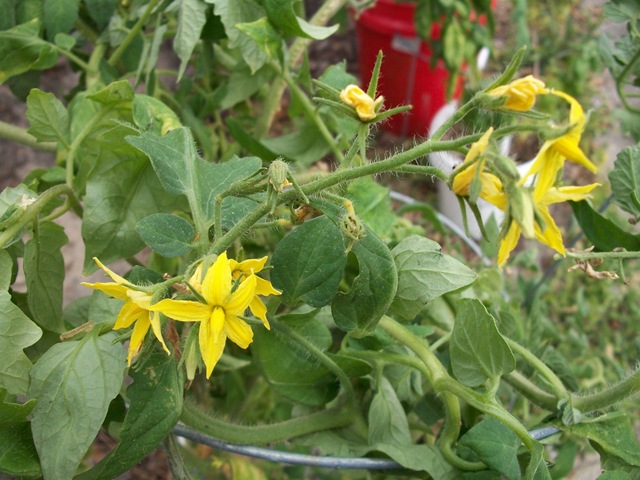 Cherry tomatoes…with Dill and Parsley growing under them..
And last …my bran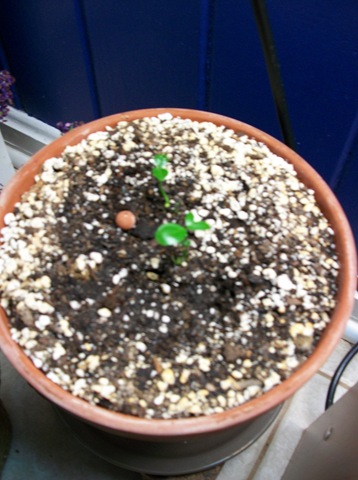 d new little orange trees. They took 3 months to sprout…I about gave up!
Voluntary simplicity as hedonism
Posted: April 7, 2010 Filed under: Going Green; How and Why... Leave a commentPosted July 24, 2007 – 16:09 by Philip Brewer
Filed Under: Frugal Living

When people talk about voluntary simplicity (or living a frugal lifestyle under any of its many names), they often do so in terms of deprivation. The descriptions are all about doing without stuff. To me, that’s completely wrong. Voluntary simplicity is fundamentally a hedonistic lifestyle.
What do hedonists do? They do what ordinary people seem only to do when they’re on vacation. They go places that are interesting or beautiful and they linger in them. They go dancing and go to parties. They read good books. They hang out with cool people. They hike in the mountains and swim in the ocean and go sailing. They play golf or tennis. They eat good food and drink good wine. They listen to music or play music. They go to museums and theaters. They do whatever gives them pleasure until they’re tired, and then they lie in the shade and take a nap.
To me, voluntary simplicity is exactly the same thing. You think about what gives you the most pleasure and then arrange your life so you can do exactly that.
I saw a poster once that said, "My tastes are simple: I like to have the best." It’s a sentiment that probably resonates with everyone. But you can’t have the best of everything–where would you keep it? So, you have the best of only a few things, the things that matter the most to you. And, if you get rid of the other stuff–stuff that doesn’t matter as much to you–then your whole life gets easier. With less stuff you can live in a smaller house, or an apartment instead of a house, or a smaller apartment.
But a small apartment doesn’t mean a small life. A small apartment is a means to an end. The end is a life doing whatever you want.
Ruthless Frugality
Posted: April 7, 2010 Filed under: Going Green; How and Why... Leave a comment
Posted January 22, 2010 – 06:00 by Philip Brewer in Frugal Living

There are many strategies for frugality: Don’t buy stuff you don’t need. Stock up when you get a good price. Make smart decisions about when to pay up for quality and when to get the cheap stuff. Then there’s what I call ruthless frugality: Always getting the best price.
I’m not talking about stupid frugality — buying the cheapest shoes you can find even though they hurt your feet. Nor am I talking about shopping around, using coupons, and so on. Rather, I’m talking about getting the best price you can without regard for what’s behind the great price.
At the extreme, of course, there’s criminal frugality — buying stolen goods and pretending to believe that they fell off the back of a truck. But short of that, there are all sorts of things that enter the general stream of commerce at prices that embed lots of bad practices — stuff made in sweatshops by children or prisoners or slaves, stuff made in ways that poison the workers or trash the environment.
Most people delegate to the government the job of policing how things are produced. There are, for example, laws about how farm animals have to be treated, and most people hope that those laws are strict enough that the food produced is safe and the animals’ suffering is minimized.
But it’s worth thinking about the costs of ruthless frugality. One good reason to pay more than you need to is to be a good neighbor, such as by buying locally. Patronizing local shops often costs more, but part of the reason the big box stores are cheaper is because they’ve got competition. Let all the local stores die and you can expect to see prices rise at the chain stores. More important, money spent in local stores tends to stay in town — possibly getting spent on stuff that you make or services that you provide. Perhaps more important yet, local production is often more ethical and more sustainable.
I talk about voluntary simplicity as being an essentially hedonistic lifestyle, because a high overall level of frugality frees up resources that can go to those specific areas of your life where paying more makes a difference that matters to you. The upside of frugality is more of what you care about.
I think a little hedonism is great, when it is enabled by thoughtful choices about priorities. But I think a similar amount of thinking ought to go into where really cheap stuff comes from — and whether your values can support the ruthlessness built into the price.
Reusable Bottles: Glass Makes a Come Back
Posted: March 16, 2010 Filed under: Going Green; How and Why..., Non-Toxic Choices Leave a comment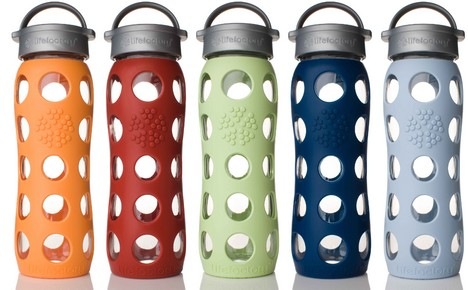
Image credit: Lifefactory Article from TreeHugger
As a rule, I am not one of these greenies that gets overly excited about new reusable bottles. I have an old reusable bottle somewhere, and it occasionally gets used when I venture out of the house—but I’ve always been a little confused by the amount of attention paid to fancy reusable bottles and their cousins, the reusable tote. But with recent scandals over BPA in old Sigg water bottles, and with Nalgene finally going BPA free, many folks with old reusables may be looking for alternatives. So howabout going old-school? Glass may be back.
Lifefactory is selling a line of bottles that even I must admit look pretty darned good. And they are made from plain-old glass, with a non-toxic silicone sleeve to protect them from breakage and allow for a better grip. After all the fancy water bottle materials out there, it’s kind of fun to see a press release extolling the virtue of (gasp!) glass:
"The glass make-up of the reusable bottle means what you see is what you get. Glass is a nonporous material containing zero harmful chemicals and does not scratch, significantly reducing bacterial growth. With Lifefactory bottles you will never experience any type of leaching into your liquid nor will you ever be left with a metallic taste. Best of all, glass is a low impact raw material that is readily abundant, easy to process and 100% recyclable, which is minimally taxing on our environment."
Not sure if I’ll be replacing my water bottle just yet, if I can even find it. But even I must admit, these are fine looking bottles.
Vitamin D deficiency now so widespread that rickets is on the rise once again
Posted: March 15, 2010 Filed under: Food and it's Impact on Our Health, In The Kitchen with Millie- How To's 1 CommentSubmitted by vermont on March 14, 2010
 (NaturalNews) A clinical review paper published in the British Medical Journal is warning the public that widespread vitamin D deficiency is resurrecting the once-obsolete disease called rickets. According to Professor Simon Pearce and Dr. Time Cheetham, authors of the paper, people are getting far too little sunlight exposure which is necessary for the body to produce adequate levels of vitamin D.
Nowadays, children spend most of their time indoors staring at computer and television screens rather than playing outside in the sunlight. On the rare occasion that they venture outside, zealous parents are quick to apply UV-blocking sunscreen that prevents the sun’s useful UVB rays from penetrating their skin and producing vitamin D. The result is an epidemic of vitamin D deficiency that is leading to all sorts of illness and disease.
Rickets, a disease in which a person’s bones do not properly develop and harden, results when a person is getting too little vitamin D and most likely not enough calcium. The U.S. Recommended Daily Allowance (RDA) for vitamin D is a mere 400 IU, an amount that is said to be adequate for preventing rickets.
To put this amount into perspective, however, exposure to the summer sun for about 20 minutes is enough to produce up to 20,000 IU of vitamin D in the body. At this level, far more optimal health can be achieved. Yet the fact that children are beginning to develop rickets suggests that they are not even getting 400 IU a day, an amount that should be relatively easy to attain through a moderately healthy diet or a few minutes in the sun every day.
In the U.K., there are several hundred cases of rickets reported every year. According to statistics, more than 50 percent of the adult population in the U.K. is deficient in vitamin D as well. During the winter and spring months, more than 15 percent experience severe deficiency.
Researchers suggest that people with darker skin pigmentation are at a higher risk for rickets because they do not assimilate vitamin D from the sun’s UVB rays as easily as those with lighter skin do. Some experts believe that the changing ethnic profile of the U.K. may play a significant role in the onset of rickets while others point primarily to an overall lack of vitamin D among all ethnic groups.
Either way, the changing lifestyles among all people are partially to blame as people are not spending enough time outside and, when they do they are using too much sunscreen to obtain any sort of benefit from the sun. Overuse of sunscreen can be blamed on government health authorities, regulatory agencies, medical professionals, and mainstream media outlets that continually exaggerate the threat of developing skin cancer from sunlight exposure to the point that some people are afraid of getting any at all.
Sources for this story include:
http://www.guardian.co.uk/society/2…
http://www.naturalnews.com/028329_vitamin_D_rickets.html
Indian law would make criticizing GM crops an imprison-able offense
Posted: March 15, 2010 Filed under: Gardening, Going Green; How and Why..., Non-Toxic Choices Leave a commentHealth Freedom Alliance March 2, 2010
 Criticizing Genetically Modified (GM) products could land you in jail — if the draconian draft Biotechnology Regulatory Authority Bill (BRAB) of 2009, which will be tabled in the current session of the parliament by the UPA government, is passed.
In an unprecedented muzzle on the right to freedom of speech of the citizen, Chapter 13 section 63 of the draft bill says, “Whoever, without any evidence or scientific record misleads the public about the safety of the organisms and products…shall be punished with imprisonment for a term that shall not be less than six months but which may extend to one year and with fine which may extend to two lakh rupees or with both.” The BRAI Bill drafted by the department of bio-technology under the Ministry of Science and Technology comes on the heels of a moratorium on Bt Brinjal announced by the Environment Minister Jairam Ramesh.
“What they are doing is much worse than what Hitler or Mussolini did. Through this bill, they want to take absolute authority. They are behaving like a vendor instead of a regulator,” Pushpa M Bhargava, a member of the Supreme Court appointed Genetic Engineering Approval Committee (GEAC) said.
There are also other provisions in this bill which are disconcerting.
Article 27 (1) of the bill seeks to keep the information related to the research, approval and science of the GM Products out of the purview of the Right to Information ( RTI) Act.
In other words, farmers, NGO’s and Environmental groups that have been on the forefront of the campaign against BT Brinjal and other genetically modified crops, can longer obtain information about it.
Not only that, the three member experts of the Department of Biotechnology will override any existing legislation about GM technology in the states.
The draft bill also states that the BRAI will set up its own appellate tribunal which will have the jurisdiction to hear arguments on the issues concerning biotechnology. In case of any disputes, petitioners can only approach the Supreme Court of India.
“The BRAI bill is more draconian than what the nation faced during the Emergency ‘’ says Devinder Sharma, writer and Food Policy Analyst. “If the Bill was already in force, I would have been in jail.
Jairam Ramesh too would have been in jail for challenging the health and environmental claims of the company developing Bt Brinjal,” he said. The bill demonstrates the extraordinary hold the multinational companies have over the UPA government, he added. Kavitha Kurugunti of Kheti Virasat Mission said that this bill is just a way to silence the voices who are opposed to GM technology.


 Meal Delivery Service by Millie Barnes