Talking About…Palm Oil
Posted: July 30, 2009 Filed under: Food and it's Impact on Our Health 2 Commentsfrom The Organic Consultancy
by Simon Wright


History
Palm oil is produced from the fruit of the oil palm Elaeis Guinnesis which is found in Africa, South East Asia and Latin America. Although humans have eaten the oil palm for over 5000 years commercial planting and cultivation did not begin until the mid-1990’s in Malaysia.
Production and Uses
Palm oil is extracted and refined through pressing and crushing rather than through using chemical solvents such as hexane. Palm oil can be further refined into palm olein (liquid) and palm stearine (solid). Palm olein is used as a frying oil because it is very stable to heat, whilst palm stearine is used in biscuits and cakes and in non-hydrogenated margarine. Palm stearine is also used to stop peanut butter from separating. Palm oil resists oxidation and rancidity, which means products made using palm oil have extended shelf lives.
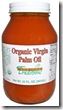 Organic palm oil

The fact that palm oil is solid at room temperature, has a neutral taste and can be extracted without the use of solvents has made organic palm oil a very useful ingredient in organic food processing. The only other organic fats which are solid at room temperature are butter and coconut oil, both of which are highly saturated.
But I thought palm oil was highly saturated?
Palm oil is frequently confused with palm kernel oil, which is highly saturated. In contrast palm oil contains a balance of polyunsaturated, monounsaturated and saturated fatty acids. In addition palm oil contains essential substances such as linoleic acid (an essential fatty acid which the body cannot manufacture) and tocopherols and tocotrienols, which act as natural anti-oxidants against damaging free-radicals.
What about cholesterol?
Like other vegetable fats palm oil is free from cholesterol. Because palm oil is solid at room temperature there is no need to use hydrogenation, a technique which hardens liquid oil but also produces damaging trans fatty acids and raises cholesterol levels in the process. Human feeding studies have shown that palm oil does not ordinarily raise blood cholesterol levels and in some cases has been found to lower harmful LDL-cholesterol.
Any other health benefits?
Rats fed on a palm-oil enriched diet had a reduced tendency to form blood clots. Unrefined palm olein (which is bright red in color) is a major source of carotenoids which inhibit some types of cancer. The unrefined oil is also a major source of beta-carotene, which is a precursor to Vitamin A.
It is also a rich source of phytonutrients such as beta-carotene, alpha-carotene, vitamin-E, lycopene and other carotenoids. These carotenoids are responsible for the striking red color of the oil.
Red palm oil has been used for thousands of years as a cooking oil in the East, but has only recently become available in the West. Importers in the West intend to make it more readily available. At the moment, red palm oil is available at selected health shops and supermarkets.
Why is red palm oil a super-healthy oil?
Red palm oil is particularly healthy because it contains the above-mentioned carotenoids and a special form of vitamin E. Most people are not aware of the fact that many different kinds of vitamin E occur in nature and that some forms of vitamin E are more beneficial than others. Red palm oil contains tocotrienols, a powerful form of vitamin E, which acts as a super-antioxidant.
The carotenoids in red palm oil also act as antioxidants and one of these carotenoids, namely lycopene, is associated with reducing the risks of certain types of cancer.
Our bodies need antioxidants to counteract ‘free radicals’. When we are exposed to pollutants in cigarette smoke, industrial pollution, stress, unbalanced diets, pesticide residues in food, and many other negative environmental influences, we are also exposed to free radicals.
A build-up of free radicals in the body is associated with degenerative diseases such as heart disease and cancer, as well as general ageing. It is, therefore, in our own best interests to ensure that we eat a diet rich in antioxidants that will counteract the damage to our bodies by free radicals.
What about heating?
Most people are aware of the fact that important nutrients can be broken down or destroyed when food is cooked. Research has shown that red palm oil can be heated during cooking without destroying its rich phytonutrient content.
What are tocotrienols?
Tocotrienols are super-antioxidants that belong to the vitamin E family. Red palm oil is particularly rich in these tocotrienols and is the only vegetable oil that has an abundant tocotrienol content.
Research results
Scientific studies conducted at the Universities of Louisiana and Wisconsin in the USA, the University of Reading in the UK, and the University of Western Ontario in Canada, have identified the following health benefits of red palm oil:
-
a reduction in the incidence of arteriosclerosis (hardening of the arteries which can result in heart disease);
-
a reduction in blood cholesterol levels;
-
a reduction in blood clotting, combined with blood vessel dilation, thus preventing heart attacks and strokes;
-
inhibition of the growth of breast cancer cells, which suggests that red palm oil may act as a chemopreventive agent;
-
a 45% enhancement of the efficiency of breast cancer drugs such as Tamoxifen.
These research results are indeed good news and may herald a new chapter in the prevention of heart disease and various types of cancer.
Interesting comparisons
The following table illustrates the nutritional benefits of red palm oil:
Nutrient Red Palm Oil Sunflower Oil Safflower Oil Maize Oil Olive Oil
Vitamin E (mg) 80 39 27.4 20.7 7.6
Carotene (mg) 50 0 0 0 0
It is evident that the vitamin E and carotene contents of red palm oil are superior to those of the above-mentioned cooking and salad oils.
So why does palm oil have such a bad reputation?
In the 1980’s the American Soya Oil processors were worried about losing domestic sales to imports of palm oil from Malaysia. They set up organizations with names like American Heartsavers which purported to promote good health to consumers but in reality these organizations were a front for attacking “tropical” oils such as palm oil. The campaign culminated in full page newspaper advertisements carrying headlines such as “Stop The Poisoning Of America”. Some of this misinformation trickled across the Atlantic and has left residual doubts in the minds of UK consumers and industry figures even today.
Palm oil is a very common cooking ingredient in the regions where it is produced.
Its heavy use in the commercial food industry elsewhere can be explained by its comparatively low price, being one of the cheaper vegetable or cooking oils on the market, and by new markets in the USA, stimulated by a search for alternatives to trans fats after the Food and Drug Administration required food labels to list the amount of trans fat per serving.
Red palm oil is known to be healthier than refined (discolored) palm oil. This is a result of several mitigating substances found in the red palm oil. These compounds are:
- betacarotenes (present in higher amounts than in regular palm oil),
- co-enzyme Q10 (ubiquinone),
- squalene,
- vitamin A
- vitamin E.
Refining these oils makes them unhealthy for us;
Palm oil products are made using milling and refining processes: first using fractionation, with crystallization and separation processes to obtain solid (stearin), and liquid (olein) fractions. By melting and degumming, impurities can be removed and then the oil filtered and bleached. Next, physical refining removes smells and coloration, to produce refined bleached deodorized palm oil, or RBDPO, and free sheer fatty acids, used as an important raw material in the manufacture of soaps, washing powder and other hygiene and personal care products. RBDPO is the basic oil product which can be sold on the world’s commodity markets, although many companies fractionate it out further into palm olein, for cooking oil, or other products.


 Meal Delivery Service by Millie Barnes
I buy my certified organic red palm oil at http://www.rainforestredpalmoil.com for a quart for $19.95
LikeLike
Interesting discussion on Red Palm Oil. Where can I buy it in Toronto, Ont. Canada? Thanks
LikeLike