My Carbon Footprint
Posted: July 20, 2009 Filed under: Food and it's Impact on Our Health Leave a comment As you probably know by now, I am a very radical environmentalist. My carbon footprint is low, I grow a lot of my own veggies, have used a clothesline all my life, use a sawdust toilet, have never used paper towels (my kids loved that!), used cloth diapers for all 5 children. You can read about how green I am HERE…
 If you’ve been reading my blog for a while, you know how much I love coffee; I hand grind organic coffee each morning before making Turkish coffee on my stovetop. I could rhapsodize here about how much I love the stuff, but you get the picture.
A few years ago I made the firm commitment to not buy or drink coffee that was not faire trade and organic and I have made no exceptions to that.
But now I am growing aware (funny how we examine our lives in layers)… that coffee has a very high carbon footprint. 
Barefoot Coffee Roasters’ Andy Newbom says that when you buy fair trade or organic coffee you’re supporting sustainable farming practices that don’t clear-cut trees or use pesticides or chemical fertilizers and that makes a big difference. "Buying fair trade coffee rewards and supports sustainable farming, reducing developing nations’ carbon footprint," he says. "It’s easy for the first world to say let’s reduce our carbon footprint, but it’s harder for farmers in developing countries to do this." Buy fair trade beans.
So in looking for other things to drink I have discovered Yerba Mate tea, and Macha tea and Kava Tea. The greenest one I found was Guayaki Maté Tea. According to Treehhugger, it has a negative carbon footprint.
The only store I found listed that carries it in Jacksonville is Biomax Health Foods.
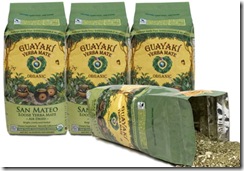 Guayaki’s Maté – "Carbon Subtracting" Beverage in Biodegradable Packaging
Biodegradable only good if it’s being degraded
Biodegradable packaging is a bit like carbon offsetting – of dubious value if it is only a band aid for our guilt. We actually must be biodegrading the packaging to make the premise work. Guayaki, which imports organic and Fair Trade loose Yerba Maté, the Argentinian tea-like drink, was attempting to improve its product’s shelf life freshness. But foil, the common choice, is not very eco-friendly. Guayaki eventually chose old-fashioned cellulose film (which also happens to be biodegradable) that is "metallized" with super thin aluminum film. Thus Guayaki says it has perfected a "carbon-subtracting" packaging – biodegradable, and at the same time, the growing the maté soaks up more CO2 than processing, packaging, and transporting the product. So each 16 oz. pouch of maté is "reducing" CO2 573 grams. TreeHugger asked some detailed questions about the Guayaki maté’s true capacity for CO2 soak-up and the bag’s ability for breaking down in the backyard pile.

TH: How are the bags made?
Guayaki: The bags are made of 2 layers of cellulose films and are printed using water-based inks. The outside layer of the package is transparent cellulose, and the inside film layer is made of cellulose with one side coated by a vacuum deposited ultra thin layer of aluminum. The outside cellulose layer is reverse printed so that the eco-friendly water-based inks are trapped between the layers; this is so the ink cannot scratch off. The metallized side is also trapped between the layers so that the product inside is only in contact with the transparent cellulose layer. Each 16-oz pack of organic, shade-grown and fairly-traded San Mateo Loose Yerba Mate achieves a subtraction of 573 gm of carbon.
TH: How was the biodegradability of the bags tested – under what conditions and what type of internal heat in the compost pile?
Guayaki: All of the materials that the bags are made of have been tested and meet the requirements of ASTM D 6400 and also Vincotte OK Compost Home. According to Innovia, the OK compost home test is conducted at ambient temperature. Tests have shown that the average total time for complete biodegradation of cellulose film is 80 to 120 days for coated cellulose products.
TH: How did you come up with the 71 grams of carbon for the transport…wouldn’t the maté be shipped to so many different locations? Or how did you calculate that?
Guayaki: We used a weighted average distance traveled that is based on each distributor’s zip code and its percentage of Guayaki total sales. An average distance was assumed from distributor to retailer.
TH: Could you also explain about the carbon profile of the mate – why is the tea-processing so relatively carbon-intensive compared to the transport?
Rob Sinclair, of Conscious Brands (www.consciousbrands.com), – the company that conducted the carbon assessment of Guayaki’s supply chain: The greatest journey the yerba mate makes from the rainforest to the consumer is by ocean freight, which has a relatively low per unit distance and mass emissions rate. Tea processing includes two major steps. First it is dried in South America, which is done with biomass, which, although ‘carbon neutral’, does emit some non-CO2 greenhouse gases which are accounted for. The second processing step includes substantial facility electricity use to mill and package the final product. The emissions rate for electricity in the region where Guayaki packages is below the national average, but, nevertheless, the greenhouse gas impact is comparatively large as seen on the label.
TH: How much aluminum (in grams) would come from the package and how much aluminum would need to be in a backyard compost before the compost composition would change enough to worry about?
Guayaki: According to Innovia, which makes the NatureFlex metallized cellulose, the amount of aluminum applied to each bag is less than .02% of the total bag by weight. Each of the new empty Guayaki bags weighs .4 ounces, so the total amount of aluminum contained in each bag to be composted is less than .00008 ounces, and the conversion to grams = less than 0.0023g. In the Earth’s crust, aluminum is the most abundant (8.13%) metallic element, and the third most abundant of all elements (after oxygen and silicon). However, because of its strong affinity to oxygen, it is almost never found in the elemental state; instead it is found in oxides or silicates. In the decomposition process for Guayaki bags, the ultra-thin coating of aluminum oxidizes and turns into aluminum oxide which is inert and non toxic. We did some research to find out if there is a regulatory limit for the amount of aluminum allowed in compost that is sold in the marketplace, etc.., and could not find any information to that effect. More specifically, research indicates that aluminum is not one of the metals that the state of California regulates and tests for in their compost regulatory program.
If you aren’t going to quit drinking coffee (I’m not, I have so few vices and I am down to one cup a day!) here are some tips to making it greener;
- The local brew
Seek out the coffee and tea that have traveled the least distance to reach you and also aim at supporting local, independent farms, cafés, and roasters. - Mug Shots
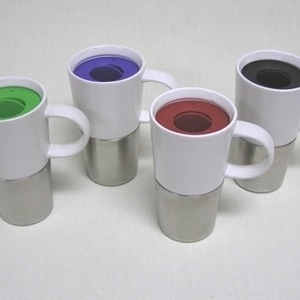
 Go ahead, find that perfect mug and make the investment. Not only is a reusable mug more pleasurable to sip out of than a paper cup, but it will replace an untold number of disposable cups, plastic sippy tops, “java jackets,” and other disposable paraphernalia. I love my stoneware and stainless steel and silicone (NO Plastic!) Highwave Mug.
 - Organic
Coffee and tea that bear organic certification are more eco-friendly because they are grown and processed without toxic chemicals, are cultivated and harvested in ways that protect sensitive ecosystems, and spare workers from exposure to harmful pesticides and herbicides. Shade grown coffee is another important category that preserves habitats for migratory birds on coffee farms, also letting beans mature more slowly and creating richer flavors. - Fair Trade
Not only does certified fair trade coffee and tea help ensure living wages and safe working conditions for farmers, but TransFair and Rainforest Alliance both include rigorous environmental standards in their certification criteria. - Home brew
 The local café is great. It’s got your friends, good food, free wireless. But if you think you can be greener in your own kitchen, give it a try. When you do it at home you know where the beans and leaves are coming from and also where they go when they’re spent. Plus, you can’t forget your mug, you can choose organic milk, and never toss out another paper sugar packet. Try a bit of quick math on the cost savings of making your morning cup-o-joe at home.
 - Loosen up
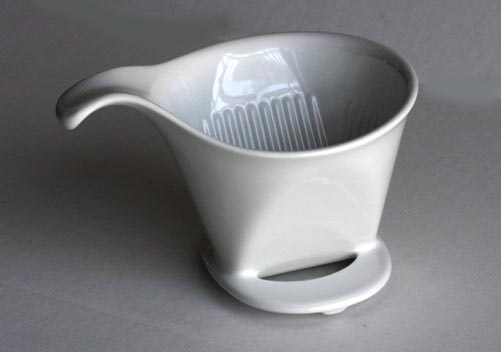
 Tea bags and coffee filters can be useful but are mostly unnecessary. Great coffee can be made at home with a reusable filter or a stovetop espresso maker. A quality tea infuser can last a lifetime and replace an untold number of (questionably compostable) tea bags. If you do use filters and bags, look for biodegradable and unbleached ones.
 - Milk and sugar
Most people put one thing or another in their hot beverage of choice. Don’t foul up your organic, fair trade, bird friendly, solar roasted brew with chemical and hormone-laden milk and sugar from a little paper packet. If you don’t do the cow thing, look for organic almond milk to yin up your yang. In the US, TransFair also certifies sugar, so even your sugar can be fair trade. (Maple syrup in coffee is another well-kept secret.) - "Press" the issue
If the local coffee shop you love doesn’t carry coffee and tea that meet your standards, start asking politely. - Compost the roast
Tea leaves and especially coffee grounds make outstanding compost. Coffee’s high nitrogen content has made it a fertilizer of choice since days of yore. Composting leaves and grounds helps keep organic waste out of landfills, makes great soil, and keeps waste baskets dry. If you don’t have a heap to toss it on, just spread coffee grounds on the top of your plants’ soil.

I do not drink Starbucks coffee because I do not like thier product, but I also do not support corporate business, I prefer that my money stay in my community. BUT, Starbucks will give you big =bags of coffee grounds if you call ahead and tell them when you will come by! I’ve built some great soil thanks to Starbucks, a local health food store and my own kitchen scraps!
 All Coffee making utensils pictured here come from Sweet Maria’s.


 Meal Delivery Service by Millie Barnes