My coffee journey
Posted: July 9, 2009 Filed under: Food and it's Impact on Our Health Leave a comment In 1993 I went to work as an Executive Chef at Juice ‘n Java, a coffee house on San Jose Blvd. near Lakewood. My job was to design and install a full service kitchen, and make the place a full service restaurant with formal service at night, and nice upscale lunches. I had a blast doing so but what fascinated me most was the coffee grinding and espresso making going on. At that time I had quit drinking coffee as I had had 3 children who had all breastfed and I had never gone back to drinking it after that. So I started learning about coffee, but didn’t go back to drinking it.
A few years later, while living in Ponte Vedra, I went to Venezuela to sail with a friend, and there is where I went back to drinking coffee. I fell in love with their coffee, the people, the little cafes we ate in and sipped Cuban style coffee. Back home in Ponte Vedra, there was a great little coffee house I began frequenting to buy freshly roasted beans. As I got to know the owner I expressed to him that I really wanted to explore, and discover, what kinds of coffee I really liked. He was very obliging, took me under his wing, and helped me learn. I discovered I loved Sumatran, Ethiopian, some south American coffees, Puerto Rican, Jamaican and Hawaiian.
But I did not know much about roasting, or making coffee. I had an electric coffee maker, but was dissatisfied with the watery coffee it made. I tried making it stronger; better… but not great. I looked into espresso machines. Ha! The price was ridiculous. I bought a French Press. I liked the coffee better than from the auto coffee maker, but I didn’t like the grounds in it, or having to filter it, or the fact that it cooled too fast in the glass carafe while steeping.
Then I discovered Sweet Maria’s, CoffeeGeek and The Coffee Review…and other coffee sites. I hit Chamblin’s Book Mine and found some books on the history of coffee. I immersed myself in studying, and applying all I had learned.
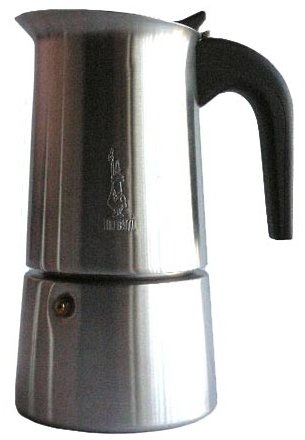 I got a Moka Pot, a nice thick espresso cup, some already ground espresso blend coffee and learned to make stove top espresso. I LOVED it! Then I bought some organic Ethiopian coffee, ground it in the store, and rushed home to make espresso…mmmm..heaven. It was perfect for that afternoon pick-up when I came home from work occasionally. Bit it wasn’t what I wanted to wake up to each day…I love to wake up to coffee, sip on it and read the NYTimes and catch up on email. Or wander to the back yard and watch the sun come up…
I learned to make Cuban coffee. Loved it.
 I learned to make Turkish coffee…AHA!!! I had found the perfect cup of coffee!! I ordered an Ibrik from Sweet Maria’s, along with some green coffee beans. I learned to roast them in my hot air popcorn popper. Hmmm, then I had to take them to the store to grind them (thanks Publix!). What a pain.
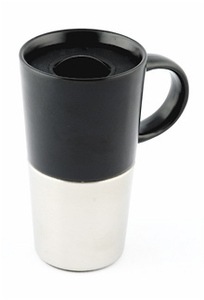
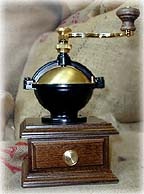
So I ordered a coffee grinder;  It is a Zazzenhuas grinder from Sweet Maria’s. I get up, grind beans (no electricity, and boy does it wake you up!!), make Turkish coffee, pour it into my double wall stainless steel cup (I am way picky about it being hot while I am drinking it) and enjoy heaven in a cup. I make another cup when I head out the door to work around 9;30 or so…..and put it in my no plastic travel mug from HighWave;
How to make Turkish coffee;
Turkish Coffee
Start with an Ibrik (Turkish coffee pot), some freshly ground espresso coffee.
Procedure:
Using a whisk, mix 9 ounces room temperature water with 2 Tablespoons sugar, 4 Tablespoons coffee, and spices (cardamom in traditional in Turkish coffee but cinnamon or chocolate is also awesome), stirred into the Ibrik. Then place on medium high heat. When foaming starts at the edges of the ibrik, slowly begin reducing the heat. The goal is to keep the coffee foaming, but not to let it rise more than a quarter of its volume. If you turn the gas down too quickly and the foaming stops, just turn it back up. The goal is to foam for 3 additional minutes (5 minutes total time). At 6 minutes total the coffee tastes over extracted, and at 4 it can be thin. The temperature at the end of 5 minutes should be around 167 F.
Swirl the ibrik gently to help the grounds caught in the foam subside. Traditionally the coffee is pored very slowly into the cups to keep the grounds out as much as possible. I personally do not like them in my coffee, so I use a Porcelain coffee cone with a hemp filter in it to strain the coffee through. (available at Sweet Maria’s)
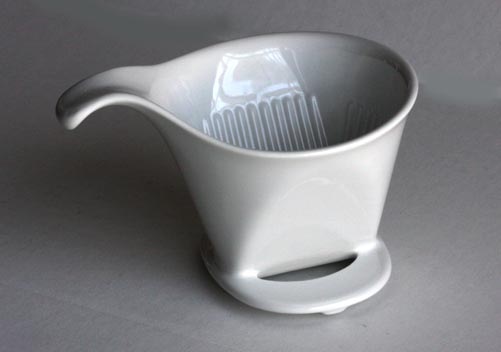 You might have guessed by now that I am an extreme environmentalist, I do not use paper filters because I cannot stand to waste the paper. I rinse my coffee filter in a small bowl of water, pour that with the grounds in it into the compost bucket, then rinse the filter and put it in a cup of water which I keep in the fridge. It keeps it from going sour and I do not have to use soap on it which would get the taste into the coffee. Once a week or so I clean it in Oxyclean.
Sugar amount:
0-4% of water mass. I find using half the mass of coffee is just about the maximum to balance the bitterness and really let the acidity shine.
Grinding:
I like the Zassenhaus Turkish mill. Mine is set 3/4 of a turn past French press–the burrs brush lightly when there is no grist.
Better picture of Model 169 DG Closed Hopper Walnut Zassenhaus grinder, available from Sweet Maria’s.


 Meal Delivery Service by Millie Barnes